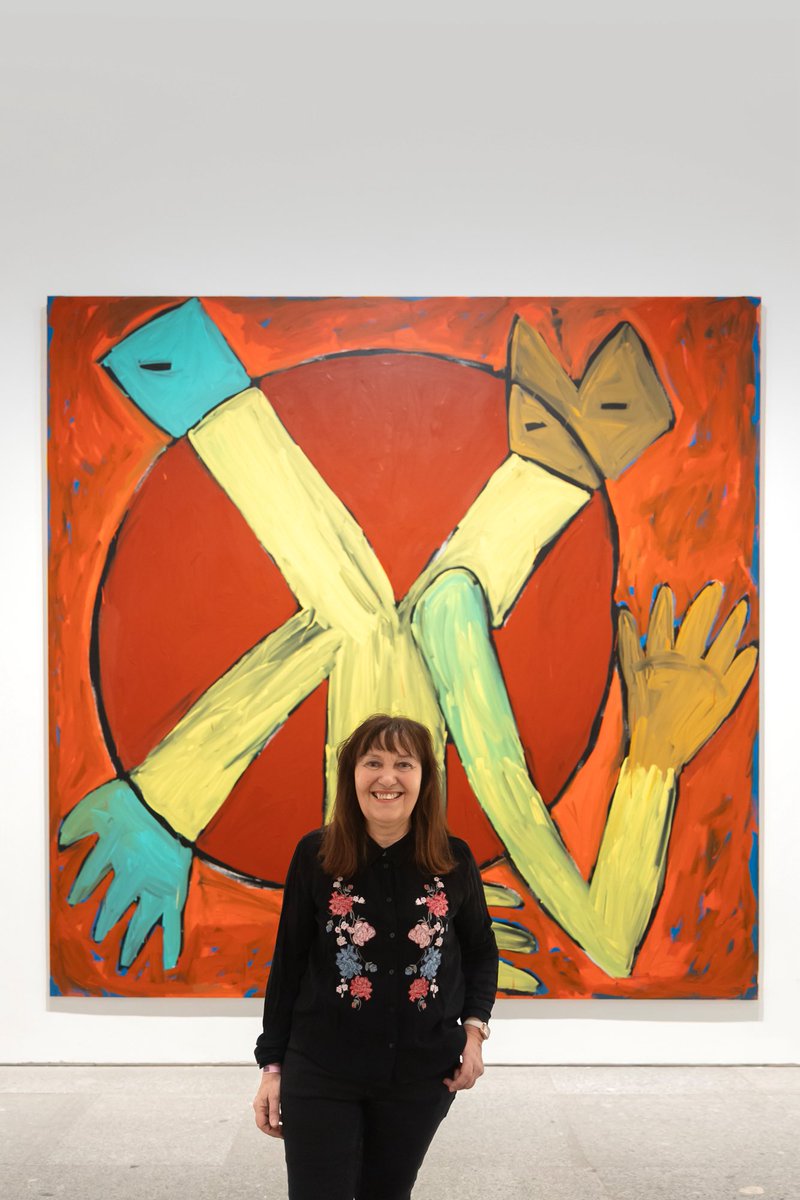
 Image: Museo Nacional Centro de Arte Reina Sofía, Madrid
The Museo Nacional Centro de Arte Reina Sofía has highlighted the role of Lamas in Atlántica, the movement that in the early 1980s helped renew the artistic scene in Galicia. In a brief post, the museum described Lamas as one of the forces behind a shift that placed painting, experimentation and a dialogue between local cultural identity and international artistic languages at the center of the region’s contemporary art.
The message situates Atlántica as more than a stylistic label. According to the museum’s wording, the movement emerged at the start of the 1980s and contributed to a broader renewal of Galician art by encouraging work that was both rooted in place and open to wider artistic conversations. The emphasis on painting and experimentation points to a period in which artists were reconsidering medium, form and cultural position at the same time.
The Reina Sofía’s reference also underlines the museum’s interest in mapping historical artistic developments beyond the major national centers. By drawing attention to Atlántica, the institution is pointing to a movement associated with a specific regional context while framing it within the wider field of contemporary art. The post does not announce an exhibition or public program, but it does place the movement in a concise art-historical frame.
Lamas is presented as a key figure in that process, specifically as one of the people who propelled Atlántica forward. The source material does not provide further biographical detail, nor does it identify particular works, dates beyond the early 1980s, or the names of other participants. It does, however, make clear that Lamas was linked to a moment of artistic renewal in Galicia that combined cultural self-definition with engagement in international art languages.
Atlántica is thus described as a movement marked by renewal, experiment and exchange. The museum’s phrasing suggests a scene that was not simply breaking from the past, but also building a new framework for artistic practice in Galicia. In that account, painting served as a central medium for artists exploring how regional identity could coexist with broader aesthetic currents.
The Reina Sofía’s post was published on 5 August 2026. It offers a succinct reminder of the museum’s attention to modern and contemporary art histories in Spain, and of the continuing visibility of Atlántica as a chapter in Galician cultural history.