 Image: Museo delle Porcellane, Florence
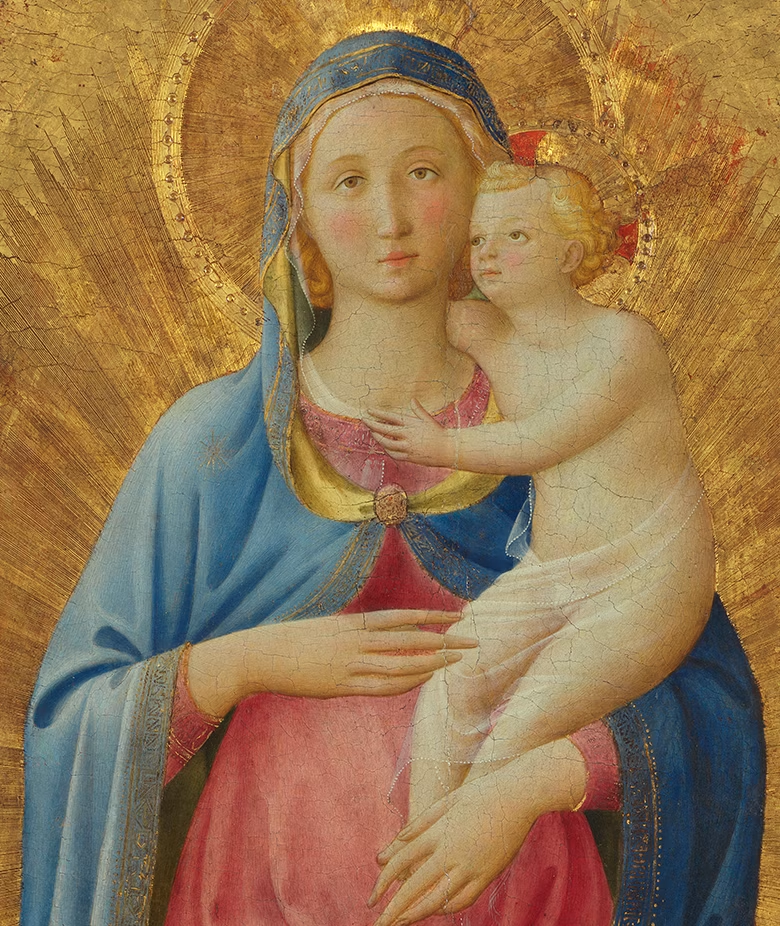
Florence’s Uffizi has highlighted one of the key works in its collection by Beato Angelico, the 'Madonna col Bambino in trono', a tempera on panel with a gold ground dated 1435. The museum’s description presents the painting as a central surviving panel from a larger polyptych made for the church of San Michele Arcangelo in Pontassieve, near Florence, and notes that it is now on deposit at the Uffizi.
The work is identified in the Uffizi’s collection page as by Guido di Pietro, later Fra’ Giovanni Angelico, better known as Beato Angelico, who was born in Vicchio di Mugello around 1395 and died in Rome in 1455. The panel measures 134 by 59.5 centimeters and is listed in the museum’s painting collection, in the section labeled A8, alongside Masaccio, Beato Angelico and Paolo Uccello. Its inventory number is Depositi n. 143.
According to the museum text, the altarpiece was commissioned by the Florentine family da Filicaia, which held property and patronage in the Pontassieve area. The panel preserves fragments of an inscription at the bottom, reconstructed from a 19th-century transcription, naming Berto and Simone di Francesco, Antonio di Luca, Piero di Nicholaio, Ser Piero and Bartolomeo di Betto da Filicaia and giving the date 1435. The page says the original frame is missing and that the reconstruction of the full polyptych remains problematic, with only this panel remaining in the church by the 19th century.
The Uffizi’s description emphasizes the painting’s blend of late Gothic and early Renaissance elements. The pointed-arch silhouette at the top and the gold ground signal a continuing Gothic tradition, while the frontal presentation of the Virgin lends the image its solemnity. That formal austerity is softened by the intimate embrace of the Child, which the museum connects to the Byzantine iconography of the Eleusa, an image of tenderness. The text also points to the marble step, the subtle chiaroscuro modeling of the Virgin’s form and the child’s pale flesh tones, which are described as seeming to emit light.
The museum notes that the panel was in the Uffizi deposits from 1949, after having been restored in the Florentine galleries’ workshop, where it arrived in 1924. It also records the later fate of the original church, which was completely destroyed in wartime bombing in 1944 and rebuilt in 1947-48. In this account, the painting stands as one of the few surviving witnesses to the Pontassieve altarpiece and to Beato Angelico’s early 1430s work in Florence.
The Uffizi page places the dating of the Pontassieve commission just before the Dominican friar received major Medici commissions for the renewal of San Marco in Florence. The institution’s online entry frames the panel as both a devotional image and a document of artistic transition, with its gilded surface, architectural hints and tender devotional exchange between mother and child remaining central to its reading of the work in the museum's collection.