 Image: Kurimanzutto, Mexico City
Aspen Art Museum is presenting Adrián Villar Rojas: 'First Gods, Lost Animals', an expansive solo exhibition of new site-specific work specially conceived for the museum by the artist Adrián Villar Rojas. According to the museum material shared by kurimanzutto, the exhibition runs from July 2, 2026, to April 11, 2027, and is organized around Villar Rojas’s long-running interest in how symbolic thought, environment, and representation emerge from deep time and material transformation.
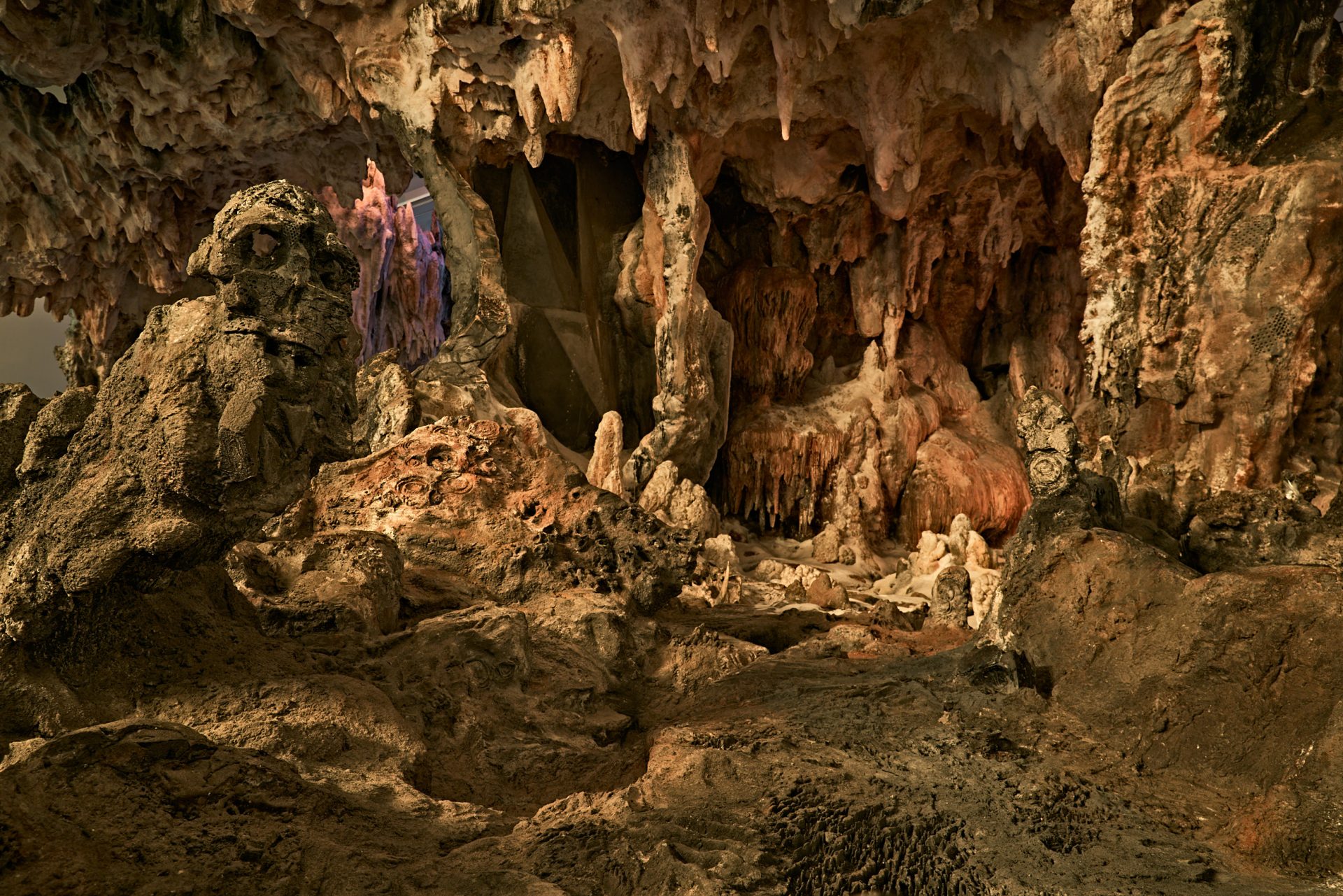
The project takes the cave as its central image and conceptual framework. The exhibition explores the geological and mythological formation of a cave, treating it as a space of double accumulation: shaped over millennia by deposition and mineral consolidation, while also layered by rituals, projections, and symbolic activity. In the artist’s account, the cave becomes a place where the earliest architectures of meaning can be considered alongside the institutions and technologies that structure contemporary life.
The exhibition includes a new sculpture co-commissioned by Aspen Art Museum and Audemars Piguet Contemporary, 'Untitled (from the series The Language of the Enemy)'. The work takes the form of a life-size Triceratops skull, cast in bronze and threaded with veins of gold, with the Venus of Lespugue carved into one horn. The museum text describes the sculpture as moving through a chain of transformations in which a living creature becomes a fossil, then an archaeological artifact, and finally a contemporary sculpture made through digital scanning, computation, and fabrication.
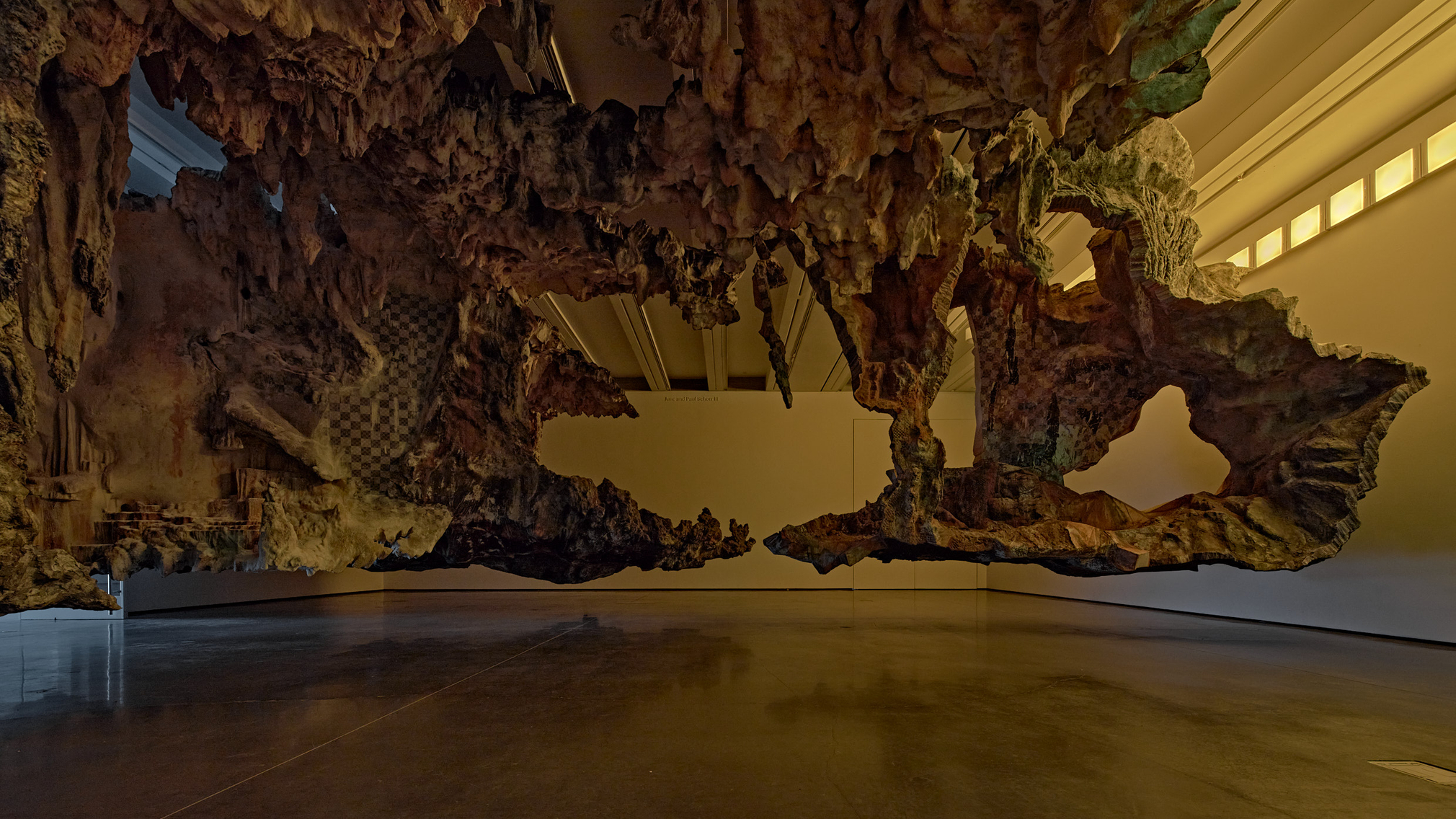
Beyond the opening work, 'First Gods, Lost Animals' extends into reconstructed cave environments derived from archaeological research. The exhibition includes enlarged cave spaces based on photogrammetric scans of sections of Lascaux and Chauvet, two major Paleolithic sites in Europe. These areas were modeled, enlarged, fabricated, and reassembled inside the museum, with the display emphasizing peripheral zones where little or no symbolic activity has been identified or preserved. The artist uses these settings to focus on the threshold at which natural formations become images and material traces begin to carry meaning.
Kurimanzutto’s material says the exhibition was developed over two years of intensive research, geometric analysis, virtual modeling, and engineering, followed by a three-month fabrication period. It was realized with a twelve-person team that traveled from Argentina. The museum environment is also used as part of the work: galleries were left empty, the reception desk removed, and light allowed to circulate between floors and adjacent rooms. Illumination comes from emergency exit signs and custom-built light cages, which the source text describes as functioning less as conventional sculptures than as luminous worlds of their own.
Aspen Art Museum’s AIR program will also feature Villar Rojas this summer, and the artist is scheduled for an honoree talk on July 28, 2026, at 2:00 pm at Aspen Art Museum, in conversation with Claude Adjil and Hans Ulrich Obrist. The museum says Villar Rojas will receive the 2026 Lewis Family Art Award at its annual ArtCrush Gala on July 31, 2026. The exhibition remains on view at Aspen Art Museum through April 11, 2027.