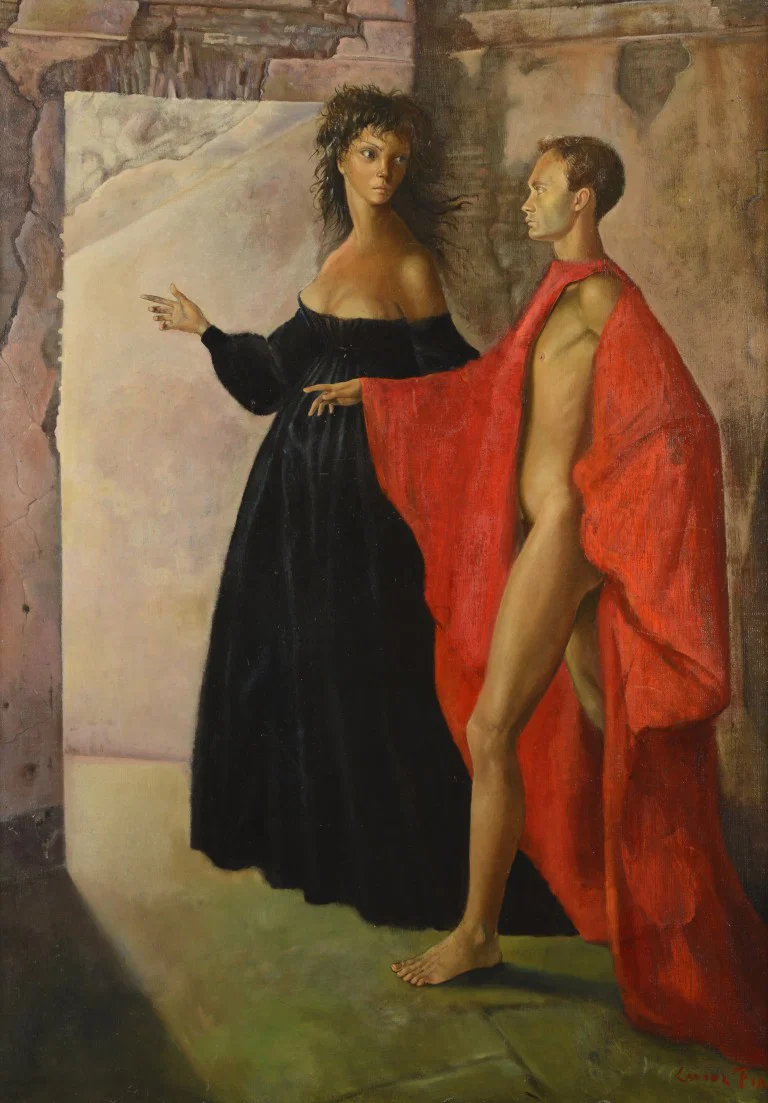
 Image: Schirn Kunsthalle Frankfurt, Frankfurt am Main
The Schirn Kunsthalle Frankfurt has published a new essay examining how generative artificial intelligence reproduces ideas of gender, identity and belonging, while also amplifying the norms embedded in its training data. Titled 'Hypersichtbar? Queerness im Zeitalter generativer KI', the article appears in the institution’s Schirn Mag on 26 June 2026 and frames queerness as both a critique of algorithmic visibility and a challenge to the categories that machine-learning systems impose.
Written by Michael Klipphahn-Karge, the essay argues that generative systems do not simply create new text, images, video or sound. Instead, they recombine existing data according to statistical probabilities, meaning they are shaped by digitized archives that already contain exclusions and hierarchies. In that sense, the piece places queer criticism alongside feminist critique, stressing that what appears as a neutral technical process is built on datasets and infrastructures marked by dominant social norms. The article makes clear that this is not only a question of representation, but also of how digital systems sort bodies, label identities and define what counts as normal.
The essay expands that point by discussing how popular image generators have long been trained mainly on white, cisgender and able-bodied images, leaving queer, trans, disabled and non-white bodies underrepresented. It notes that some technology companies have tried to address this through diversity strategies, but warns that such efforts can turn queerness into a consumable style. According to the article, prompts can produce standardized lifestyle imagery that links queer identity to urban, fashionable and often white visual codes, while Blackness may be rendered through stereotyped markers. The result, the essay says, is a form of algorithmic visibility that remains tied to narrow visual legibility.
The article also connects these questions to political uses of AI-generated imagery. It says that authoritarian and anti-democratic movements increasingly deploy synthetic pictures through social media feeds and automated image systems to stabilize one-dimensional ideas of gender, bodies and national belonging. In this context, the essay describes AI-generated images as tools that can naturalize heteronormative gender roles, white identity assumptions and normative family models while obscuring queer life and broader social inequality. Rather than treating visibility as an unqualified good, the piece suggests that for marginalized groups being too legible to digital systems can itself become dangerous.
A further section turns to automated gender classification and biometric recognition, pointing out that digital identification systems often depend on standardized labels and categories. The essay cites examples of algorithmic error and bias, including systems that fail to recognize Black skin or misidentify Black people more frequently in surveillance settings. It also notes the historical roots of some of these datasets in state archives such as mug shots and prison records. In this framework, the article argues that machine-learning systems do not merely reflect existing bias; they can intensify it.
The Schirn’s publication sits within a broader July 2026 editorial focus on art, culture and AI. The institution’s newsletter also points readers to an interview with Hito Steyerl related to 'The World Through AI' and to a quiz about AI-generated images, but the queer critique essay stands as a separate contribution in the magazine’s discourse section. By foregrounding the unstable relationship between visibility, normativity and classification, the article asks what it means when digital systems assign gender, identity and belonging in the first place.