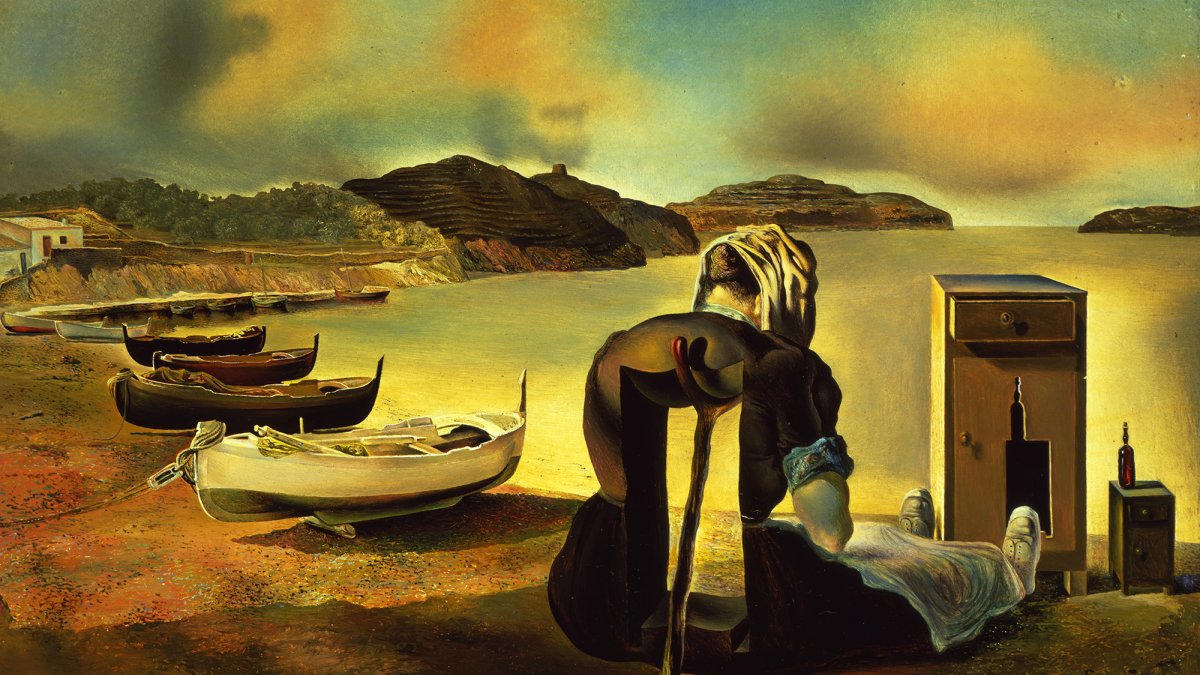
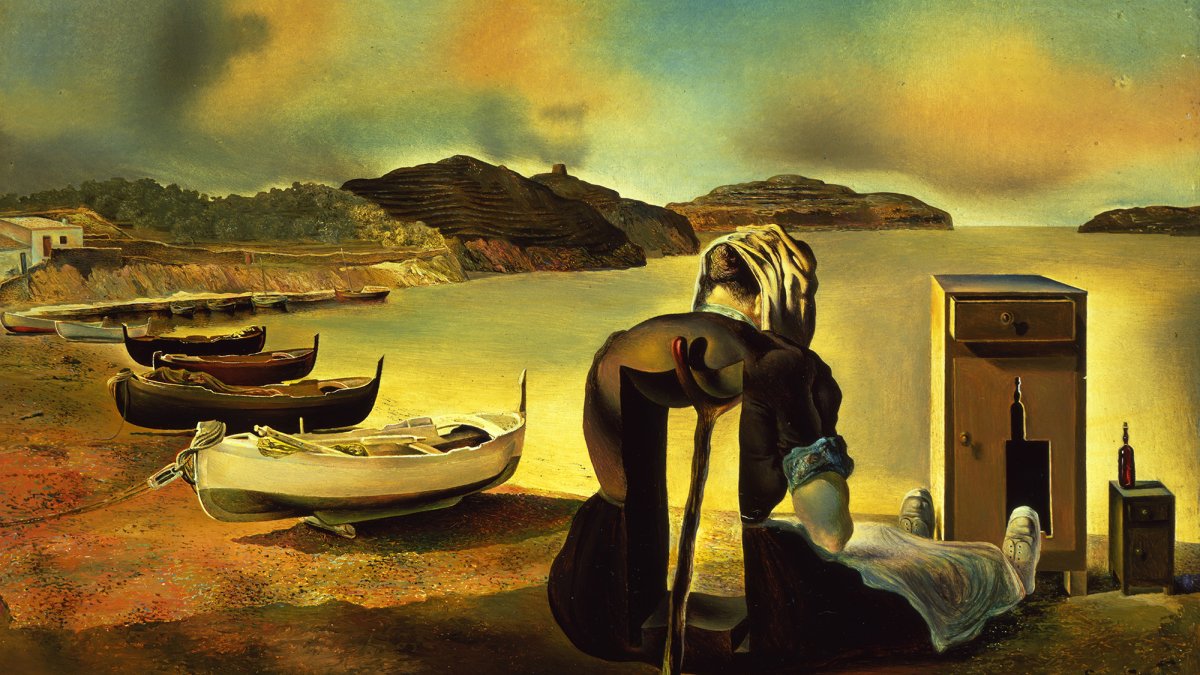
 Image: Salvador Dalí, El destete del mueble-alimento (The Weaning of Furniture-Nutrition), 1934. The Dalí Museum, St. Petersburg, Florida, gift of A. Reynolds and Eleanor Morse, 2007. © Salvador Dalí, Fundació Gala-Salvador Dalí, VEGAP, Madrid, 2026
The Museo Nacional Thyssen-Bornemisza in Madrid opens ‘El universo freudiano de Dalí’ (The Freudian Universe of Dalí) on 20 October 2026. Curated by Jaime Brihuega, the exhibition reconsiders Salvador Dalí’s career through his fascination with the writings of Sigmund Freud, a relationship the museum treats as one of the keys to the artist’s visual language. It remains on view until 24 January 2027 in the museum’s ground-floor temporary exhibition galleries.
According to the museum’s press materials, the show brings together around 130 works, with the fact sheet giving a figure of 136. They are lent by museums and institutions in Europe and North America, among them The Museum of Modern Art in New York, The Dalí Museum in St. Petersburg, Florida, the Museo Nacional Centro de Arte Reina Sofía and the Haggerty Museum of Art at Marquette University, as well as private collections.
Dalí’s interest in Freud began in his youth and grew into an obsession. He had access to translations of Freud’s writings from the early 1920s, during his years at the Residencia de Estudiantes in Madrid, and from 1926 his work moved closer to Surrealism, a movement itself shaped by Freud. His ‘paranoiac-critical method’ grew out of that reading. In 1938 he met Freud, then living in exile in London, and Freudian motifs continued to surface in the ‘mystical-nuclear’ phase that followed.
The exhibition is arranged chronologically in six sections: the family setting of Figueres and Cadaqués; the Residencia de Estudiantes and the return to Catalonia (1922–1928); the young promise of Surrealism (1929–1931); the paranoiac-critical method (1932–1937); the meeting with Freud and expulsion from the Surrealist group (1938–1939); and Freud’s persistent shadow after 1940.
Works on view include ‘Acantilados’ (1926), ‘Los esfuerzos estériles (Cenicitas)’ (1927–1928), ‘Los placeres iluminados’ (1929), ‘El hombre invisible’ (1929–1933), ‘El destete del mueble-alimento’ (1934), ‘El gran paranoico’ (1936), ‘Enigma sin fin’ (1938), a drawing of Sigmund Freud from 1938, and ‘La Madona de Portlligat’ (1949).
Each section sets Dalí alongside reference works by other figures, including Ingres, Gino Severini, Hans Arp, Kurt Schwitters, Federico García Lorca, Yves Tanguy, the neuroscientist Santiago Ramón y Cajal and Freud himself. The museum notes that the exhibition addresses sexuality, approached from an art-historical perspective.
Guided visits take place on Fridays, Saturdays and Sundays throughout the run, and a lecture series on the exhibition’s themes is scheduled from 28 October to 25 November 2026. Leticia de Cos and Juan Ángel López-Manzanares are the technical curators. The exhibition is sponsored by Natixis, with the collaboration of the Comunidad de Madrid and the Ayuntamiento de Madrid.