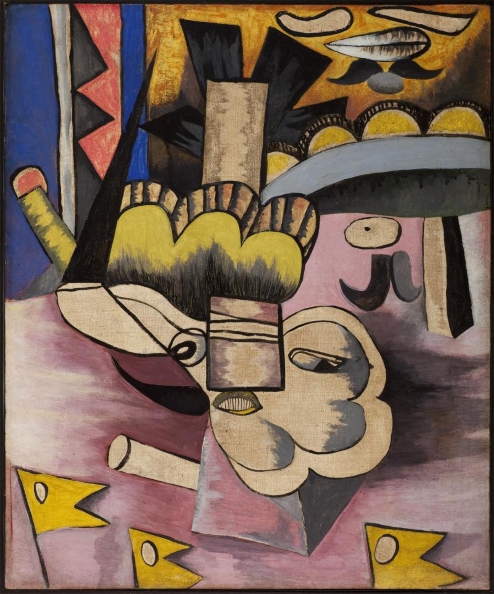
The Pinacoteca de São Paulo is offering ‘Corpos modernos: figura humana e projeto nacional’ (Modern bodies: the human figure and the national project), the second module of its course ‘Histórias da Arte Brasileira a partir do acervo da Pinacoteca’. The in-person classes take place on Saturdays from 7 to 28 November 2026 at the museum’s Pina Luz building.
The module revisits Brazilian Modernism through the human figure. Using works from the Pinacoteca’s collection as starting points, it looks at how artists of the period drew on the languages of the international avant-garde to construct images of the country, and at how the body was stylised, idealised, racialised, eroticised and staged in that process.
The wider course offers a critical reading of art produced in Brazil, organised around the four curatorial sections of the museum’s collection display, ‘Pinacoteca: Acervo’. Its four modules are independent but complementary, and according to the museum they treat the collection not only as a historical survey but as a living field of disputes, memories and interpretations.
Each class in this module centres on a single work. An opening session considers how the body is figured in the collection and Fernand Léger’s presence in Brazil. Tarsila do Amaral’s ‘Antropofagia’ then frames a discussion of a Brazilian image built through assimilation and cultural invention, and of the stylisation of figure and space. Vicente do Rego Monteiro’s ‘Figura Sentada’ is the starting point for examining how avant-garde references combined with Indigenous and Amazonian imagery through simplification, geometry and synthesis.
Lasar Segall’s ‘Bananal’ leads into the representation of labour and of the Black worker in Brazilian modern art, including questions of expressionist language and racialisation. Cícero Dias’s ‘Mamoeiro ou Dançarino’ opens up the human figure, landscape and the regional imaginaries of the Northeast within modernist experiment, and Flávio de Carvalho’s ‘Ascensão Definitiva de Cristo’ addresses the figure as a site of rupture with traditional representation, linking body, religion and modernity. A closing session, ‘Acervo imaginário’, invites participants to imagine alternative arrangements of the collection and other ways of telling the history of Brazilian art.
The course is aimed at teachers, researchers, artists and a general public interested in art, and participants receive a certificate of attendance. Registration is open until 5 November. The museum reserves 40 places for public-school teachers and social educators, 30 affirmative-action places and 10 places for students of the ali:leste programme.