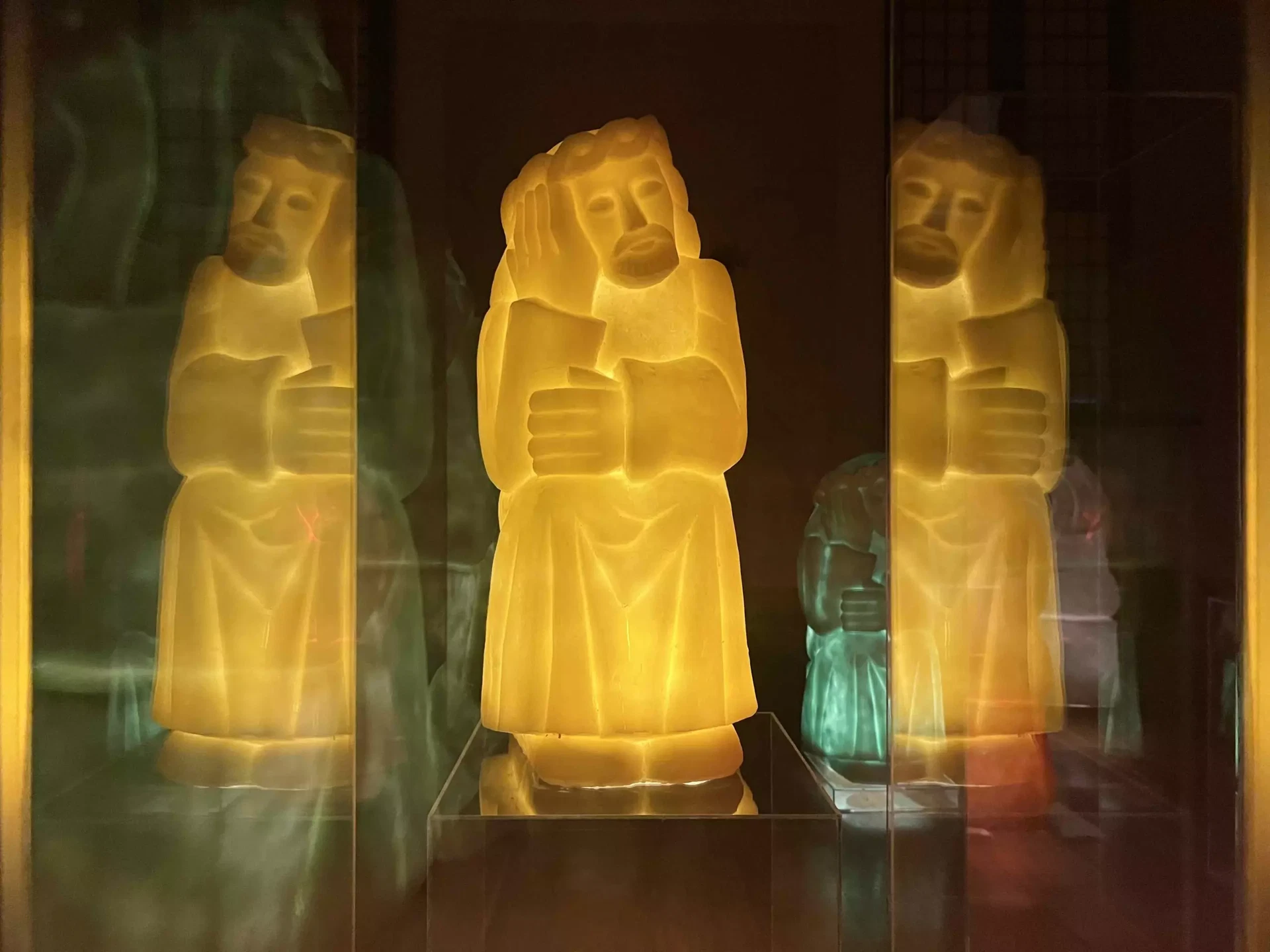
 Image: Beelden aan Zee, The Hague
The exhibition, the museum’s first dedicated to wax sculpture, centres on a Lithuanian folk-religious image recast as a group of translucent works shaped by questions of migration, memory and home.
Dzelzytė begins with an oak-carved Rūpintojėlis—also known as the Meditative Christ—by Lithuanian folk sculptor Algirdas Butkevičius. The figure was a familiar presence in the Lithuanian landscape, appearing along roads, at crossroads, in chapels and near houses. It became associated with departure, loss and return.
For the exhibition, Dzelzytė transforms Butkevičius’s wooden sculpture into ten transparent wax sculptures. The works glow like votive candles and recall village churches, chapels and domestic memorial rituals. Because no cast is identical to the original, each retains traces of its source while taking on its own form.
The installation belongs to an ongoing series in which Dzelzytė translates architectural fragments, everyday objects, religious objects and forms from folk culture into wax. She regards cultural objects as living carriers of human experience; casting gives them a new existence while retaining their origins. Wax, for the artist, is a material in continual motion, a quality that informs her interest in how cultural heritage is passed on and acquires new meanings over time.
Dzelzytė left Lithuania more than a decade ago. The work asks what remains when returning home is no longer possible, locating home in objects, gestures, prayers, scents and stories that change in meaning over time. Its title refers not simply to crossroads, but to roads that have crossed: lives shaped by journeys, missed opportunities, changing identities and narratives linking generations.