 Image: MKM Museum Küppersmühle, Duisburg
The MKM Museum Küppersmühle für Moderne Kunst in Duisburg is presenting ‘Jaume Plensa – Invisible’, described by the institution as the most comprehensive solo exhibition to date of the internationally recognised Spanish sculptor. The exhibition brings together more than 50 sculptures, a selection of works on paper and wall drawings created specifically for the museum. It is on view from 26 June through 1 November 2026.
The exhibition is also the first major presentation of Plensa’s work by a German museum in a decade, according to the MKM. The museum’s installation is organised across the building’s galleries and includes works from different periods and in a range of materials, among them marble, alabaster, plastic, bronze and iron casting, and steel. The presentation occupies eight further rooms beyond two large-scale works placed in prominent architectural settings.
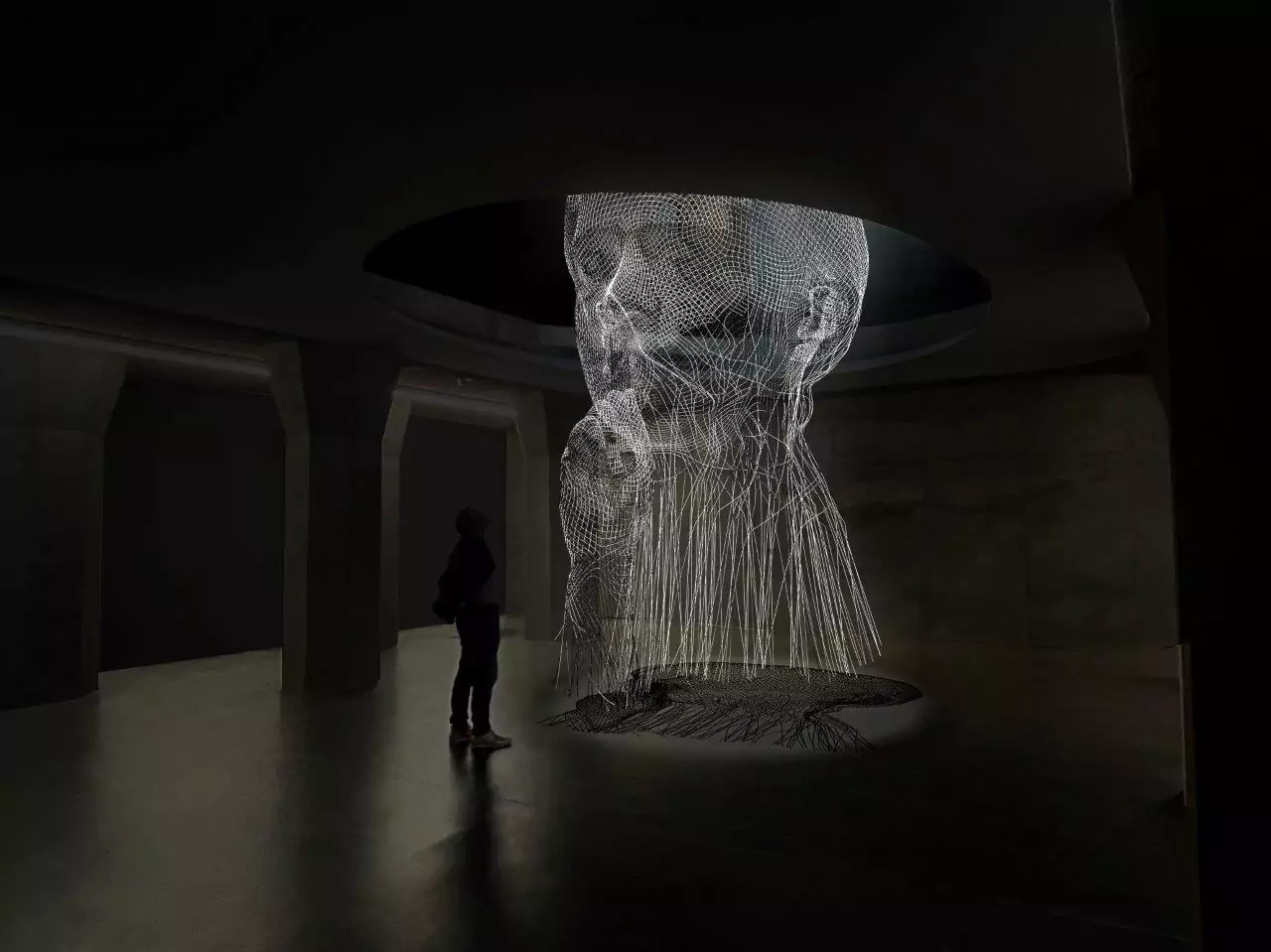
At the museum entrance, visitors encounter ‘Flora’ (2021), a large sculpture positioned to establish the exhibition’s scale from the outset. In the silo room, the exhibition centres on ‘Invisible Anna’ (2018), a transparent head formed from stainless-steel rods. The work’s open construction allows the surrounding space to remain visible through the figure, while its monumental scale makes it a defining presence within the former industrial architecture.
Plensa has been internationally recognised for public artworks that he has presented across every continent for more than 20 years. The MKM’s account of his work cites projects in Germany including ‘Body of Knowledge’ in Frankfurt, installed in 2010; ‘Gläserne Seele’ in Potsdam, realised in 2000; and ‘Laurelle am Bahnhof’ in Bonn-Bad Godesberg, completed in 2024. It also points to ‘Secret Garden’, presented in Salzburg’s Residenzplatz during the 2025 Salzburg Festival.
The title ‘Invisible’ reflects the exhibition’s emphasis on the relationship between physical form, perception and the spaces occupied by Plensa’s figures. The museum describes his works as combining mystery with an invitation to contemplation. Plensa has said: “My work always wants to build bridges, ask questions, bring beauty into people’s everyday lives; create connections between people, regardless of skin colour, ideology, religion or geography.”
The exhibition is accompanied by a large-format publication featuring installation views, an interview between Walter Smerling and Plensa, and an essay by the writer Clemens Setz. In the essay, Setz writes of standing before Plensa’s works: “We remain alone with ourselves, and not intimidated or unfulfilled, but gifted and strangely elevated.” ‘Jaume Plensa – Invisible’ remains on view at MKM Museum Küppersmühle für Moderne Kunst in Duisburg until 1 November 2026.