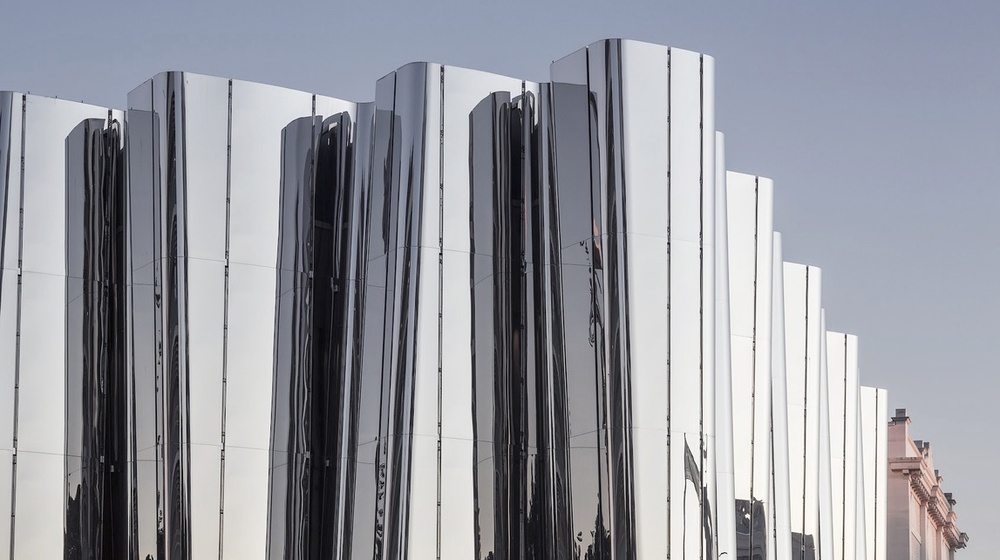
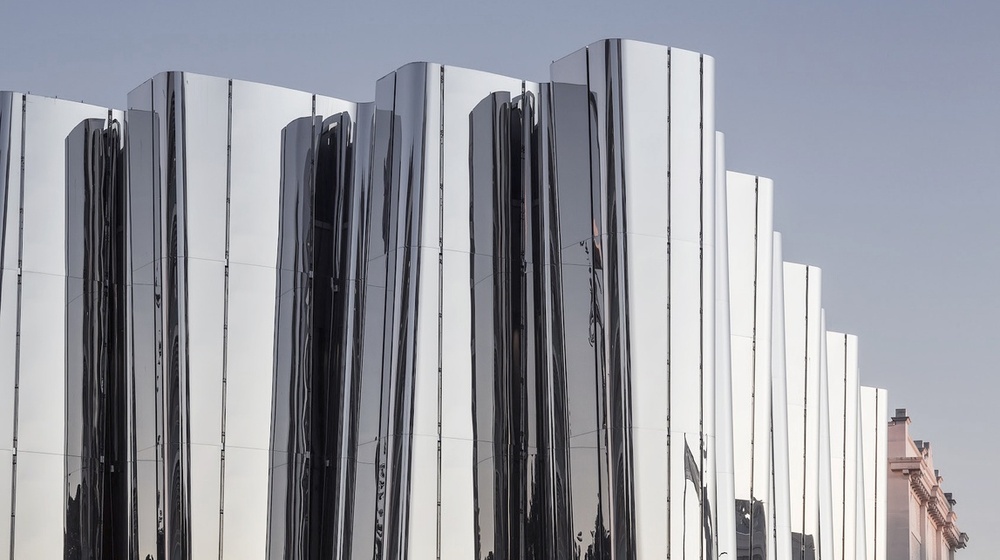
 Image: Govett-Brewster Art Gallery/Len Lye Centre, New Plymouth
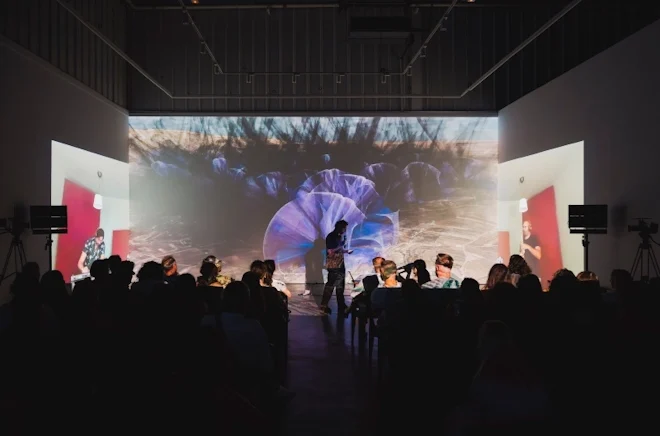
‘Direct Bodily Empathy—Sound, Signal, Feedback’, the second chapter of a two-part exhibition marking the tenth anniversary of the Len Lye Centre, remains on view at the Govett-Brewster Art Gallery and Len Lye Centre in New Plymouth, Aotearoa New Zealand, through 11 October 2026. Curated by Anna Briers, the exhibition brings together sound installations, sculptural assemblages, field recordings, experimental films, musical compositions, archival interventions and deep-listening experiences by artists from Aotearoa and abroad.
The exhibition treats sound not simply as an accompaniment to visual art, but as a material force with consequences in the world. Its premise centres on deep listening—to audible currents, felt vibrations, sirens and noise—as a way of building knowledge and engaging critically with a planet in crisis. The works examine sonic relationalities and the politics of sound through questions about ecological health, decolonial practice, machine listening and the role of warning signals in a threatened future.
Participating artists are Lawrence Abu Hamdan, Andrew Faleatua and Stroma, Simon Ingram, Len Lye, Machine Listening, Yuko Mohri, Aura Satz, Rachel Shearer, Weather Cry and YoungEun Kim. Their approaches include acoustic ecologies, in which sound becomes a speculative tool for sensing biodiversity and climate volatility, and forms of ‘ear witnessing’, where audio material can operate as evidence in truth-telling and social-justice contexts. The exhibition also considers sound as a decolonial force, with musical composition unsettling established histories of field recording and the archive while affirming Indigenous ways of being and knowing.
Several works involve more-than-human or environmental collaborators. The exhibition describes artists working with wind, decomposing fruit and native birdsong to amplify weather systems, sonify carbon flows and attune to the dawn chorus. Other works use warning sirens and ancestral rhythms to consider ecological feedback loops and possible forms of survival. Among the works documented by the gallery are Simon Ingram’s ‘Vibrating World: Rotokare Forest, 39.45254° S, 174.41727° E’ (2026), a two-channel video installation with surround sound, and Aura Satz’s ‘Sirening (as a verb)’ (2026), a multi-channel video installation using HD video and 16mm film.
The exhibition’s title pays homage to Len Lye’s notion of ‘bodily empathy’, described by the institution as a term signalling sensory attunement and the transfer of elemental energies. The first chapter, ‘Sensing Sound’, focused on sonic structures, resonant objects and shared vibration. The current instalment shifts attention toward material sound as a transmitter of meaning and an input for action, asking how vibration might enter the body and alter relationships between matter, society and the environment.
A daily presentation of ‘Environments 12’ (2023), a sound installation by Machine Listening, is scheduled in the Len Lye Cinema during specified periods: 4 April to 3 June, 25 June to 26 August, and 10 September to 11 October. The exhibition will also be accompanied by a major publication with Melbourne-based Perimeter Editions, scheduled for release in late 2026. The Govett-Brewster Art Gallery and Len Lye Centre is open daily from 10am to 5pm at 42 Queen Street, New Plymouth.