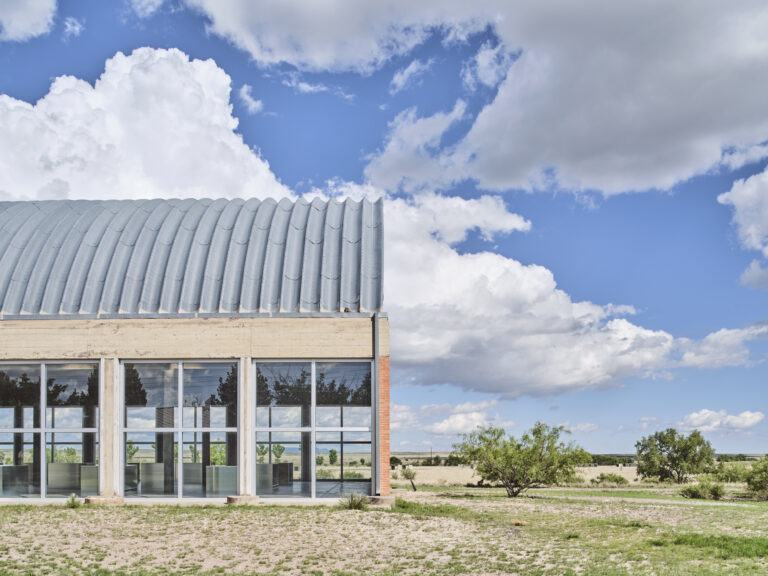
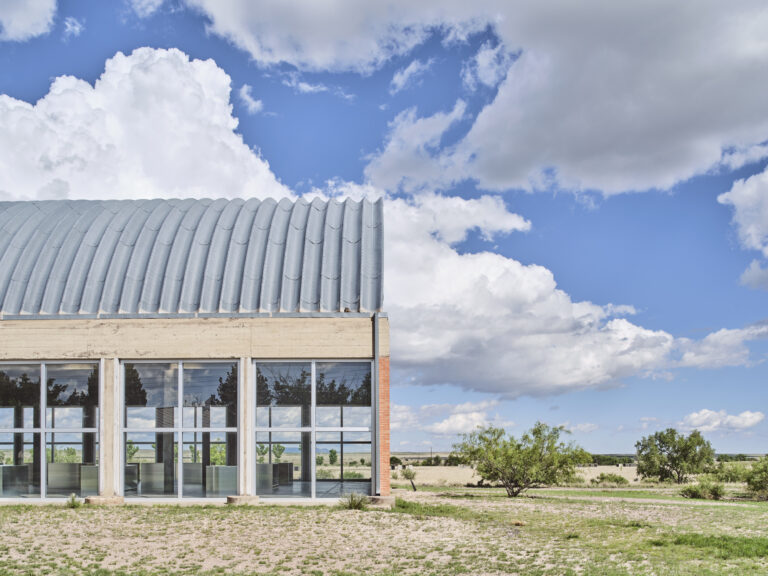
 Image: Artillery Sheds, The Chinati Foundation, Marfa, Texas. Photo: Alex Marks, courtesy of The Chinati Foundation
The Chinati Foundation in Marfa, Texas, will close Donald Judd’s ‘100 untitled works in mill aluminum’ (1982–1986) to the public for a multi-year restoration of the two Artillery Sheds built around it. The museum announced the project on 19 August 2026; no closure or reopening dates have been given.
The sheds are former military buildings, put up in 1939 by the U.S. Army Corps of Engineers for Fort D.A. Russell, on the north-eastern edge of the Chihuahuan Desert. From 1980 Judd replaced their garage doors with quartered glass windows of his own design and added curved metal roofs that doubled the buildings’ height; he finalised the installation of the 100 works in 1986, the year the Chinati Foundation was established.
According to Chinati, the restoration will repair and redesign the roofs and gutters to keep water out, replace more than 10,000 square feet of quartered window glass with high-performance glazing, clean and repair the historic brick and concrete, and add pathways, grading, bioswales and rainwater storage. It follows the buildings’ expanded recognition on the National Register of Historic Places in 2025 as part of the Donald Judd Historic District. Schaum Architects leads the architectural design, with structural engineering by TYLin and historic preservation consulting by Higgins Quasebarth & Partners.
Before construction, all 100 works will be documented and moved for the first time since they were installed. Chinati is developing the movement and conservation plan with Alfred Lippincott, one of the works’ original fabricators, and the Getty Conservation Institute; the works are to be returned to their original positions once the buildings are finished.
Last chance to see it: the 39th annual Chinati Weekend, from Friday 9 to Sunday 11 October 2026, is one of the final occasions for viewing the Artillery Sheds and the installation before construction begins. The rest of Chinati’s collection will stay accessible during the works through guided tours and open viewing, alongside special exhibitions, artist residencies and public programmes. The restoration forms part of the museum’s Art as Intended campaign.