 Image : Smithsonian American Art Museum, Washington, D.C.
Cette actualité est affichée en anglais en attendant que sa traduction soit prête.
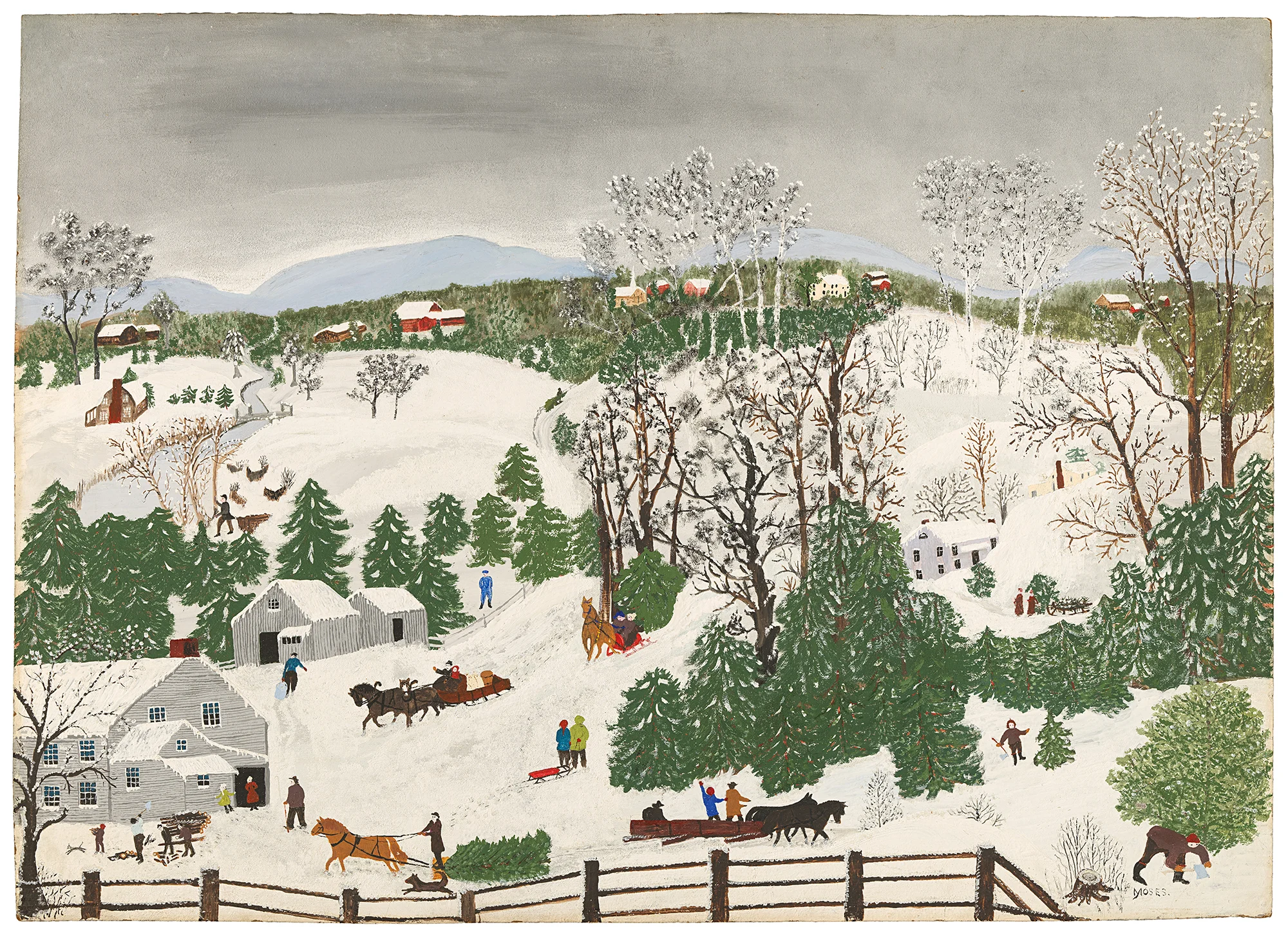
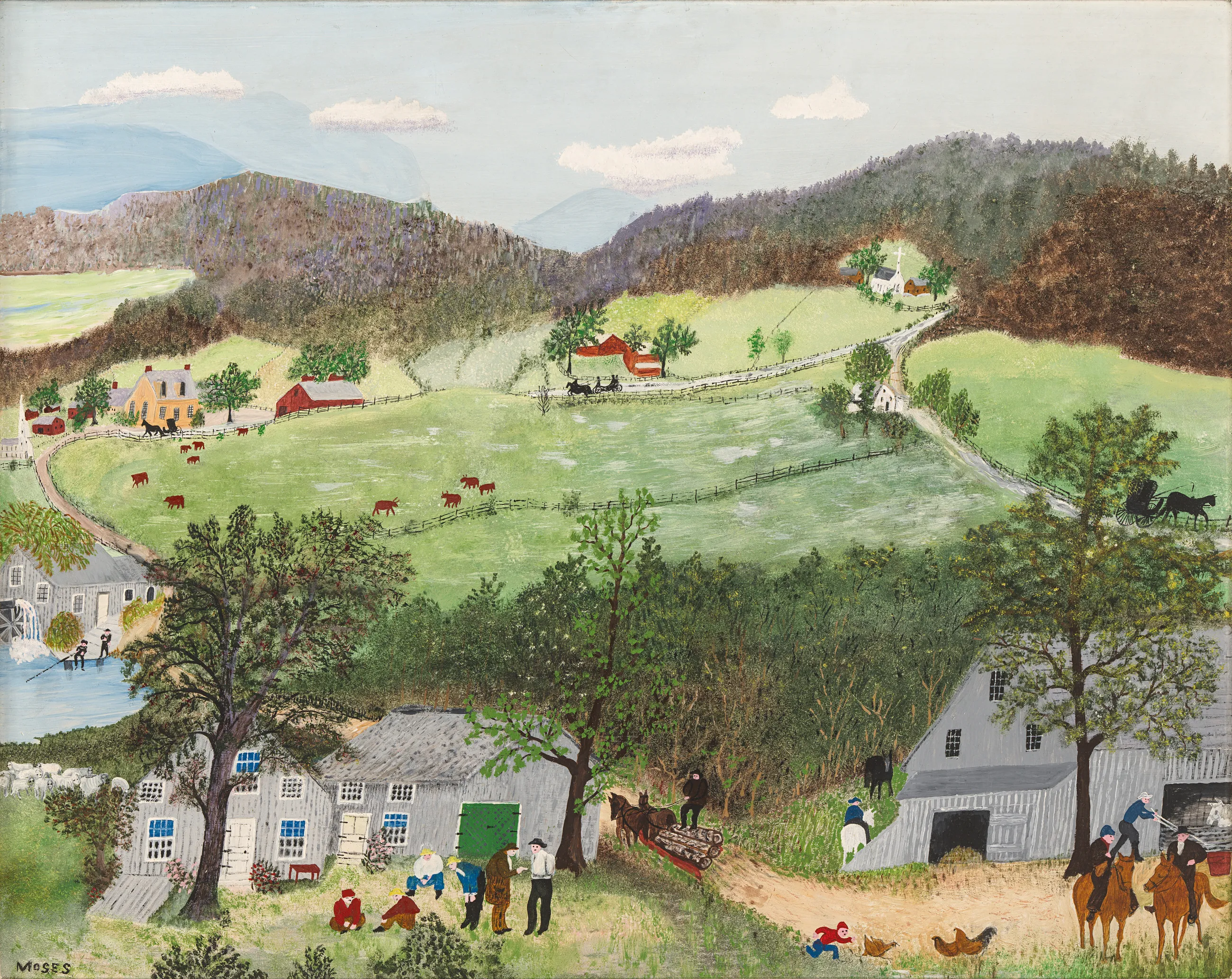
The Smithsonian American Art Museum is in the closing stretch of “Grandma Moses: A Good Day’s Work,” a survey of Anna Mary Robertson Moses that runs through Sunday, July 12. The exhibition highlights one of the most widely recognized figures in American folk art and is presented as a reexamination of an artist whose painted memories of rural life helped shape her lasting place in the country’s cultural imagination.
According to the museum, the show “repositions” Grandma Moses as a multidimensional force in American art. Moses, who lived from 1860 to 1961, drew on direct observation of nature and personal memory to create scenes of rural America that became beloved by the public. The exhibition also addresses the tension around her reputation: while she was celebrated by the press and the broader public, she was often belittled by the art world and critical press.
The museum’s online exhibition page notes that Moses began painting in earnest in her late 70s and was 80 when gallerist Otto Kallir introduced her to the American public with her first solo exhibition in 1940. That late-career rise remains central to her story, as does the way her work fused creativity, labor, and recollection into images that the museum says became “distinctive stories of America.” The exhibition’s title comes from Moses’ own reflection on life as “a good day’s work.”
“Grandma Moses: A Good Day’s Work” is anchored by 33 artworks from SAAM’s collection, including many of the artist’s best-known paintings. Works cited on the museum’s site include “We Are Resting” (1951), “Checkered House” (1955), “Cambridge Valley” (1942), “Busy Street” (1952), and “Grandma Moses Goes to the Big City” (1946), among others. The exhibition was organized by Leslie Umberger, senior curator of folk and self-taught art, and Randall R. Griffey, former head curator, with support from Maria R. Eipert, curatorial assistant.
The show is also described as the culmination of a special collection initiative that began in 2016, underscoring the museum’s long-term effort to deepen its holdings and scholarship around Moses. In addition to the gallery presentation, SAAM has published a richly illustrated catalogue with Princeton University Press, extending the exhibition’s research beyond its Washington run.
The exhibition opened at the Smithsonian American Art Museum on November 25, 2025, and is free to visit through July 12, 2026, at the museum’s building at 8th and G Streets NW in Washington. After its Washington presentation, the exhibition is scheduled to travel to Crystal Bridges Museum of American Art in Bentonville, Arkansas, from September 12, 2026, to March 29, 2027.
The closing days matter because Grandma Moses continues to be a touchstone for debates about self-taught art, fame, and the canon. By revisiting her work now, SAAM is not only marking the final days of a major exhibition but also renewing attention to an artist whose vision of rural America has remained instantly recognizable while still inviting fresh interpretation.