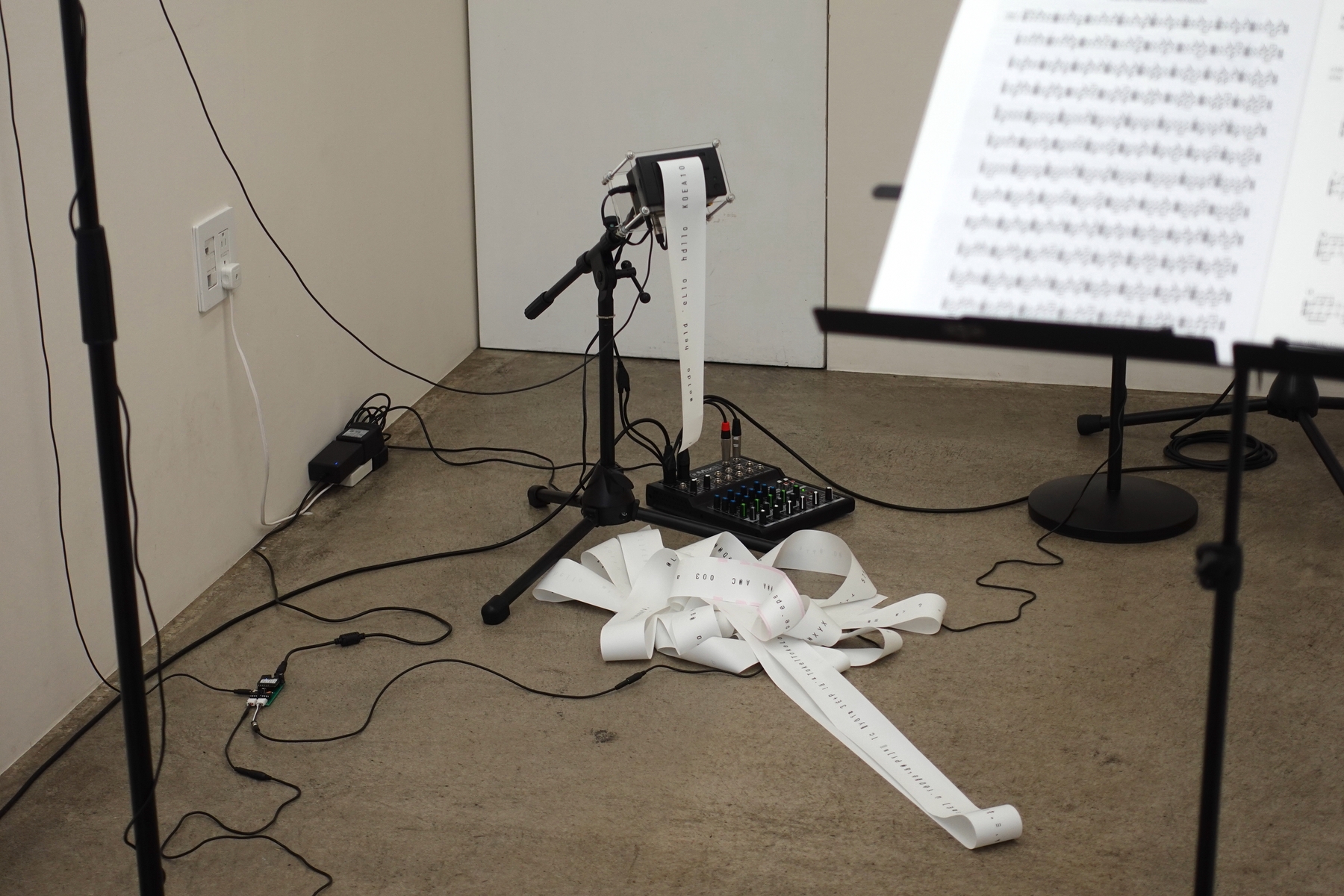
 Image: NTT InterCommunication Center, Tokyo
Keita Miyashita’s 'A Communication Protocol for Two Performers' takes its cue from Steve Reich’s 'Clapping Music' and recasts handclap patterns as a system for transmitting information. According to the artist’s project page, the work was developed in 2022 and presented as a sound, communication and music device that uses rhythmic signals to send and interpret messages.
The piece is built around a protocol in which handclap patterns are encoded as binary data. In Miyashita’s description, the patterns are arranged as clap1 and clap2, producing 24 bits of information that can be divided into three bytes. Read in reverse, the system can also transmit one byte of data through four claps, and ASCII values can be sent to form arbitrary strings of text.
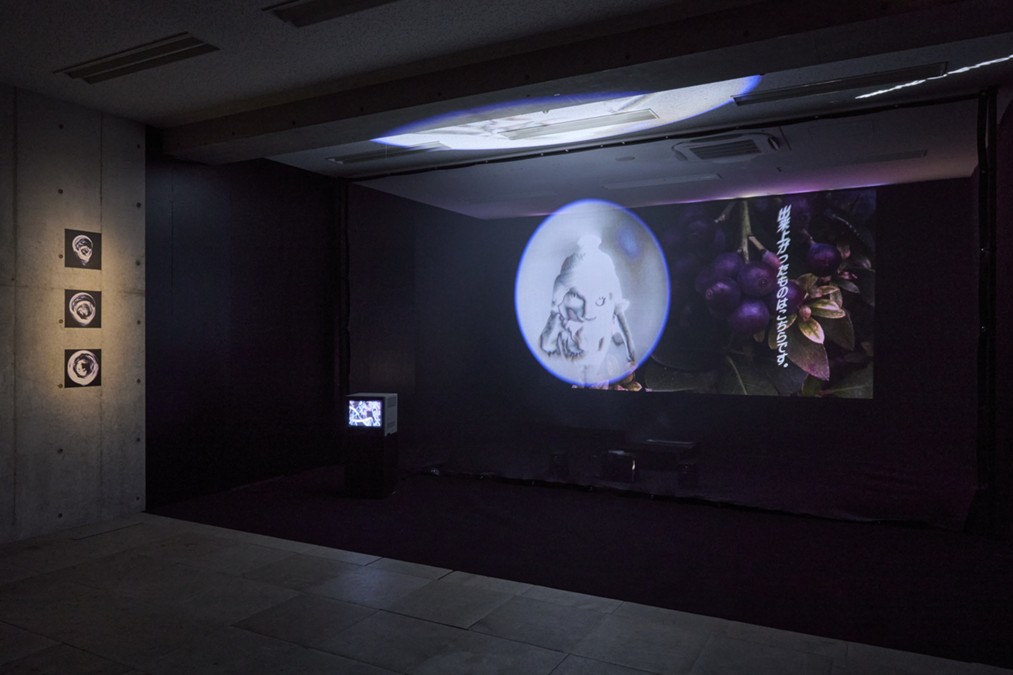
The work does not treat rhythm only as an abstract musical pattern. Instead, it uses two transmitters placed in the exhibition space and synchronized by an external metronome. Each transmitter emits sound in time with the click, the sound is picked up by microphones, converted into electrical signals, and then decoded by a receiver into a message. That decoded message is then sent to a printer and output as readable text.
Miyashita’s project page describes the space itself as a communication channel. The artist’s text says the sound heard in the room may be understood either as rhythmic music or as a mechanical signal, depending on whether the viewer shares the protocol. The system is framed as a new interpreter for sounds that have usually been listened to self-referentially as music, while also allowing signals made for information transfer to take on the character of music for those outside the code.
The project also places 'A Communication Protocol for Two Performers' in relation to another work, 'A Device for Clapping Music', and notes a sound performance at NxPC.Live Vol.54. On the project page, the artwork appears alongside the Japanese title '2人のパフォーマーのための通信規約 / A Communication Protocol for Two Performers'.
Miyashita’s site identifies the work with the tags 'sound', 'communication', 'device' and 'music', underscoring the piece’s cross-disciplinary setup. The project material presents it as an artwork that is at once a performance score, a transmission system and a practical demonstration of encoded rhythm, with the metronome click providing the shared timing that keeps sender and receiver in step.