 Image: Museo delle Porcellane, Florence
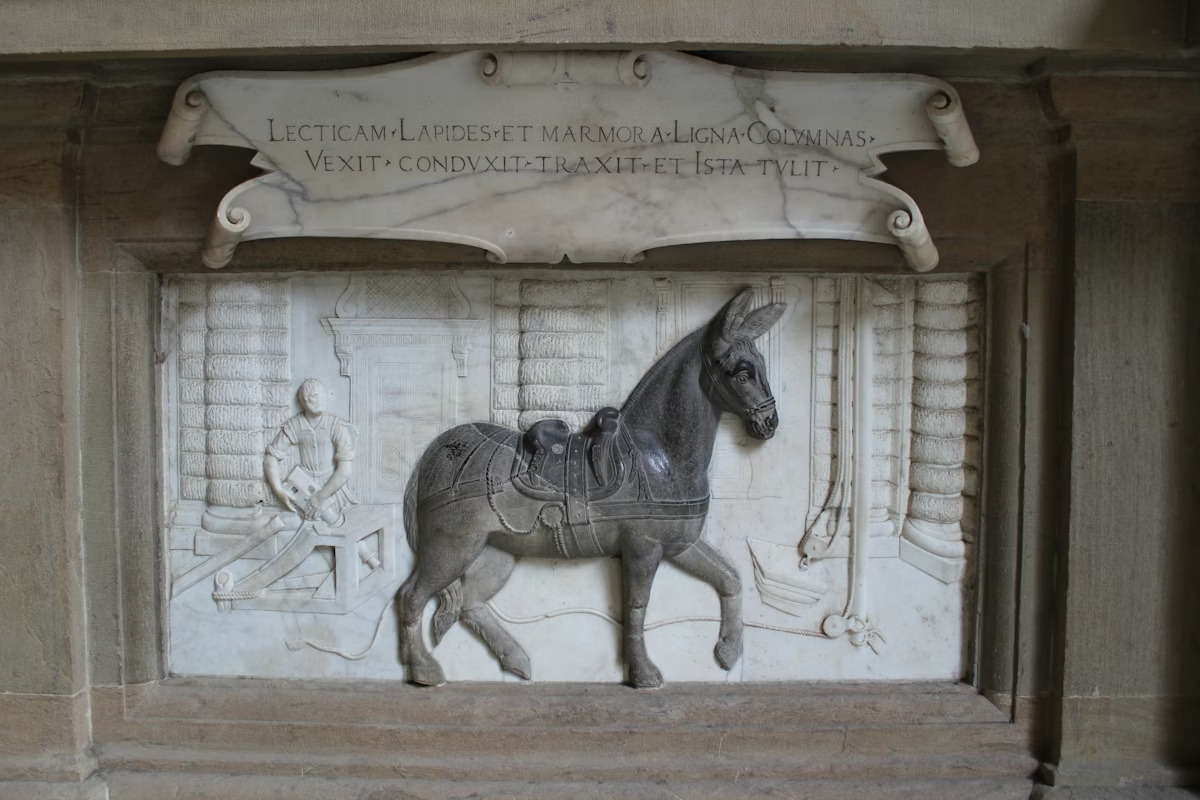
The Gallerie degli Uffizi has drawn attention to 'La Muletta', the bicrome relief known as the “ritratto della mula” and installed in the Cortile dell’Ammannati at Palazzo Pitti in Florence. The museum’s online notice presents the work as a notable detail of the palace complex, linking the relief to the building campaign of Palazzo Pitti and to the hard labor behind its construction.
According to the Uffizi, the relief dates to 1570–75 and is attributed to Bartolomeo Ammannati’s workshop. It is made of white and grey marble and measures 88 by 174 centimetres. The work is set in the left side of the courtyard portico, beneath a niche occupied by the 'Ercole in riposo', where the relief shows the profile of the so-called “muletta”, the mule credited in the inscription with hauling stone, marble, timber and columns during the years of work on the palace.
The Latin cartouche on the work reads: “LECTICAM LAPIDES ET MARMORA LIGNA COLVMNAS / VEXIT CONDVXIT TRAXIT ET ISTA TVLIT”. The museum’s text says the inscription recalls the mule’s role in transporting materials for Palazzo Pitti’s construction under Ammannati’s direction. The same account notes that the relief’s position below the resting Hercules may carry a moralizing meaning, contrasting the animal’s strenuous labor with the exhausted hero above.
The relief’s setting also preserves a view of the palace construction site as it appeared in the sixteenth century. The Uffizi describes the background of the marble slab as worked in 'stiacciato', the shallow relief technique associated with Florence since the early Quattrocento for scenes rendered in perspective. In this case, the background depicts Palazzo Pitti under construction and includes references to the lifting machinery used at the time, said to have been operated by the mule itself.
The museum text, written by Laura Donati, also notes that the carving does not appear to be especially refined in its anatomical detail, and suggests it was likely made by a workshop assistant rather than directly by the master. That detail reinforces the object’s position as both a document of artistic practice and a historical record of the building process at one of Florence’s major Renaissance palaces.
Palazzo Pitti remains the stated museum location for the work, with the relief belonging to the Cortile dell’Ammannati collection area. The Uffizi’s online page identifies the subject simply as 'La Muletta' and 'Ritratto della mula', and places it within the broader context of Cinquecento sculpture and the decorative program of the courtyard at Palazzo Pitti.