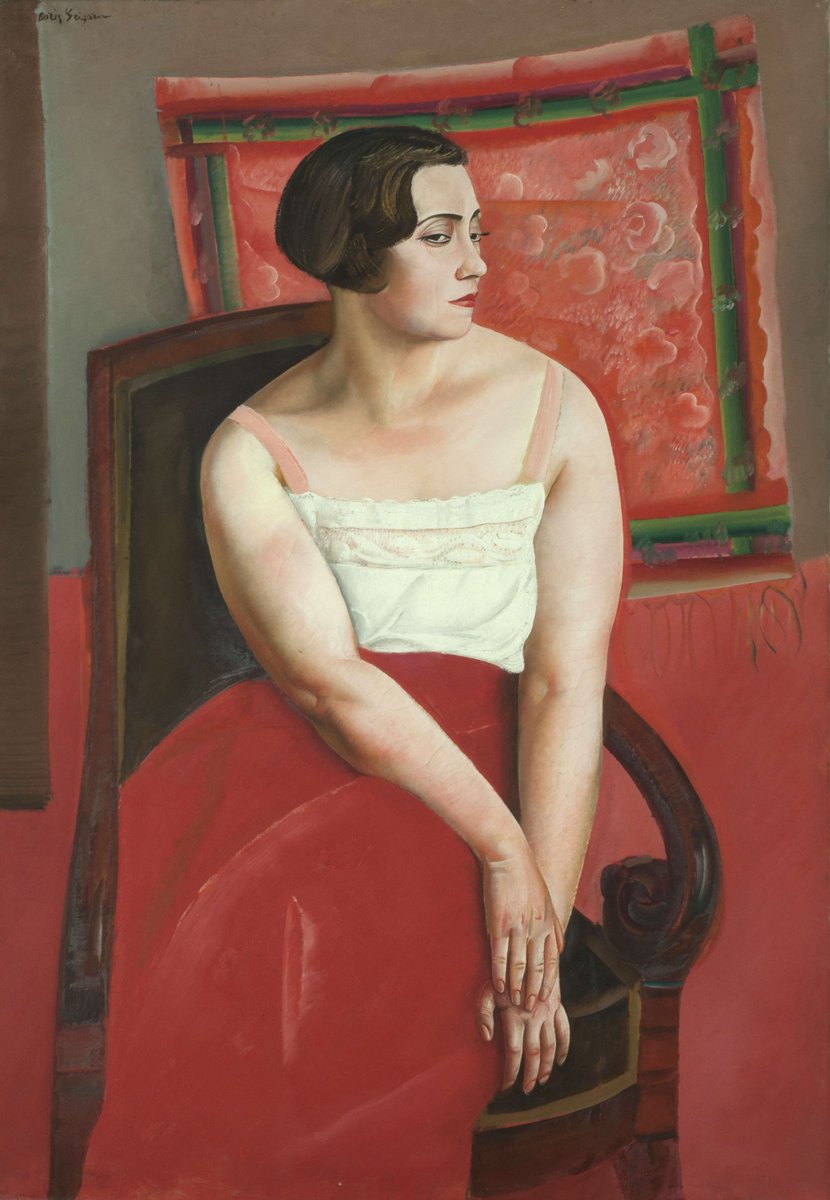
 Image: National Museum of Fine Arts, Argentina
The National Museum of Fine Arts in Argentina has highlighted a work by Boris Grigoriev as part of its “La Obra del Día” series, drawing attention to the artist’s portrait “Mujer joven.” The museum describes the painting as a portrait of a lady of Parisian high society, noted especially for the sharply outlined eyes and heavy eyelids that define the sitter’s expression.
The museum’s post places the work in the context of its gallery dedicated to interwar modern art, indicating that the painting is on view there. By foregrounding a single object from the collection, the institution is using its daily spotlight format to guide visitors toward a specific work and to frame it within the broader story of modern art between the wars.
Grigoriev’s portrait stands out in the museum’s brief description for its attention to facial detail and social identity. Rather than emphasizing a grand historical scene, the museum highlights the refinement of the sitter and the painting’s psychological effect, suggesting why portraits of this period continue to attract close viewing in museum settings.
The museum’s choice also underscores the value of collection-based programming. Short-form posts such as “La Obra del Día” can bring renewed visibility to works that are already on display, helping audiences encounter them not simply as part of a room of objects but as individual works with distinct artistic and historical presence.
That emphasis matters in a museum devoted to presenting art in a broader historical framework. By placing “Mujer joven” in the interwar modern art room, the National Museum of Fine Arts links the painting to a period of experimentation and social change that shaped modern European visual culture. Even in a concise social media post, the institution signals that the work belongs to a wider conversation about modern portraiture, taste, and representation.
For visitors and online followers alike, the post serves as a reminder that museum programming is not limited to major exhibitions or acquisitions. Sometimes the most direct curatorial statement is a single artwork, carefully identified and contextualized. In this case, the museum’s focus on Boris Grigoriev’s “Mujer joven” invites renewed attention to a portrait that bridges artistic style, social image, and the museum’s interwar modern art display.