 Image: University of Michigan Museum of Art
The University of Michigan Museum of Art is presenting a long-running exhibition that reframes protest not as background history but as a core force in American culture. American Sampler: Activating the Archive, on view in UMMA’s Vertical Gallery, looks back to the period from the 1950s through the 1970s, when movements for Black freedom, civil rights and resistance to the Vietnam War reshaped the nation. The museum says the exhibition runs from Jan. 24, 2026, through summer 2027.
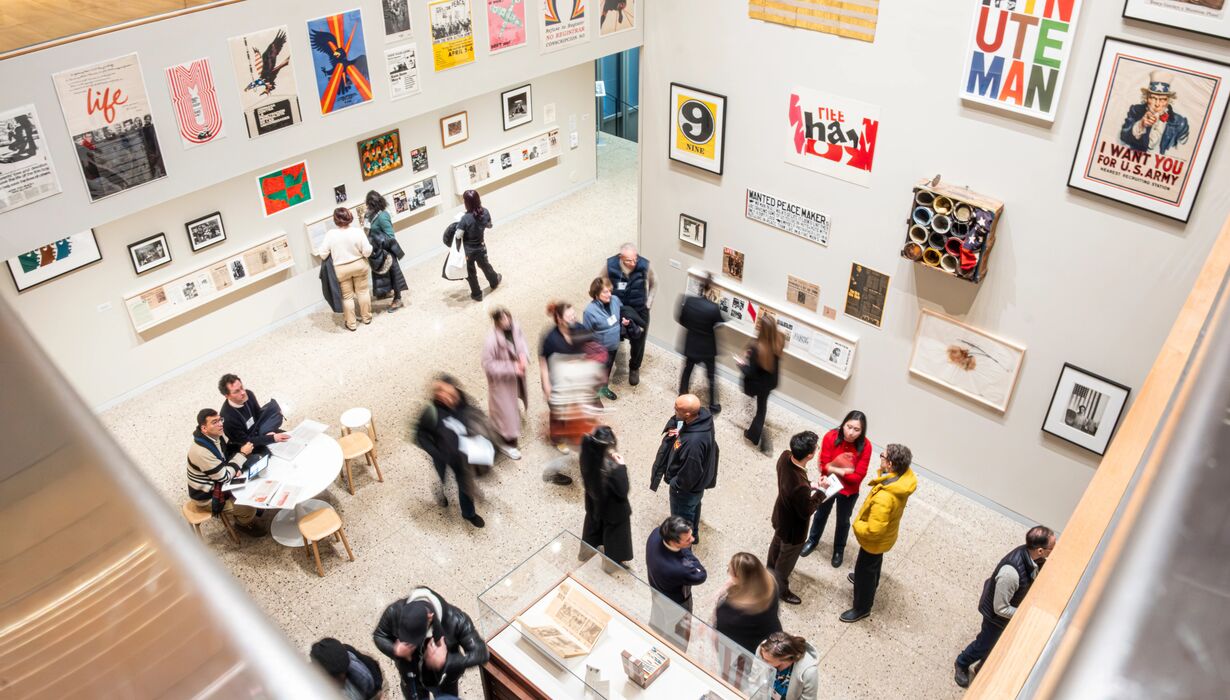
Curated by artist and MacArthur Fellow Julie Ault in collaboration with the University of Michigan’s Joseph A. Labadie Collection of political dissent, the project brings together artworks, archival documents and rare ephemera. UMMA describes the installation as transforming its towering Vertical Gallery into a “living record of activism,” using the gallery itself as an interpretive space for the visual language of dissent.
The exhibition is built around the idea that protest depends on communication as much as conviction. According to UMMA, American Sampler explores “the interconnected movements for Black Freedom, civil rights, and resistance to the Vietnam War—and the visual strategies that gave them power.” The museum says the presentation asks visitors to consider how acts of dissent are built, communicated and remembered, an approach that gives equal weight to art objects and the printed and documentary traces of political struggle.
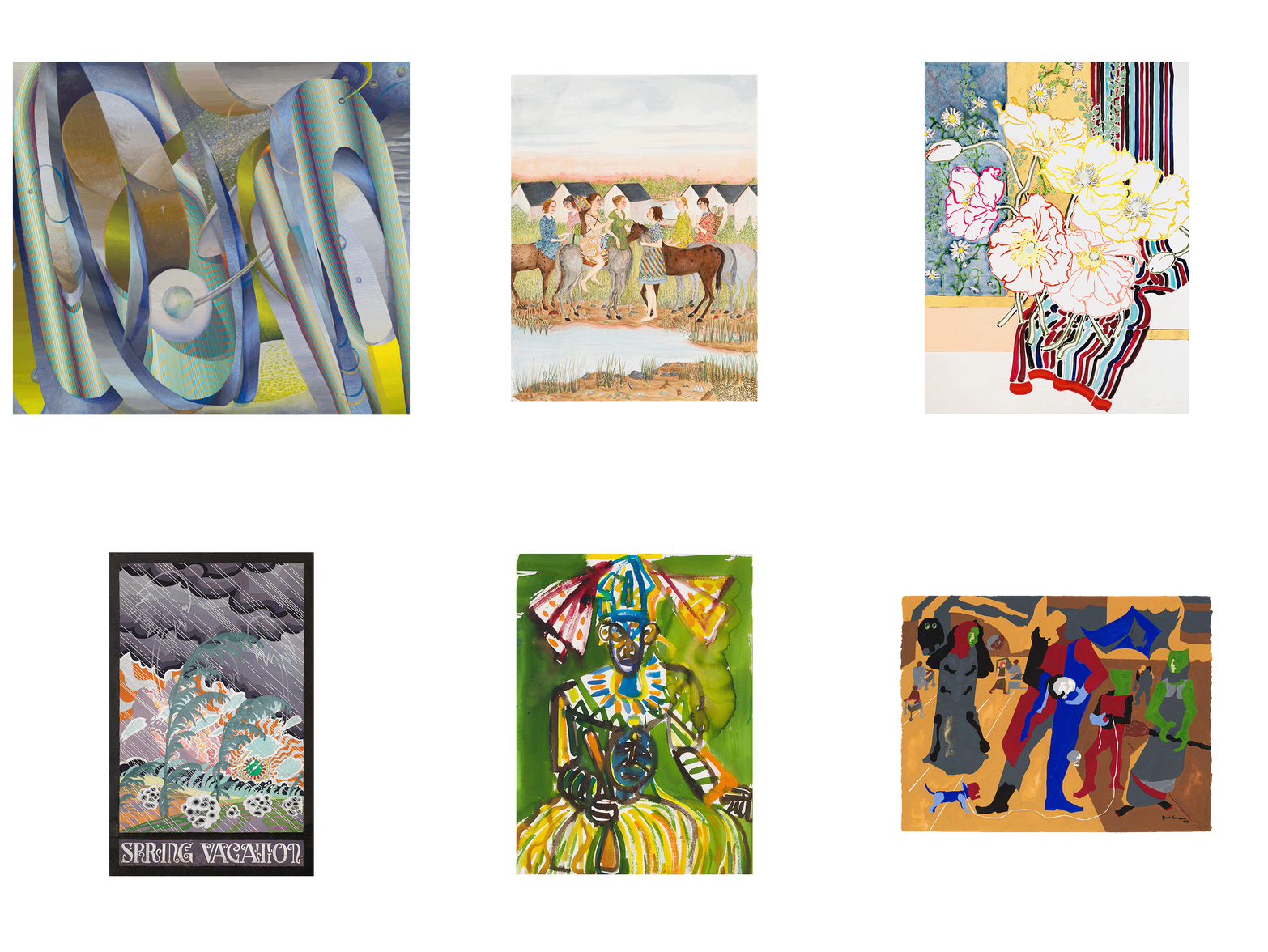
Among the named artists and materials included are works by Romare Bearden, Robert Indiana, Corita Kent, Jacob Lawrence, Nancy Spero and Félix González-Torres, alongside protest posters, Freedom Rider testimonials, GI resistance material and courtroom records from the Chicago Seven trial. UMMA’s exhibition text emphasizes the juxtapositions between art and activism, presenting them as part of a shared visual culture rather than separate histories.
The show also arrives with a forward-looking frame: UMMA says it is opening in advance of the United States’ 250th anniversary, and that Ault’s project offers a reflection on dissent as a cornerstone of American democracy and identity. That context gives the exhibition wider institutional significance, positioning it not just as an archival presentation but as a statement about how museums can interpret contested political histories through art.
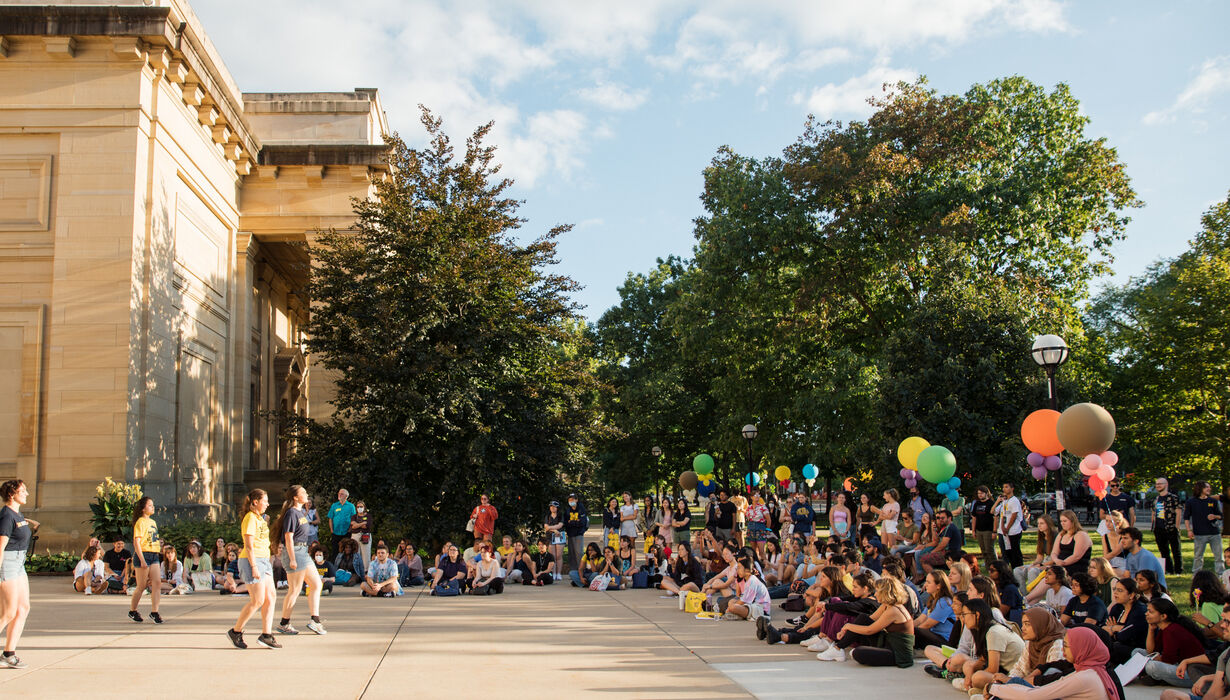
UMMA has also programmed related public events around the exhibition, including talks, tours, film screenings and print demonstrations earlier in 2026. The museum’s website lists an opening-day conversation on Jan. 24, 2026, plus multiple exhibition tours and a film sampler series later in the spring. Those events underscore the exhibition’s active approach: it is designed less as a static display than as an evolving forum for looking at activism through material culture.
The museum’s framing of American Sampler matters because it reflects a broader turn in contemporary art institutions toward archives, political memory and social movements as subjects worthy of major exhibition treatment. By placing canonical artists beside movement ephemera and institutional records, UMMA is asking audiences to see protest as something constructed through images, texts and objects — and to recognize those materials as part of the art historical record.