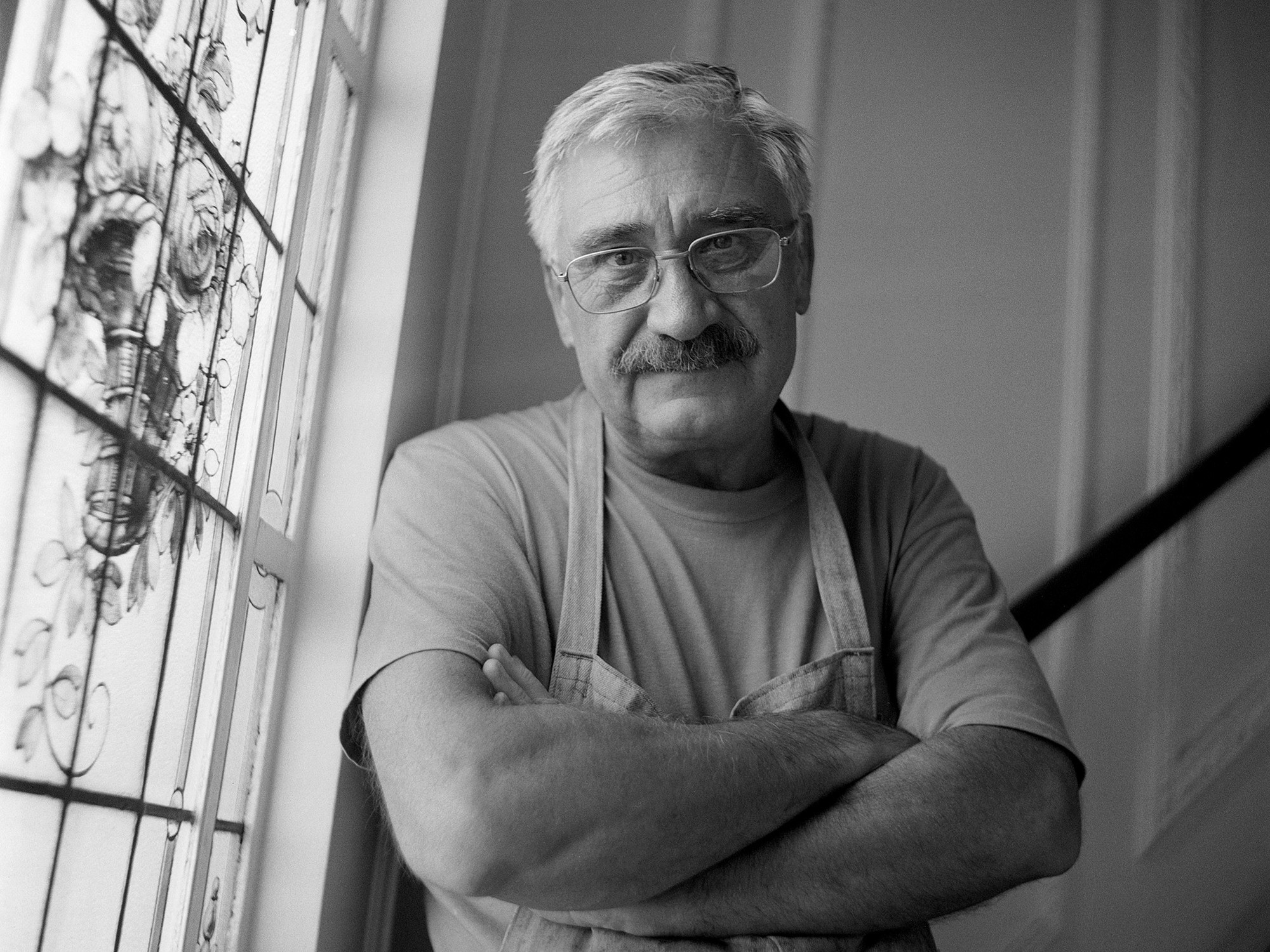
 Image: National Museum of Fine Arts, Argentina, Buenos Aires
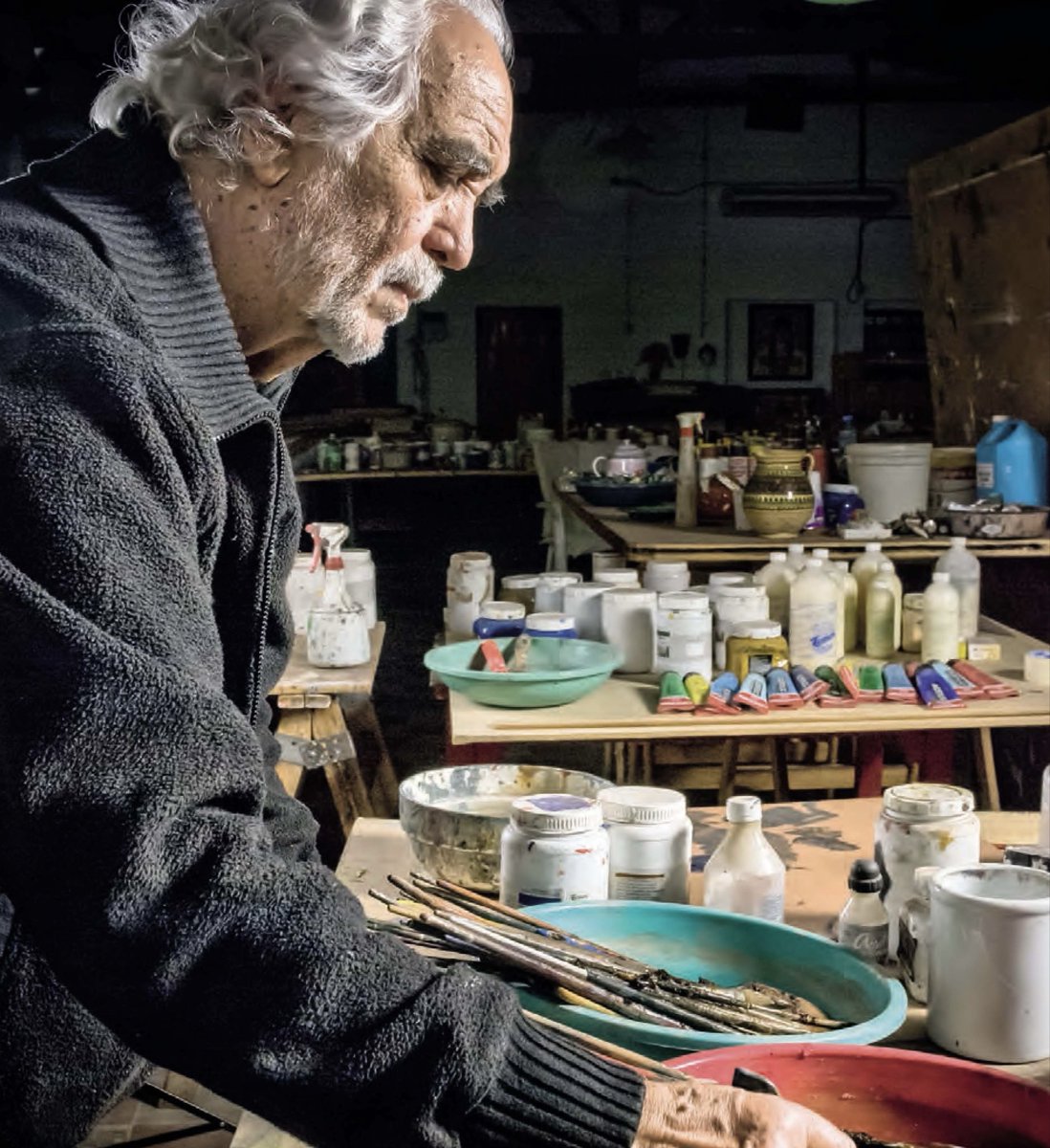
Andrés Duprat, director of the National Museum of Fine Arts in Buenos Aires, has written a tribute to Juan Carlos Distéfano that positions the artist as a central figure in Argentina’s visual culture. In an essay published in Clarín’s Revista Ñ, Duprat presents Distéfano as both a graphic designer and sculptor whose work combined technical research, material experimentation and a close attention to visual impact.
The text frames Distéfano as an artist who helped define key aspects of 20th-century Argentine visual language. Duprat describes him as a “true scholar of art,” recalling a figure marked by broad cultural knowledge, sharp observation and a lasting interest in exhibitions, books and films. The tribute is as much an account of an artistic practice as it is a portrait of a person remembered by colleagues for warmth and generosity.
A central part of Duprat’s account focuses on Distéfano’s time in Italy in the 1960s, where he studied classical sculpture directly and later reinterpreted those forms through the concerns of his own period. Duprat links that experience to a sculptural practice centered on the body and defined by tension, torsion and formal disruption. He notes that Distéfano broke with the sculptural conventions of his time through the use of polyester reinforced with fiberglass, synthetic resins, industrial paints and other experimental procedures unusual for the period.
Duprat also highlights Distéfano’s work at the Instituto Di Tella, where he created and directed the Graphic Design Department. From there, he helped build the institution’s visual identity and professionalize design within a major avant-garde environment. In Duprat’s account, that role placed Distéfano at the center of modern communication design during the 1960s, when artistic renewal was reshaping Argentine culture.
The article also recalls the difficult political context of the late 1970s, when Distéfano left Argentina for Barcelona with his wife, the writer Griselda Gambaro, after Gambaro’s novel 'Ganarse la vida' was banned by the military dictatorship. They returned in the 1980s and eventually settled permanently in Argentina. Duprat’s remembrance places that exile within Distéfano’s broader career rather than treating it as an isolated episode.
The National Museum of Fine Arts has had a long relationship with Distéfano’s work. Its collection includes several of his representative pieces, among them 'Escalera' (1976), 'El mudo' (1973) and 'Emma traviesa II. Homenaje a Lino Enea Spilimbergo' (2015), which entered the collection in 2018 when he received the National Prize for Artistic Career. The museum mounted a retrospective in 1998 curated by Martha Nanni, and in 2022 it again presented his work in the temporary exhibition pavilion with 'Juan Carlos Distéfano. La memoria residual', curated by María Teresa Constantin.
Duprat closes by returning to the singularity of Distéfano’s sculptural language, writing that each of his works carries a unique way of looking at the body, making it speak and revealing the human condition in matter. The tribute appears as part of Clarín’s Revista Ñ, with Distéfano’s portrait credited to Gian Paolo Minelli, courtesy of Fundación Larivière.