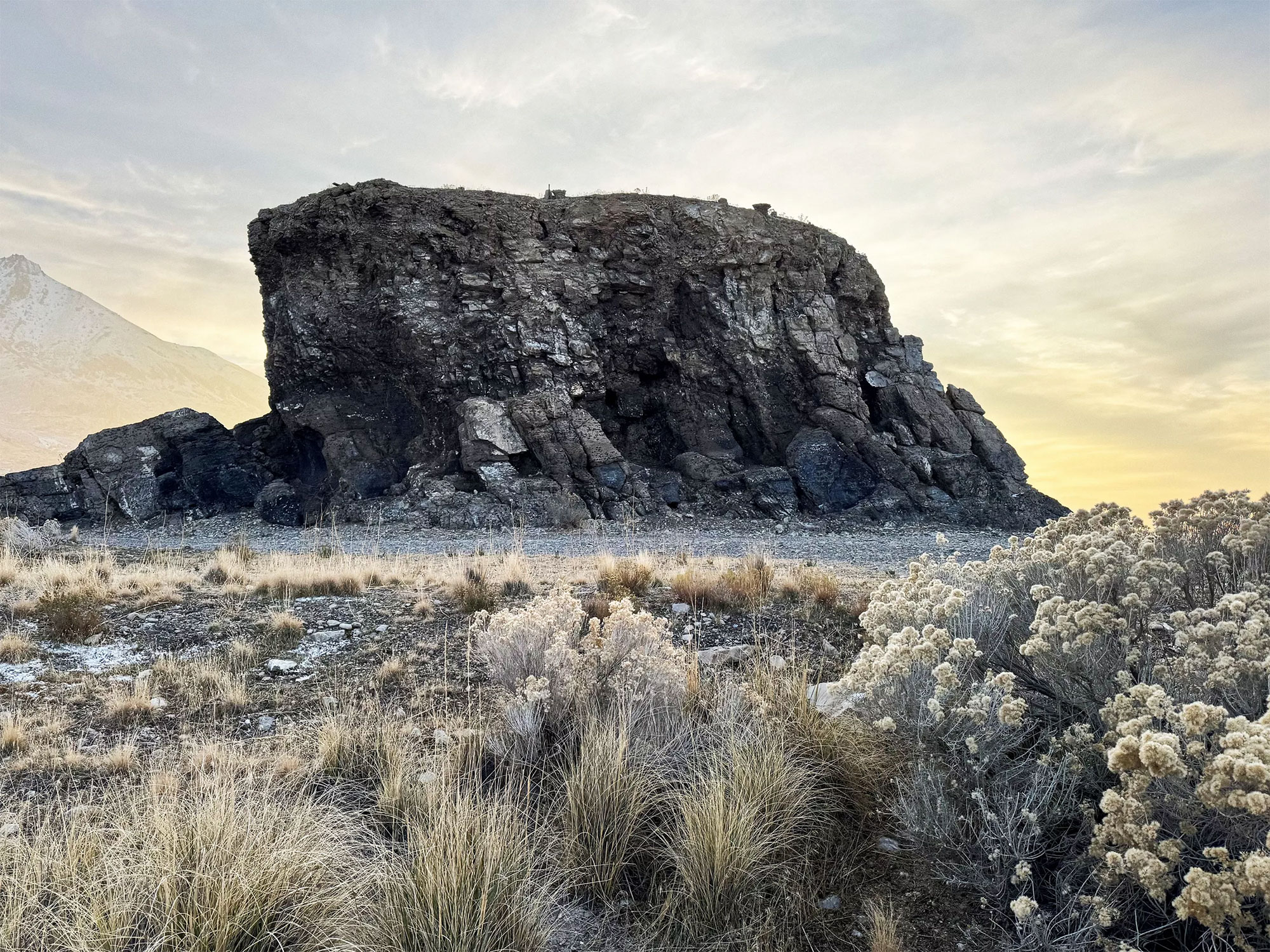
 Image: Utah Museum of Contemporary Art, Salt Lake City
Alfredo Jaar’s ‘Inferno & Paradiso’ is currently on view at Photo Elysée in Lausanne and at the Utah Museum of Contemporary Art in Salt Lake City, where his related exhibition ‘The End’ runs through September 5, 2026. Together, the two presentations show Jaar working with photography and projection to confront environmental collapse, global conflict and the emotional strain produced by images of crisis. Both exhibitions are listed in current gallery and museum announcements shared by Galerie Thomas Schulte, which represents the artist.
At Utah MOCA, ‘The End’ occupies the museum’s Projects Gallery and focuses on the disappearance of the Great Salt Lake. The museum says the work confronts the lake’s decline, which it describes as the result of excessive water extraction. According to the museum text, the lake has lost 73 percent of its water and 60 percent of its surface area since the mid-nineteenth century. Jaar’s photographs, the institution says, set the lake’s natural beauty against its accelerating devastation.
The Utah presentation also places the work in a broader environmental frame. The museum cites Joel Ferry, a former Utah state lawmaker and current commissioner of the Utah Department of Natural Resources, who described the situation as an “environmental nuclear bomb.” The museum notes that the lake’s decline has led to dangerously high salinity levels and exposed toxic dust containing arsenic, lead and mercury, creating a serious public health risk for residents and endangering local ecosystems. Jaar is quoted on the museum page as saying that he chose to print the images “in a small, unspectacular format, as a kind of visual whisper, a lament for our dying planet.”
Photo Elysée’s ‘Inferno & Paradiso’ takes a different form while pursuing a related ethical question: how images of suffering and hope shape our perception of the world. The museum describes the work as an immersive slide-projection exhibition in which Jaar invited 20 contemporary reportage photographers to select two images from their archives — one they considered the most painful they had taken and one they saw as the most hopeful. The exhibition presents 40 photographs in 20-minute cycles, with all the images associated with “heaven” projected at once before the “hell” sequence appears. Visitors enter a darkened room and are surrounded by the alternating projections.
Photo Elysée says the exhibition gathers work by photographers including Samar Abu Elouf, Lynsey Addario, Motaz Azaiza, Véronique De Viguerie, Maxim Dondyuk, Abdulmonam Eassa, Donna Ferrato, Johanna-Maria Fritz, Olivier Jobard, Bülent Kilic, Alice Martins, Lorenzo Meloni, Finbarr O’Reilly, Darcy Padilla, Pablo Ernesto Piovano, Hannah Reyes Morales, Lindokuhle Sobekwa, Brent Stirton, Anastasia Taylor-Lind and Laetitia Vançon. The museum identifies the project as one first shown in Cortona in 2025 and says it was co-produced with the nonprofit On The Move for the Cortona On The Move international photography festival, with curators Paolo Woods and Kublaiklan.
The Lausanne museum also frames the exhibition within Jaar’s larger practice. Its artist biography notes that he is a Chilean artist, architect and filmmaker who lives and works in Lisbon, and says he has exhibited widely, including at the Venice Biennale, documenta and Rencontres d’Arles. The same page highlights the artist’s long engagement with politically charged subjects, including his visit to Rwanda in 1994 after the genocide there, which the museum says radically changed his artistic practice. Photo Elysée lists the exhibition dates as June 26 to November 1, 2026, while Utah MOCA’s ‘The End’ runs from June 26 to September 5, 2026.