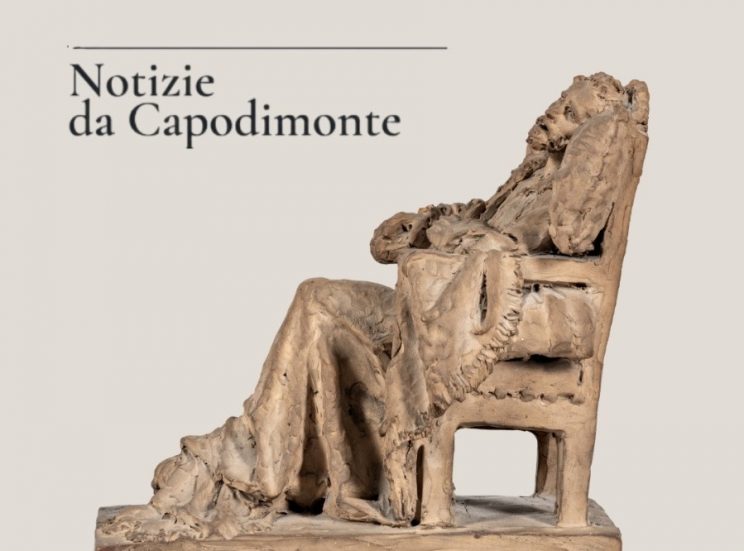
 Image: Museo di Capodimonte, Naples
It follows a recent retrospective organized by Rome’s Palazzo delle Esposizioni, which presented Fogli’s seven Atlases and principal cycles from the past 25 years.
Fogli defines the project’s subject as Naples’s “galassia immaginale partenopea,” asking which city could better inspire an atlas of devotions in which a statue, volcano, dream, daily ritual, skull, mask or exceptional footballer can each have a particular cult.
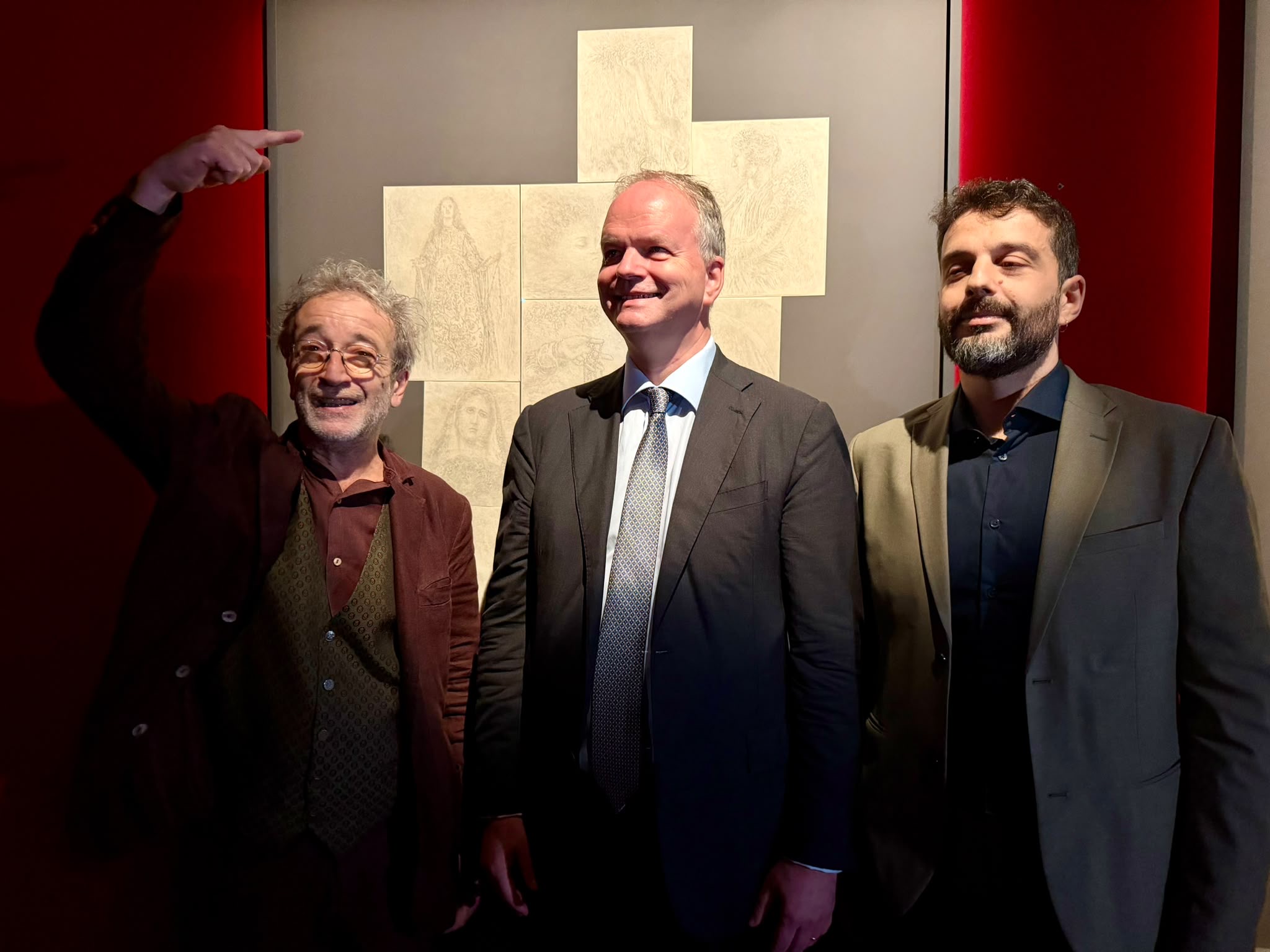
The exhibition is arranged across three connected rooms: a central room of ‘Atlas Partenope’ drawings, a room placing them in dialogue with Fogli’s repainted holy cards and postcards, and a final room containing a new installation in raw clay. Its central focus is a group of ten ‘Atlas Partenope’ polyptychs, charcoal drawings in which viewers can find figures from works in Capodimonte, other museums and churches in Naples, domestic and street life, and films and theatre productions made in the city.
Across drawing, painting and sculpture, the three rooms transform pre-existing images belonging to a shared memory, including postcards, holy cards, the Atlas’s image repertoire and a reanimated skull motif. The final room pairs the phrase “Cenere torna argilla” with an installation conceived for the exhibition.
Fogli calls the Atlas an atlas of “images of the heart” and says that ruins and images should be inhabited and reanimated rather than erased or deformed. The presentation occupies an ideal space beside the permanent installation commemorating Anna Maria Ortese, where Capodimonte can continue to host projects and unconventional perspectives on Naples.