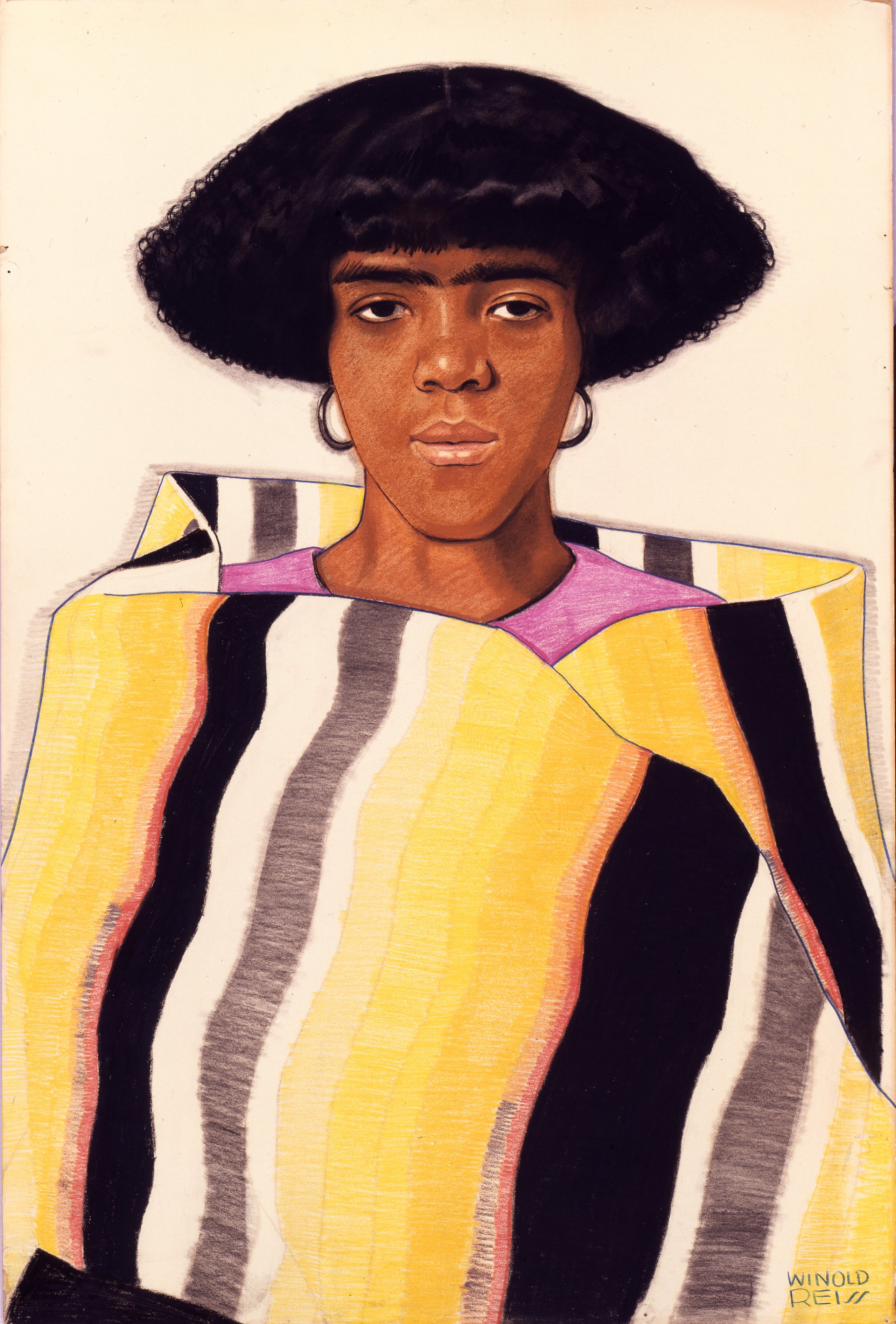
 Image: Winold Reiss, Harlem Girl with Blanket, ca. 1925. Private collection
To mark its 50th anniversary, the Museum Ludwig in Cologne is presenting "Along the Color Line – Traces of a Transatlantic Modernism," a large interdisciplinary survey on view from October 3, 2026, to March 7, 2027. Curated by Eboa Itondo, the exhibition looks at the ties between the art of the international Black diaspora and European modernism, setting modernist and contemporary works by Black artists, many on loan from abroad, in dialogue with the museum's own collection. Painting, sculpture and drawing appear alongside literature and music.
The title comes from the writings of the African American sociologist W. E. B. Du Bois, who had studied in Berlin and in 1936, as a journalist for The Pittsburgh Courier, visited Cologne, Hamburg and Stuttgart, attended the Bayreuth Festival and reported from the Berlin Olympics. His accounts are shown together with those of other figures of the Black diaspora in Europe, among them the philosopher Alain Locke, who taught at Howard University in Washington, D.C. Howard, where Locke's writings and his collection of international art are now held, has lent works to the show, among them Romare Bearden's "Jazz (Chicago) Grand Terrace Ballroom" (1964). According to Howard, Kathryn E. Coney-Ali, executive director of the Howard University Gallery of Art, is among the authors of the exhibition catalogue.
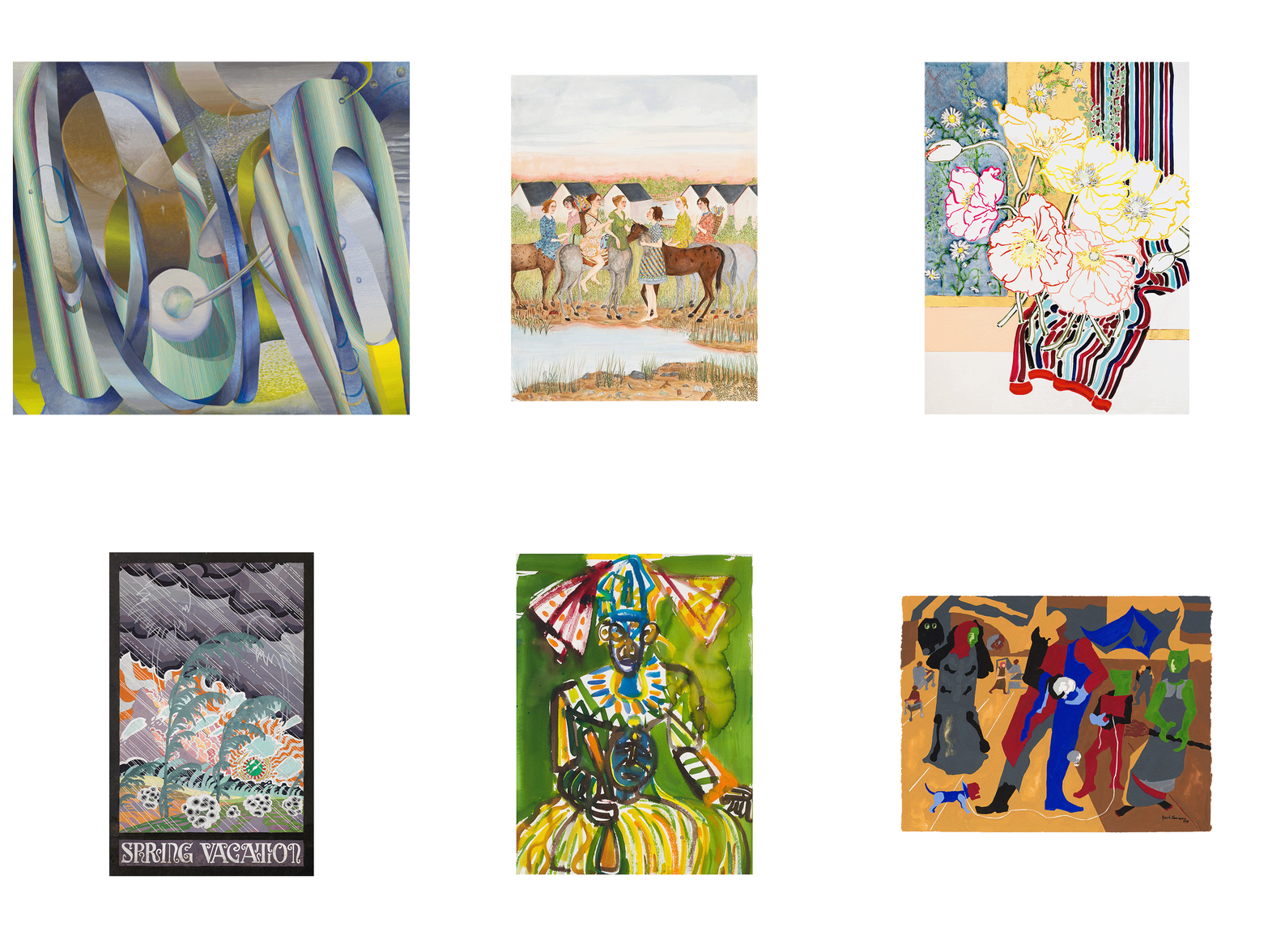
The project grew out of a study of the museum's holdings, which, as in most European museums, revealed almost no works by Black artists, especially in modernism. The museum links this gap to long-standing colonial and social power structures. Drawing on the Harlem Renaissance and the Négritude movement, the exhibition follows how Black artists built narratives that pushed back against colonial and Eurocentric ways of seeing, and how those exchanges between continents still shape artists today.
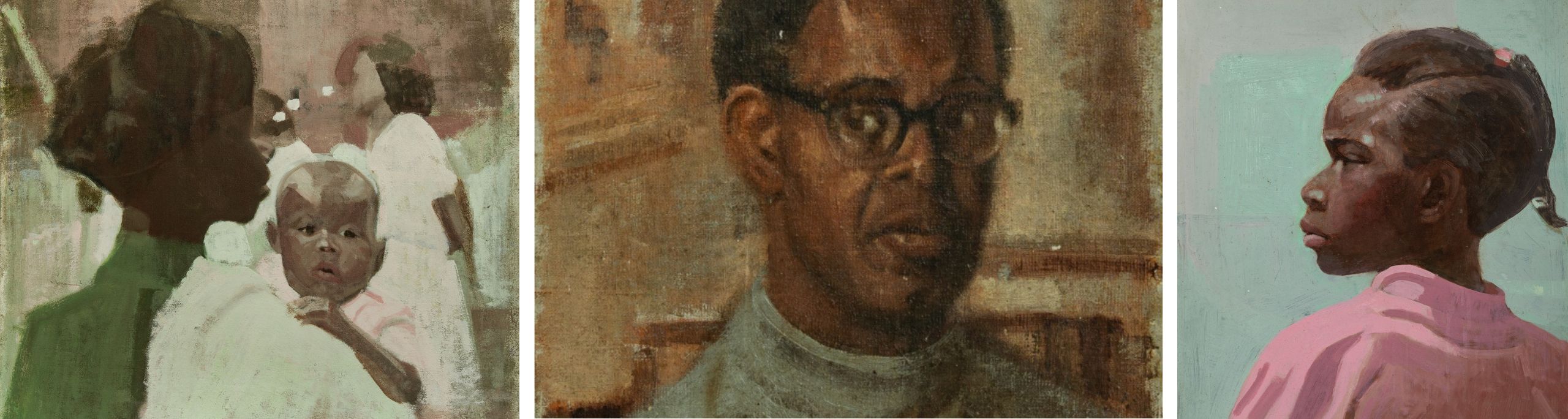
A central place is given to the German American artist James Gregory Atkinson (born 1981), whose nonlinear archive of images, objects, texts and oral histories addresses African American history and the history of Black people in Germany. Mildred Thompson, who lived in Düren in the 1960s and studied at Howard, gives the show a regional anchor. Ahead of the opening, the museum acquired works by Thompson, Herbert Gentry and Iba Ndiaye, which now join the loans in a conversation with the collection's core themes of European modernism and American postmodernism.