 Image: Fundació Joan Miró, Barcelona
The Fundació Joan Miró in Barcelona has announced a summer programme that frames the museum as a “climate and artistic refuge,” pairing exhibitions, guided tours and evening music with the landscape of Montjuïc. In an email sent on 30 June 2026, the foundation invited visitors to find “coolness, inspiration and calm” at the site through activities running through July and August.
The programme combines long-running collection visits with time-limited projects and public events. Among the most prominent dates is 4 July, when the ‘Música a la Miró IV’ series returns to the foundation’s terraces with an AMORE + Lorea concert. The event is presented as part of the fourth edition of the series and in collaboration with the Grec Festival of Barcelona. According to the foundation, doors open at 9 pm, Lorea’s concert begins at 10 pm and AMORE follows at 10:45 pm, with tickets priced at 29 euros, or 16 euros for friends of the foundation.
The music programme is described as being shaped around the edition’s theme, ‘Tech and Earth’. AMORE is presented by the foundation as one of the central proposals in the series, with a performance designed specifically for the terraces and in direct dialogue with Josep Lluís Sert’s architecture and the city views. The same event pairs AMORE with Lorea, whose project ‘los problemas se frotan’ is cited by the foundation as having positioned her within the national avant-garde scene. The email also notes that in 2026 she presents the new album ‘Miel de Mosca’ live, released by Barcelona label Urpa i Musell.
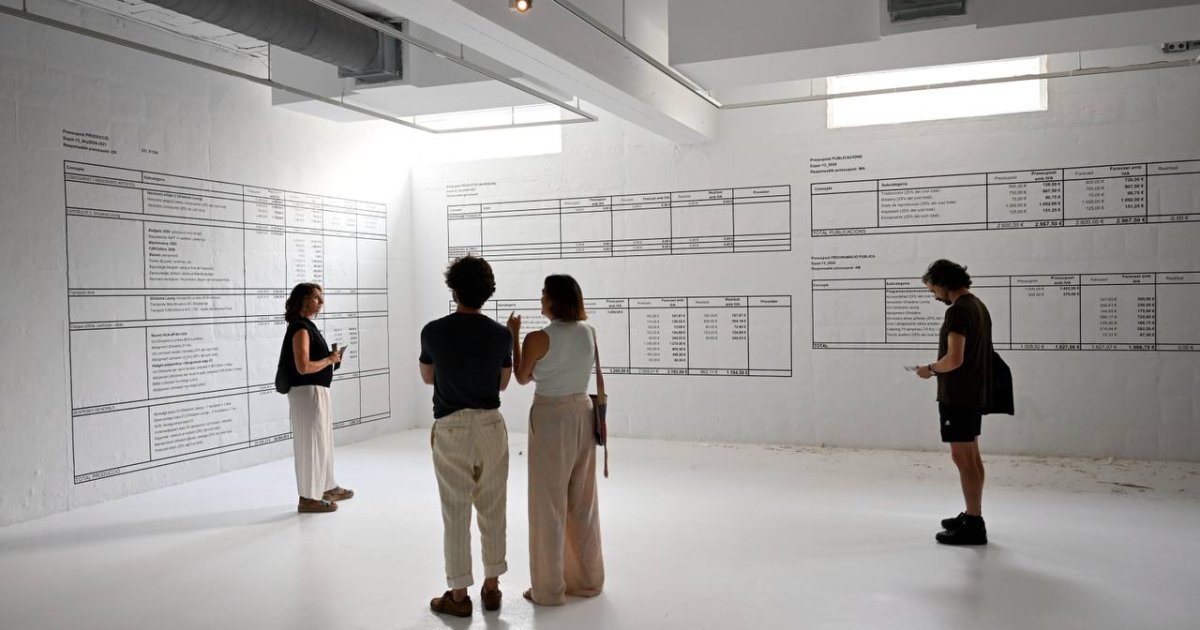
The exhibition component of the summer schedule includes ‘Maintenance’, a new project by Ghislaine Leung at Espai 13. The foundation lists the run as 17 July to 18 October 2026 and says it is curated by Alejandro Alonso Díaz, within the cycle ‘from 6:12 pm to 5:48 pm’. The exhibition text says Leung’s practice follows a series of scores that define the nature of each work and respond to the conditions of the structures in which they are shown. It adds that, by adhering to the parameters of the Fundació Joan Miró, the project focuses on mutual dependence and examines the vulnerability of institutional structures and the movement of bodies through them.
Leung, who lives and works in London, is described on the foundation’s site as developing a rigorously conceptual yet personal practice that pays attention to the reproductive aspects of institutional life, often through bullet-point instructions that redistribute the terms of artistic production. The page also lists solo exhibitions at Kunsthalle Basel, the Renaissance Society in Chicago, Simian in Copenhagen, Maxwell Graham in New York, Ordet in Milan, Museum Abteiberg in Mönchengladbach, Cabinet in London, Netwerk in Aalst, Künstlerhaus Stuttgart, Chisenhale in London, Reading International, Cell Project Space and WIELS in Brussels.
Alongside the new project at Espai 13, the foundation is offering guided tours of ‘Kapwani Kiwanga: Changing States’ until 13 September, and summer visits focused on ‘Joan Miró. Circles’, a new presentation of Joan Miró’s works and creative process. The foundation’s activities page also lists regular guided tours of the Joan Miró Collection in several languages throughout July and August, as well as participatory sessions such as ‘A/P (Artist’s Proof)’.
The summer newsletter also points visitors to ‘The Paths to the Fundació Joan Miró’, an itinerary through Montjuïc’s historic gardens and routes. The foundation describes the hill as a network of paths shaped by ancient settlements, quarries, fields, shrines and fountains, and suggests that visitors reach the museum on foot through routes such as the Teatre Grec Path, the Satalia Path, the Botxí Path and the Jardins Laribal Path.