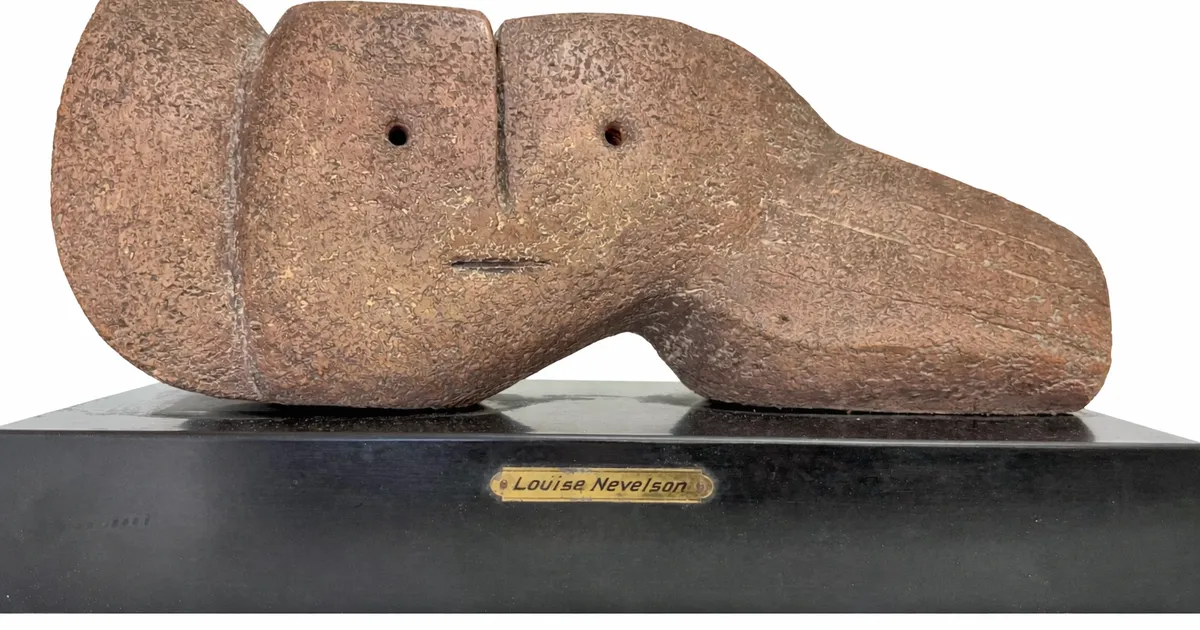
 Image: Lincoln Glenn, New York
Lincoln Glenn is presenting works by Louise Nevelson, the pioneering American sculptor best known for her monumental monochromatic assemblages made from found wood. The gallery’s online artist page and related exhibition materials position Nevelson within its broader focus on reviving the careers of artists active in the 1950s through the 1970s, especially those whose contributions to American art history have been overlooked.
The New York gallery, founded in 2022, says its program spans American art from the 19th century through the late 20th century, with particular attention to Abstract Expressionism and Color Field painting. It also frames its recent activity around artists who made significant contributions between the 1950s and 1970s. In that context, Nevelson appears as a key figure in Lincoln Glenn’s current emphasis on women artists and postwar American art.
According to the gallery’s artist biography, Nevelson was born near Kyiv, then part of the Russian Empire, and immigrated with her family to the United States in 1905, settling in Rockland, Maine. The biography notes that early exposure to discarded wood scraps at her father’s lumberyard shaped her artistic imagination. It also states that she moved to New York in 1920 after marrying Charles Nevelson, later studied with Hans Hofmann in Munich and New York between 1931 and 1932, worked briefly as an assistant to Diego Rivera, and supported herself as an art teacher through the Works Progress Administration during the 1930s.
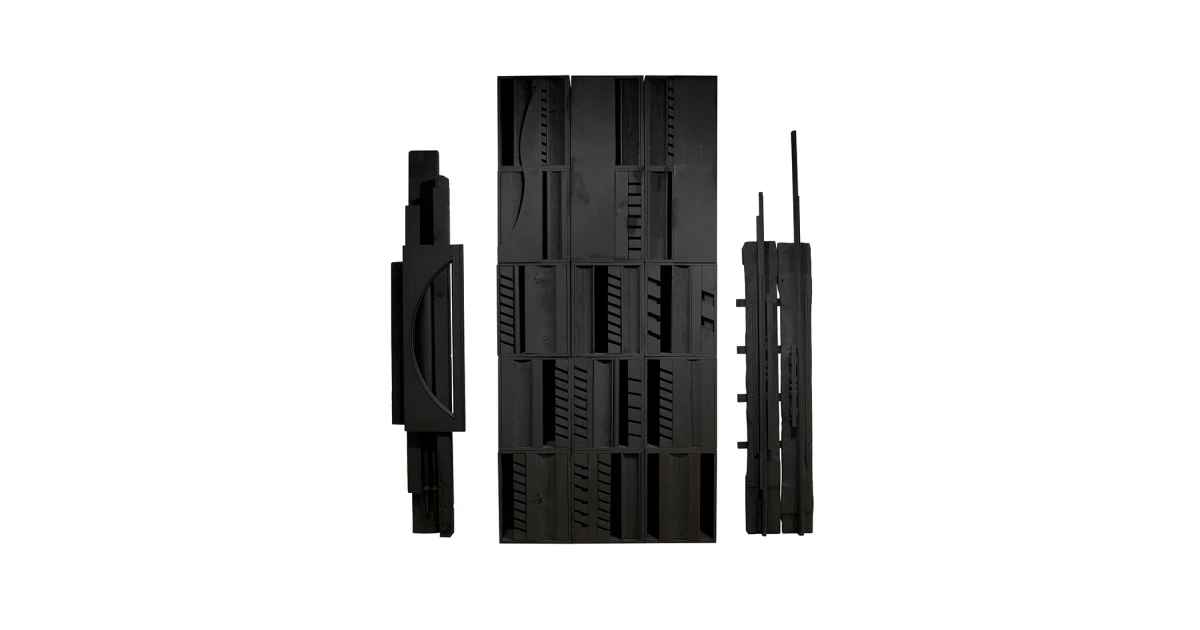
Lincoln Glenn describes Nevelson’s mature sculptures as carefully arranged fragments of wood, often salvaged from urban environments, assembled into box-like compartments and stacked into large wall-like structures. By painting these constructions a single color, most famously black, she unified the separate elements into cohesive forms that blur the boundary between sculpture and environment. The gallery says she began exhibiting in the 1940s but did not fully develop her signature style until the late 1950s.
Her breakthrough, as outlined on the gallery page, came with a 1958 exhibition of all-black environments and her inclusion in ‘Sixteen Americans’ at the Museum of Modern Art in 1959–60, where works such as ‘Dawn’s Wedding Feast’ brought her international acclaim. The biography adds that her reputation grew steadily in the 1960s, when she represented the United States at the Venice Biennale and received a major retrospective at the Whitney Museum of American Art.
Lincoln Glenn’s artist page for Nevelson also lists works including ‘Female Nude’, ‘Artnews Illustration’, ‘River Woman’ and ‘Abstract Figure with Face’, while the gallery’s related exhibition page identifies her as part of ‘Making Space: American Women Artists and the Century of Change’, on view July 2-August 22, 2026, at its Chelsea location. The exhibition catalogue essay accompanying ‘Making Space’ situates women artists within a longer struggle for recognition and notes that artists such as Nevelson had to navigate an art world shaped by male gatekeepers, even as they helped build opportunities for later generations.
The gallery’s current exhibition schedule also lists ‘250 Years: American Women Artists and the Nation’s Story’ for October 1-December 4, 2026, continuing the same institutional interest in women’s contributions to American art.