 Image: Secession Building, Vienna
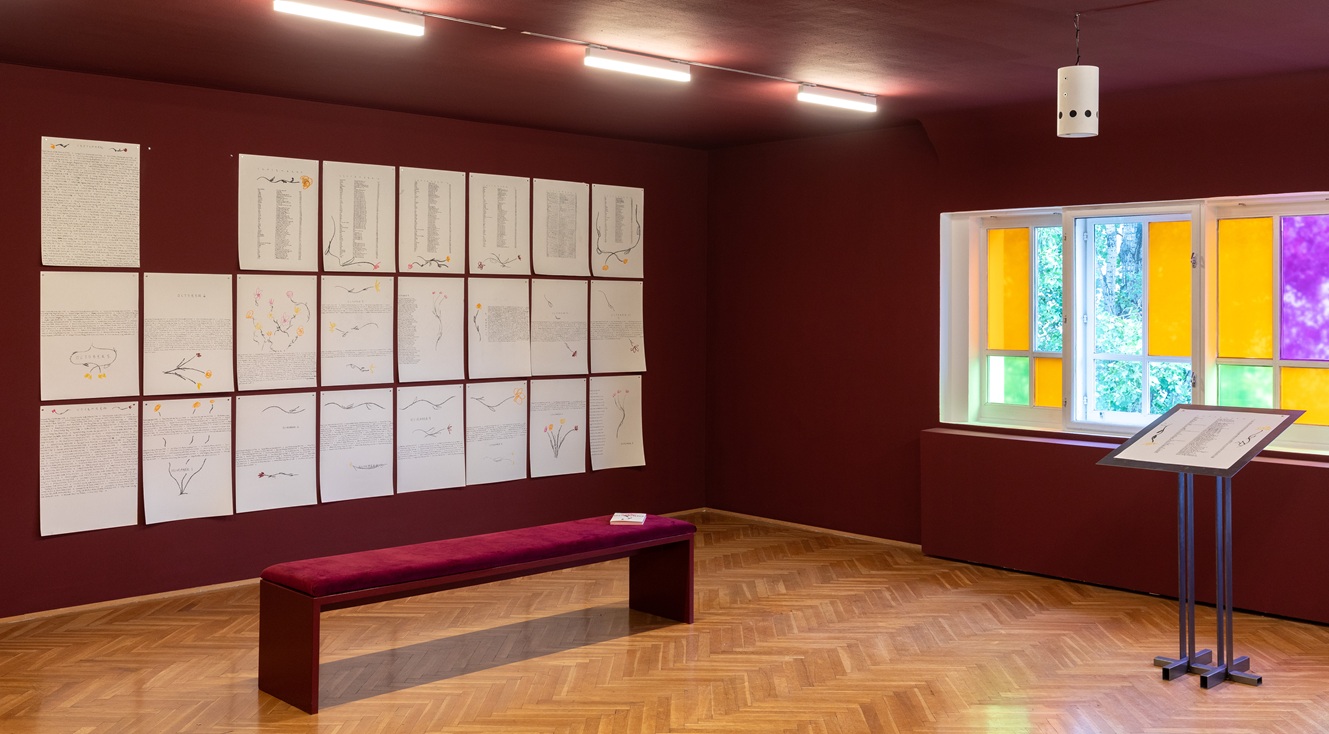
For the exhibition, Ellis has covered the walls with a calendar extending across its entire duration, with one sheet for every day and month.
The calendar’s charcoal lists are decorated with flowers drawn in oil pastel. They record the names of enslaved people who freed themselves in the 17th, 18th and 19th centuries, together with the dates and places of their escapes.
An audio recording plays in the room, with Ellis’s voice describing the installation and reading aloud the names assigned to each day.
Ellis’s artistic practice explores the intersections between Blackness, music, spirituality and non-normative language. Through this practice, Ellis creates spaces for healing and community.
The exhibition’s calendar proposes a form of remembrance that differs from the obligations and appointments normally marked on a calendar. Its daily act of reflecting on people who escaped offers an opportunity for commemoration, while the act of making a calendar becomes, in a sense, a way of writing history for the future. A prayer can be spoken or an ancestor honored on any day, regardless of which day it is.