 Image: Washington County Museum of Fine Arts, Hagerstown
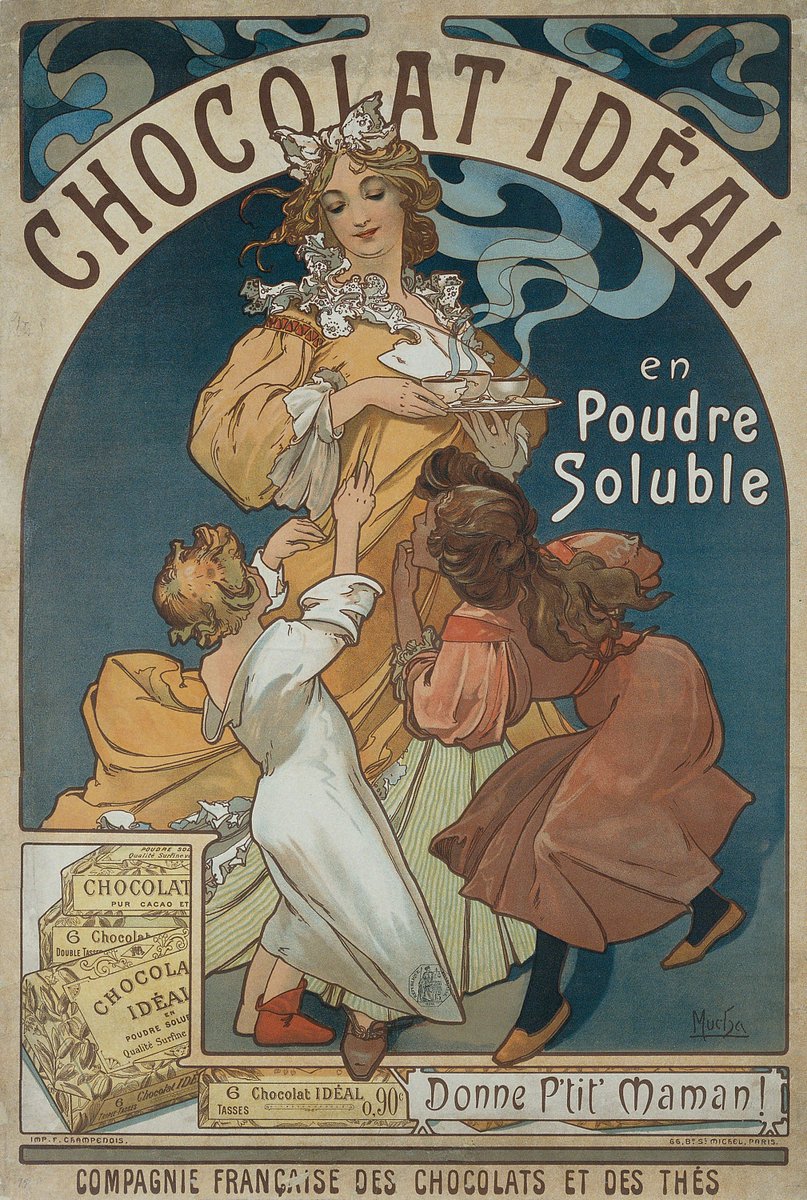
The Washington County Museum of Fine Arts is using its summer presentation of 'Alphonse Mucha: Master of Art Nouveau' to foreground one of the artist’s most important inspirations: Sarah Bernhardt. In a newsletter titled 'Art & Passion That Connects,' the museum describes Bernhardt as a central figure who appears repeatedly in the exhibition and as the muse whose image became closely tied to Mucha’s decorative style and to Art Nouveau itself.
The museum’s account positions Bernhardt not simply as an actress, but as an international cultural force whose reach extended well beyond the stage. Born Henriette-Rosine Bernard in Paris in 1844, she adopted the name Sarah Bernhardt in the 1860s, studied at the Paris Conservatory, and made her debut with the Comédie-Française. The museum notes that an early setback at the company — shaped by stage fright, mixed reviews and a dispute with a senior actress — did not end her career, but helped set the terms for her later success as she moved through leading theaters and influential social circles in France and abroad.
By the 1880s and 1890s, the newsletter says, Bernhardt had become one of the most recognizable women in the world. She toured internationally to sold-out crowds, performed across Europe and the Americas, and embraced new technologies, becoming one of the first stage performers to make sound recordings and appear in motion pictures. The museum also emphasizes that she was an accomplished painter and sculptor, and that she understood publicity as a creative tool, carefully shaping an image that made her one of history’s earliest global celebrities.
The exhibition framing also extends beyond Bernhardt’s celebrity to her wartime service. The museum recounts that during the Franco-Prussian War of 1870–71, she transformed the Odéon Theatre into a military hospital, organizing beds, supplies and meals while personally nursing wounded soldiers during the Siege of Paris. When shelling made the theater unsafe, she relocated patients and continued caring for them elsewhere. More than four decades later, during the First World War, she again devoted herself to the French war effort, visiting hospitals, performing for wounded soldiers and using her fame to raise funds and morale, even after losing her right leg to amputation.
Much of the museum’s article turns on the 1894 meeting between Bernhardt and Alphonse Mucha, then a relatively unknown Czech illustrator. Commissioned to create a poster for Bernhardt’s production of 'Gismonda,' Mucha produced an image the museum describes as unlike anything Paris had seen. The poster caused an immediate sensation, and Bernhardt responded by signing Mucha to a six-year contract to design posters, costumes, jewelry, stage sets and other decorative works for her productions. The museum presents that partnership as one of the defining collaborations of the Belle Époque, with Bernhardt’s fame helping to introduce Mucha’s vision to the world and his designs helping to secure her image for later generations.
The newsletter does not give a separate exhibition opening or venue detail beyond situating the text within 'Alphonse Mucha: Master of Art Nouveau' and identifying the project as an exhibition and museum tour organized by Landau Traveling Exhibitions in Los Angeles, California. It also notes that major funding for the Hagerstown presentation has been provided by Nora & Bruce Wilder. The article closes by telling visitors that the exhibition will reveal not only Mucha’s artistry but also the woman whose talent, determination and vision helped inspire some of his most iconic works.