 Image: Tate Britain, London
Tate Britain’s major retrospective of James McNeill Whistler is entering its final weeks, with ‘James McNeill Whistler’ closing on 27 September 2026. Open since 21 May, the exhibition is the first major European exhibition of Whistler’s work in 30 years, bringing together celebrated paintings with works described as rarely or never seen.
Organised by Tate Britain with the Van Gogh Museum and the Mesdag Collection, the exhibition presents Whistler across portraits, drawings, prints and designs. Its account of the artist is both formal and social: Tate describes him as a pioneer of innovative techniques who created visions of modern life, while also presenting him as a cosmopolitan celebrity who disrupted Victorian conventions in pursuit of truth, beauty and progress.
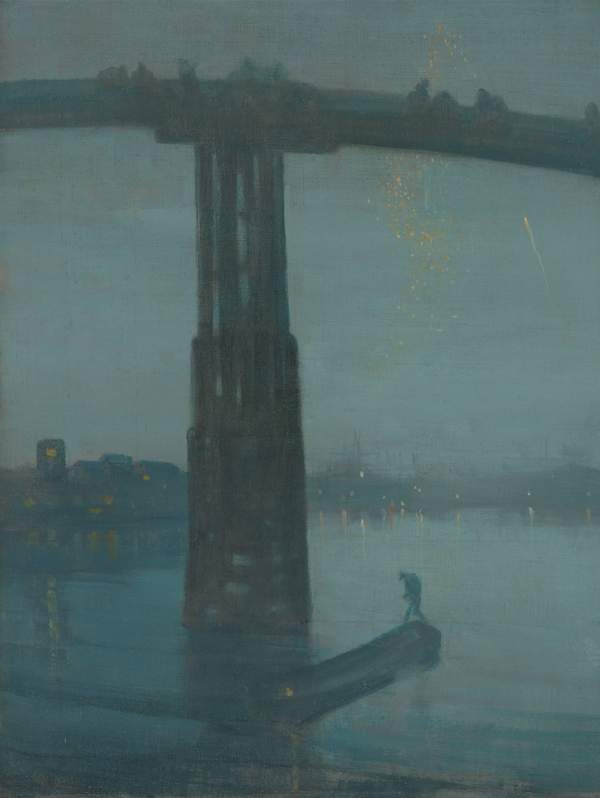
The works identified on the exhibition page include ‘Symphony in White, No. 2: The Little White Girl’ (1864), held by Tate, and ‘Arrangement in Grey and Black No.1’ (1871), from the Musée d’Orsay in Paris. ‘Wapping’ (1860–1864) is identified as being from the National Gallery of Art in Washington, DC’s John Hay Whitney Collection. Tate also features ‘Nocturne: Blue and Gold – Old Battersea Bridge’, dated circa 1872–75. These paintings appear within a presentation that includes the wider range of portraits, drawings, prints and designs described by the exhibition.
The retrospective follows Whistler’s work from pieces made during his teens in St Petersburg to his late self-portraits. It therefore brings together material from across his life while maintaining the exhibition’s emphasis on his experimental methods and his ideas about modern life. Whistler lived from 1834 to 1903.