 Image: Ars Electronica Center, Linz
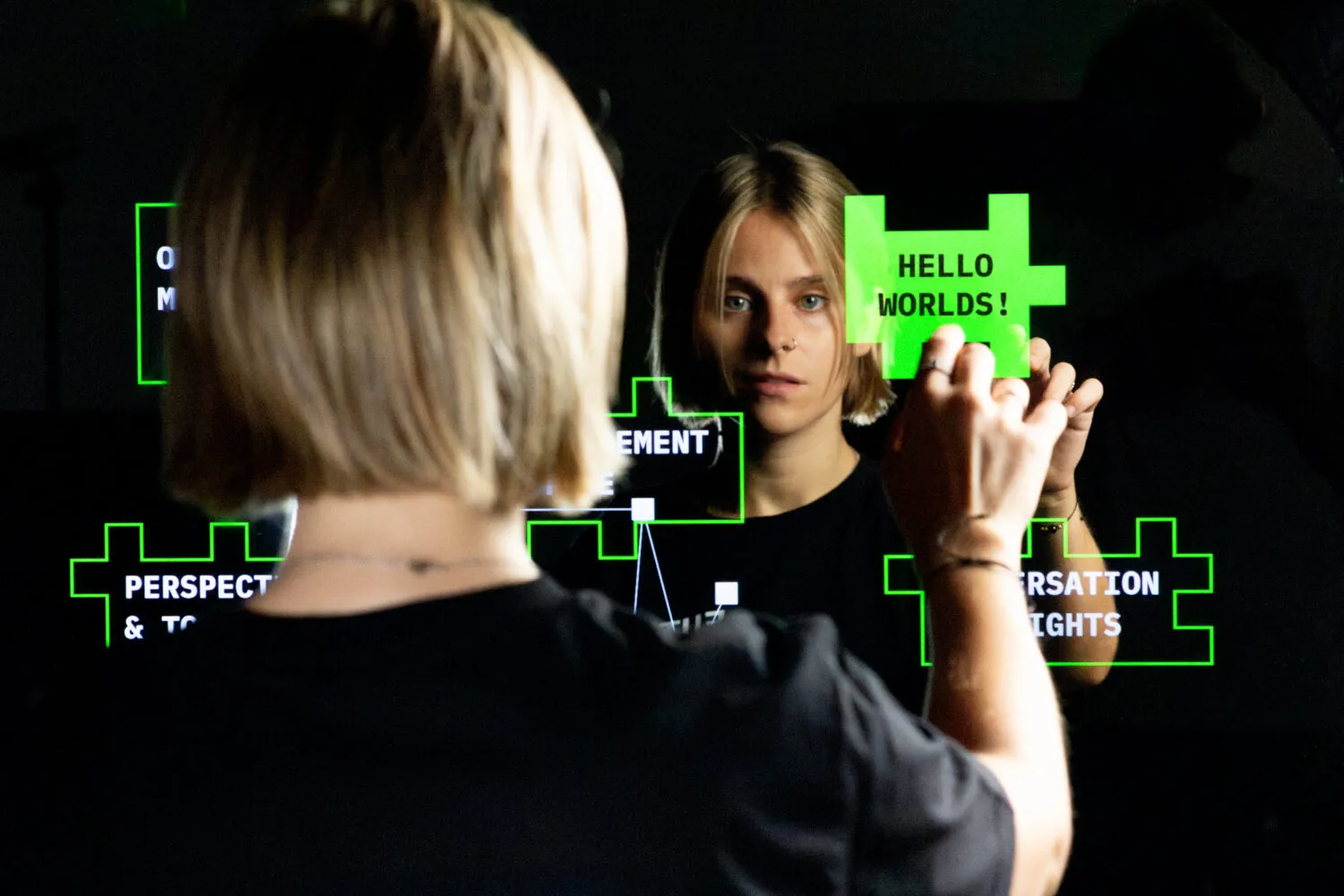
The Ars Electronica Center in Linz will present ‘Hello Worlds!’, a new exhibition and platform examining how artificial intelligence may alter human identity, perception, communication and collective life. Developed through a research collaboration between the Ars Electronica Futurelab and Toyota Motor Corporation’s Advanced R&D and Engineering Company, the project will begin in September 2026. An inaugural press tour is scheduled for September 7 at 10 a.m. CEST at the Ars Electronica Center.
Described by the Futurelab as a platform for negotiating humanity, ‘Hello Worlds!’ combines interactive exhibition systems, artistic works and prototypes. Rather than offering a single prediction about the future, it asks visitors to experience possible relationships between people and increasingly autonomous forms of intelligence. The project is organized around a central question: who will humans become in the age of artificial intelligence?
The exhibition is the public outcome of the ‘Future Humanity Project’, an experimental collaboration between Toyota’s Advanced R&D and Engineering Company and the Ars Electronica Futurelab. Its content is structured through three connected perspectives: ‘Hello Me! – The Amplified Self’, which considers identity, perception and the future self; ‘Hello You! – Dialogue Beyond the Human’, which explores relationships with animals, machines and ecosystems; and ‘Hello Us! – Shared Resonance’, which focuses on community, negotiation and collective futures.
Among the Futurelab’s contributions is ‘Hybrid Thinking’, an experience in which visitors record a short voice sample and hear AI-generated reflections through bone-conduction audio in a version of their own voice. ‘Deep Mirror’, developed by the Futurelab and Toyota, uses movement, interaction and participation to create a temporary visitor record that can influence texts, questions and perspectives appearing in the exhibition. Participation is voluntary, and visitors can review or delete their temporary record.
The platform also includes works by curated artists. Freddie Hong’s ‘Algorithms in Reflection’ is an interactive mirror that reveals a visitor’s reflection when the system detects a smile, turning facial recognition into an encounter with machine interpretation. ‘Corpus Corax, Speculative Human-Raven-Translator’ by the Ars Electronica Futurelab imagines communication between people and ravens, emphasizing the misunderstandings and gaps that arise when different forms of life attempt to communicate.
Other projects address technology through familiar objects, shared activity and environmental consequence. Jan Zuiderveld’s ‘Conversations Beyond the Ordinary’, commissioned by iii — instrument inventors initiative, gives a coffee machine, microwave and photocopier distinct conversational roles. ‘No Bird’ by UJOO+LIMHEEYOUNG consists of two machines moving across sand, one leaving bird-like footprints while the other erases them. Sven Windszus’s ‘Lebensraum’ uses a physical experiment involving pumps, people, expanding space and rising water to connect growth with finite resources. In ‘Resonance Loom’, the Futurelab and Toyota transform visitors’ ideas about humanity’s future into a continually developing woven visualization.
‘Hello Worlds!’ forms part of Ars Electronica’s 2026 program, whose festival theme is ‘Negotiating Humanity’. The Ars Electronica Festival will take place at multiple locations in Linz from September 9 to 13, with exhibitions, performances, concerts, conferences, talks and workshops. The festival’s additional press tours include presentations at the Lentos Art Museum, the University of Arts Linz and the OK-Platz meeting point, while ‘Hello Worlds!’ is presented at the Ars Electronica Center.
!['Shimmer: Dreaming the Posthuman' to Open at the Frist Art Museum[f1][f2]](/uploads/newsletter-12548-0e30af0095de.jpg)