The Georgia Museum of Art in Athens, Georgia, has reinstalled its Nancy Cooper Turner and Marilyn Overstreet Nalley South galleries following the departure of most loans from the Terra Foundation for American Art. The new presentations combine works from a private collection with rarely displayed pieces from the museum’s permanent collection, recasting its exploration of American art across the 19th and 20th centuries.
The change follows a four-year presentation of Terra Foundation loans. One work by John Singleton Copley will remain at the museum for a longer period, while the other Terra loans have left the galleries. According to the museum, their departure created an opportunity to reinterpret the existing installations through new loans and works that have received limited public display.
The Turner Gallery now presents eight portraits by John Singer Sargent, lent by a private collection and scheduled to remain on view for one year. Sargent, who lived from 1856 to 1925, was born to American expatriates in Italy, moved to Paris in 1874 and studied at the École des Beaux-Arts. He traveled widely, including between England and the United States, and became a leading portraitist of the Gilded Age.
The museum frames the portraits around Sargent’s international career and cosmopolitan clientele. His sitters included industrialists, aristocrats and artists in Europe and North America. In combination with the gallery’s existing works, the portraits address cultural exchange and the intellectual and artistic relationships that shaped the 19th-century art economy, including the emergence of the United States as a center of artistic exchange.
The adjoining Nalley South Gallery shifts attention to early-20th-century American art and the relationship between artists and their environments. A central addition is Francis Newton’s ‘Iceberg Lake’ (1920), which has returned to public view for the first time since the museum acquired it in 1970. The painting, shown after conservation, forms a transition between the 19th-century landscapes in the Turner Gallery and the modernist works in Nalley South.
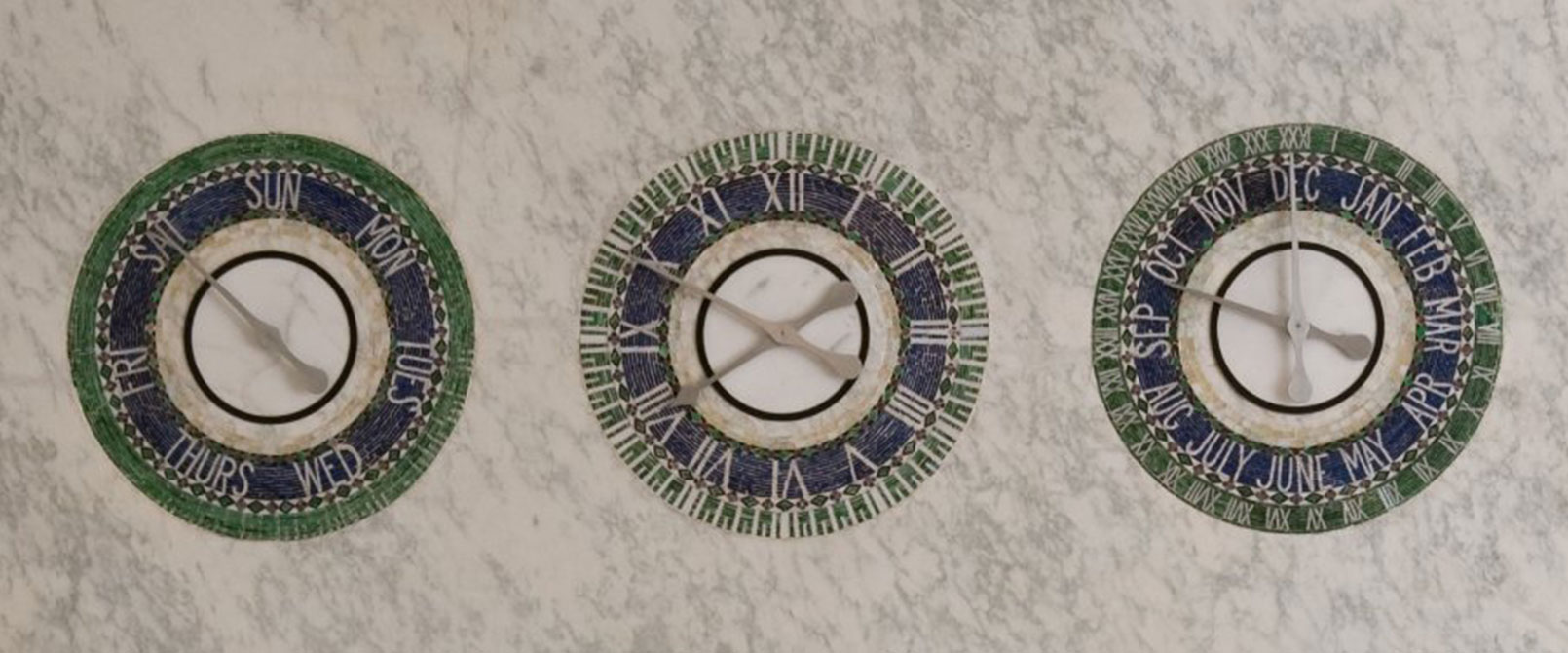
The installation also examines how agriculture, urbanization and changing technologies influenced perceptions of time and place. A locally made clock constructed from recycled materials by Athens doctor William B. Conway in 1897 is displayed with a cast-iron weathervane made around the same period. Nearby, Robert Henry Logan’s painting of a barn with a weathervane, Georgia O’Keeffe’s ‘Red Barn, Lake George, New York’ (1921) and Guy Carleton Wiggins’ ‘Wall Street Winter’ (circa 1920) bring modernist works into dialogue with traditional vernacular objects. The Georgia Museum of Art, founded in 1945 as a unit of the University of Georgia, maintains a collection of nearly 20,000 works and presents a selection in its permanent-collection galleries.