 Image: Multimedia Art Museum, Moscow
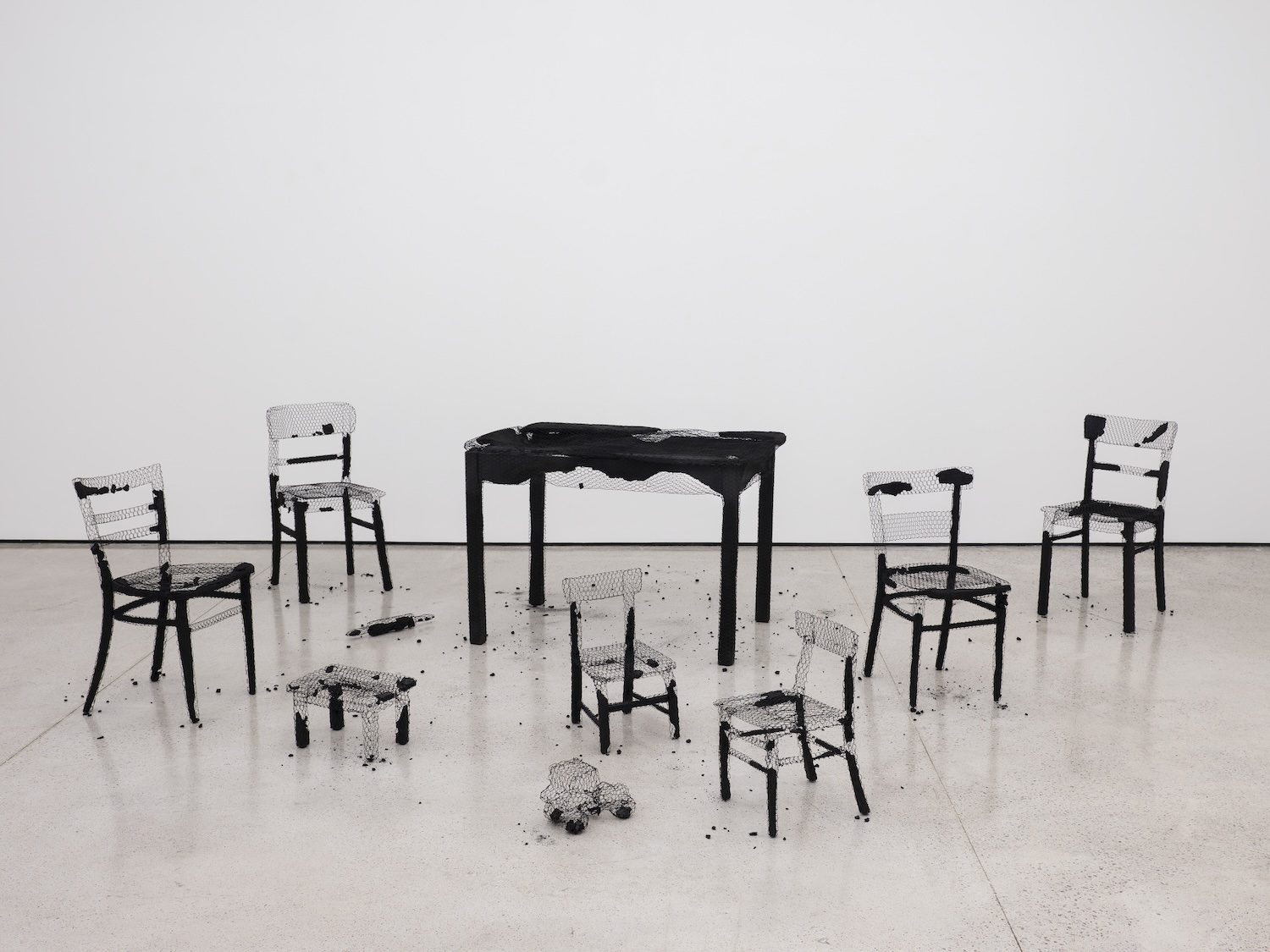
Pedro Gómez-Egaña’s exhibition ‘Los años de la piedra’ will open at the Museo de Arte Moderno de Medellín (MAMM) in Colombia on 10 September, bringing together an exploration of the point at which domestic life, geology and industrial history begin to overlap. The exhibition forms part of a new cycle of four shows inaugurated by the museum, with public programming continuing through 11 September.
According to the MAMM, ‘Los años de la piedra’ is shaped by Antioquia’s geography of steep inclines and by the industrial inheritance of the building that houses the museum. The site was formerly a steel plant whose origins were connected to coal mining. Gómez-Egaña’s presentation uses that setting as a framework for considering the coexistence of progress and ruin, inviting visitors into a space where geological and human-made environments are treated as closely connected.
The exhibition is curated by Cristina Vasco. Its title, which the museum renders in English as ‘The Years of the Stone’, points to a temporal scale extending beyond the ordinary rhythms of domestic life or industrial production. The museum’s description presents the exhibition as a descent into a territory rather than as a conventional survey, with the building’s material history and the landscape of Antioquia functioning as central elements of its context.
Gómez-Egaña was born in Colombia and lives and works in Oslo, Norway, according to the MAMM, which adds that he holds a doctorate in visual arts and teaches sculpture and installation at the Oslo National Academy of the Arts. The museum describes his practice as spanning installation, sculpture, performance and sound work, drawing on literary and historical references tied to industrialisation as well as on the histories of cinema and science. It presents temporality as a central category in his work, describing an artist who examines how we experience deeply contradictory forms of time and who builds spaces the museum calls choreographic, where movement, music and architecture carry the content.
The opening programme begins on Thursday 10 September, when the exhibition spaces open to the public at 11 a.m. Admission is free. A guided tour of ‘Los años de la piedra’ and Félix Blume’s ‘Enjambre’ is scheduled for 3 p.m., with a second tour of Astrid González’s ‘La boca donde el agua engendra el agua’ and Gala Porras-Kim’s ‘El movimiento de un registro fluvial’ at 4:30 p.m., followed at 6:30 p.m. by an opening discussion. On Friday 11 September, the programme includes a 10 a.m. talk with Gala Porras-Kim, whose exhibition ‘El movimiento de un registro fluvial’ is also part of the new cycle.
The other opening presentations are Félix Blume’s ‘Enjambre’, an installation involving 250 small suspended speakers that reproduce the individual sounds of bees in flight, and the exhibition by González, which considers the ocean as a site of burial, liberation and ancestral memory. Porras-Kim’s presentation is identified by the museum as her first institutional exhibition in Colombia. These projects share the opening cycle’s stated interest in matter, territory, memory and sound, while remaining separate exhibitions with their own curatorial frameworks.
The museum’s exhibition page places ‘Los años de la piedra’ in Rooms B and C and the Nave Central of the MAMM, at Carrera 44 No. 19A-100 in Medellín’s Ciudad del Río district; the wider inauguration programme uses the Fundiciones, A, B, C and D rooms, LAB 3 and the MAMM Theatre. The public opening takes place from 11 a.m. to 9 p.m. on 10 September, with programming continuing the following day; the museum has not announced a closing date for the exhibition.