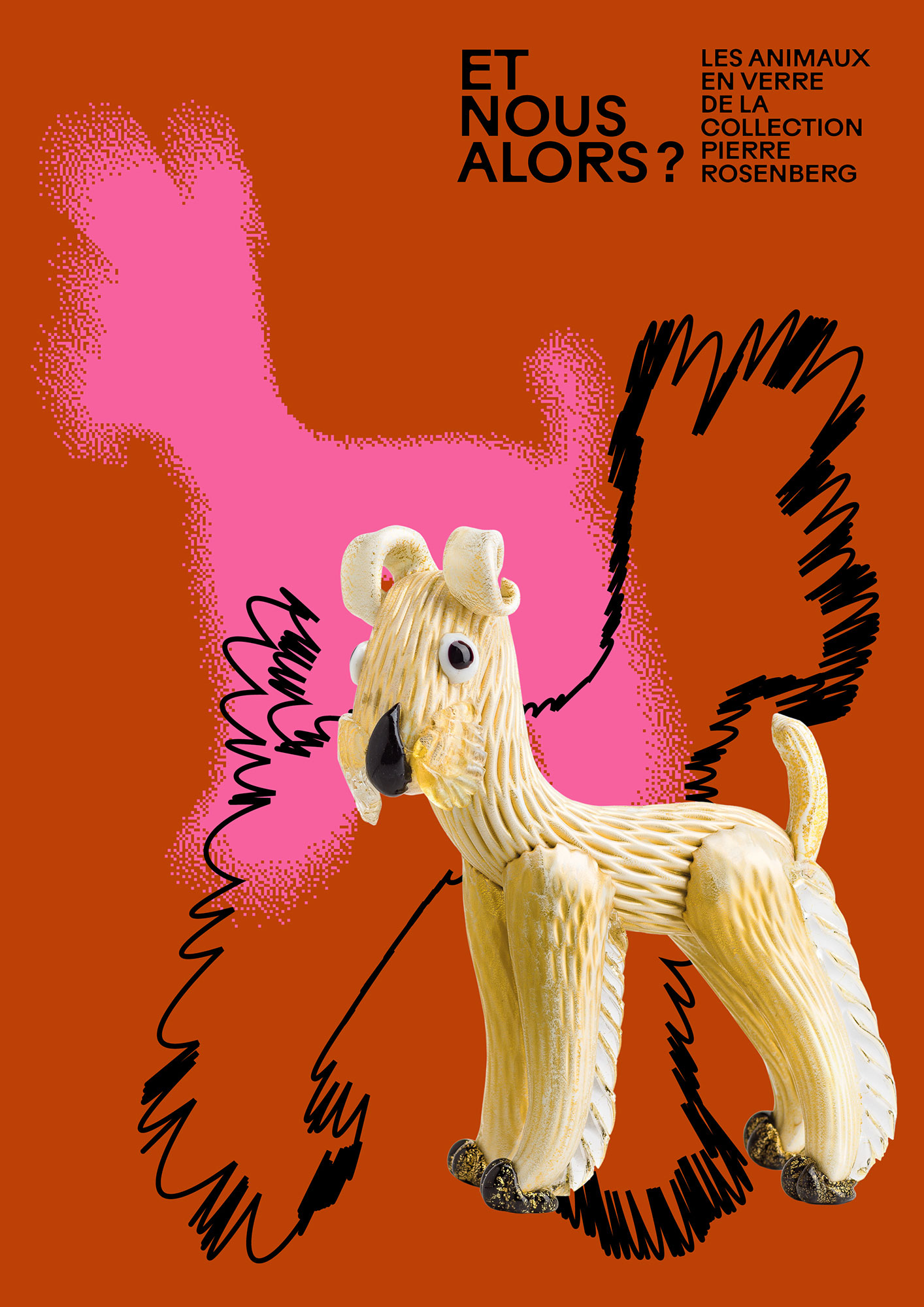
 Image: mudac - Cantonal Museum of Design and Contemporary Applied Arts, Lausanne
More than 300 glass animals from the collection of art historian and honorary Louvre director Pierre Rosenberg are on view in ‘Et nous alors?’ at mudac, the Cantonal Museum of Design and Contemporary Applied Arts in Lausanne. The exhibition, which also includes works from Rosenberg’s donation to the Musée du Grand Siècle, examines the ways animals are represented, classified and contained through the delicate medium of Murano glass.
Running from 24 April through 27 September 2026 at mudac, Plateforme 10, the exhibition brings together a bestiary whose variety of forms, expressions and postures reflects both curiosity about the animal world and a desire to understand, control and domesticate it. The title, ‘Et nous alors?’, turns the question back toward human observers, placing their habits of looking at the centre of the exhibition’s enquiry.
According to mudac, the works reveal an ambivalent relationship with the living world. The animals can be approached as objects of fascination and study, but their presence also points to the mechanisms through which people shape and organise images of other species. In the museum setting, where objects are preserved, arranged and displayed, the collection becomes a way to reconsider the conventions of the showcase and the act of observation itself.
A film made especially for the exhibition introduces Rosenberg’s palazzo in Venice, where the glass animals are installed throughout the architecture. The works appear in the surroundings that house them, including the spaces where their collector placed them, allowing the film to present the collection not only as an assembly of objects but also as part of a lived interior environment. The installation at mudac then relocates this bestiary into a public museum context.
‘Et nous alors?’ is curated by Amélie Bannwart of mudac, with scientific collaboration from Diane Maechler, also of mudac. Nathalie Opris is responsible for the scenography, Enen Studio for graphic design and communication, and Tapio Snellman for the video. The project forms part of mudac’s wider programme of exhibitions in design and contemporary applied arts, presented at the Plateforme 10 arts district beside Lausanne railway station.
The exhibition’s public programme includes a family-oriented visit, ‘Miaou, meuh, wouf: animaux et art verrier’, scheduled for 16 September at 2 p.m. Participants aged seven and above are invited to identify animals from sounds and reproduce them as they discover the collection. The one-hour visit is led by a mediator, requires advance registration and is free with an admission ticket. ‘Et nous alors?’ remains open until 27 September 2026.