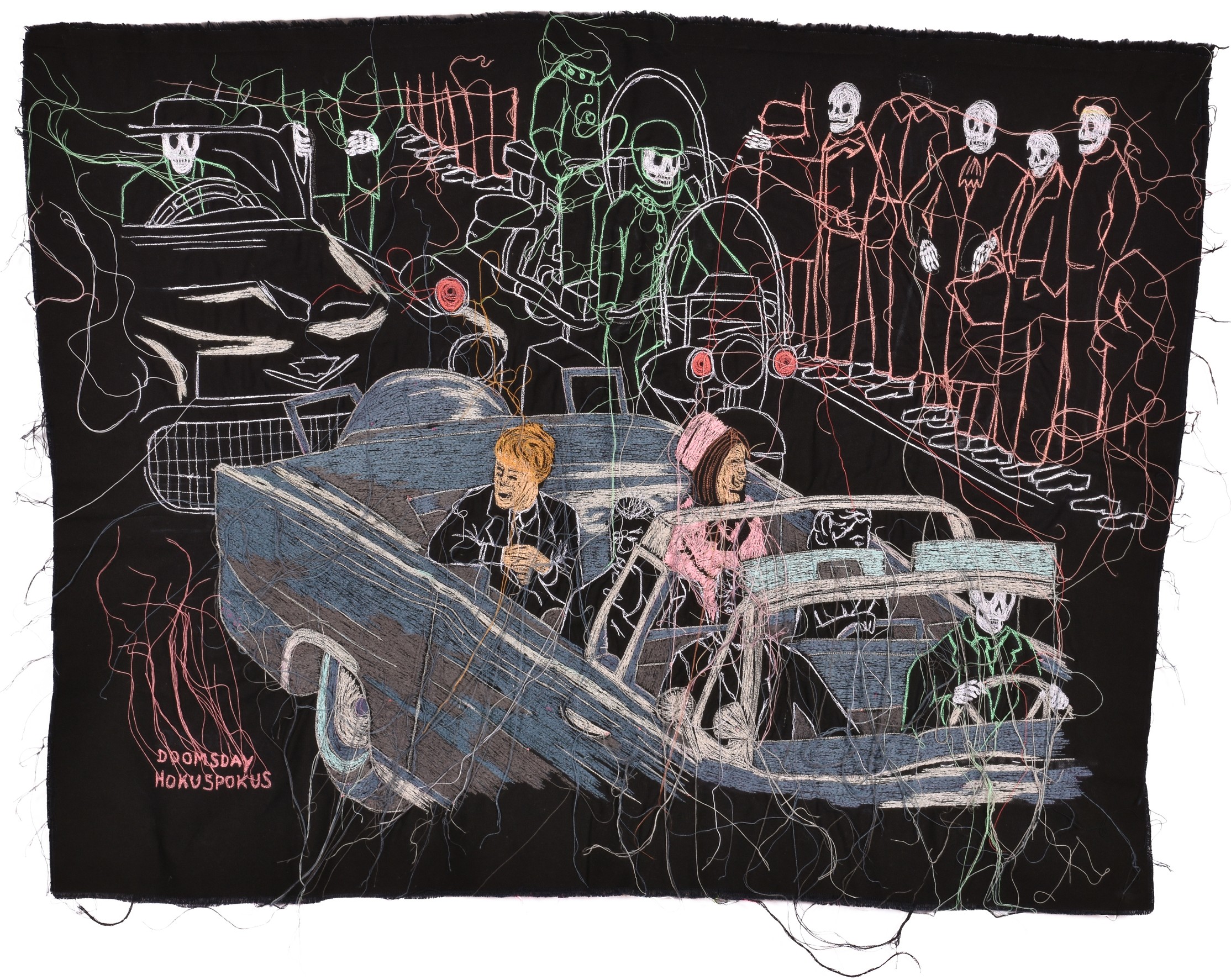
 Image: Andrea Ziegler, ‘Unscheduled Disassembly I’, 2025, freehand machine embroidery and appliqué (front) © VG Bild-Kunst, Bonn 2026. Courtesy Horst-Janssen-Museum, Oldenburg
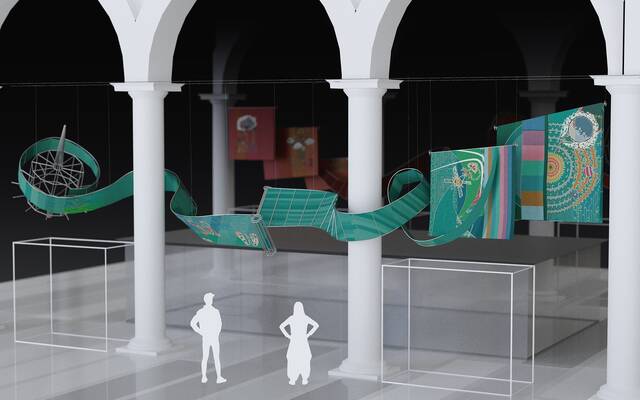
The Horst-Janssen-Museum in Oldenburg has opened ‘Andrea Ziegler | Horst Janssen: What Is the Truth and Where Did It Go? Von Menschen und Maschinen’, an exhibition pairing selected works by the German draughtsman and graphic artist Horst Janssen with new textile works by artist and curator Andrea Ziegler. The exhibition runs from 15 August to 8 November 2026.
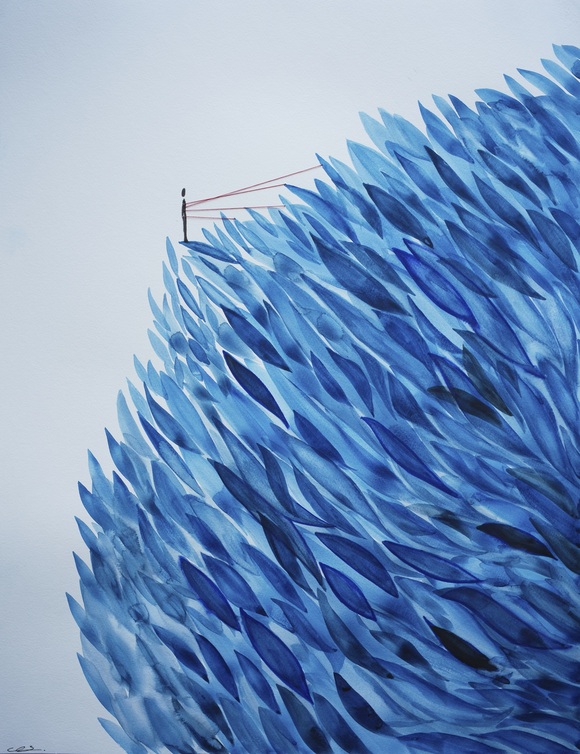
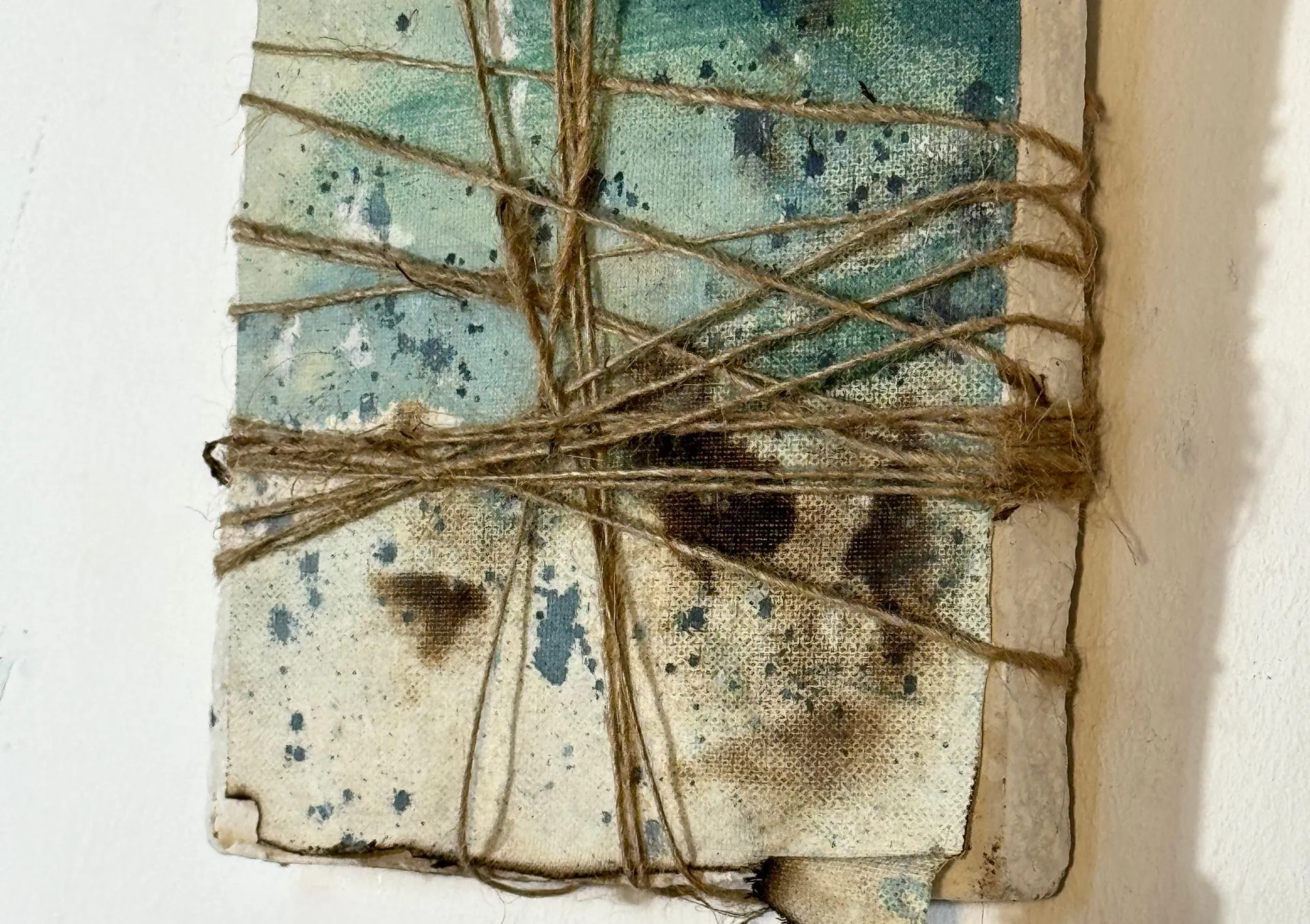
Ziegler’s central technique is freehand machine embroidery. Working with a sewing machine rather than a pen, she translates motifs, structures and conceptual figures from Janssen’s work into a contemporary visual language grounded in craft. The museum describes the presentation as a dialogue between the two artists, with Ziegler’s works responding directly to selected works by Janssen.
The exhibition takes as its starting point questions about truth, perception and trust in a media- and technology-shaped world. Its accompanying material identifies artificial intelligence, algorithms, information overload and technology ideologies as current social issues addressed by Ziegler. The works invite visitors to reconsider how images are read, tolerate ambiguity and develop their own perspectives on mediated reality.
One point of entry is Ziegler’s ‘Unscheduled Disassembly I’ (2025), a freehand machine embroidery and appliqué work that addresses the assassination of John F. Kennedy in 1963 as an event surrounded by conflicting interpretations, myths and political instrumentalisation. From there, the exhibition establishes connections with several Janssen bodies of work, including ‘Laokoon. Die Bäume der Annette’, ‘Nigromontanus’, ‘Hannos Tod’ and the etching cycle ‘19.05.1990’. These links extend toward questions of media representations of events, technological development, promises of the future and technology-driven ideologies.
The museum presents Ziegler’s labour-intensive, individually made embroideries as a counterpoint to artificial intelligence and algorithmic processes. Alongside the artworks, questions installed in the galleries and a programme of talks are intended to create a space for direct discussion. Ziegler was the fourth holder of the research fellowship that the Horst-Janssen-Museum has awarded annually since 2022 with its Förderverein; she held it from 2025 into early 2026 and worked there on Janssen’s self-portraits and his motifs of decay.
The exhibition’s public programme includes Sunday tours at 11am, an interactive session titled ‘Abgetaucht – Kunst auf den Grund gehen!’ on 29 August and 24 October, and a curatorial tour led by Ziegler on 5 September. A tour in German Sign Language is scheduled for 27 September. On 20 October, the museum will offer a free 30-minute lunchtime tour as part of the Oldenburg ‘Kultursnacks’ series.
Five free ‘Tribünengespräche’ will take place in the exhibition, each beginning with a 30-minute expert presentation followed by an open audience discussion. Subjects include fact-checking and disinformation, transhumanist ideology, populism and polarisation, radical life extension, and technology-driven authoritarianism. Speakers listed by the museum include investigative journalist and fact-checker Alice Echtermann, technology ethicist Dr Anna Puzio, political scientist Prof. Dr Marcel Lewandowsky, medical ethicist Prof. Dr Mark Schweda and digital-ethics scholar Prof. Dr Anna-Verena Nosthoff. The Horst-Janssen-Museum is open Tuesday to Sunday from 10am to 6pm at Am Stadtmuseum 4–8 in Oldenburg.