 Image: National Museum of Modern and Contemporary Art, Seoul
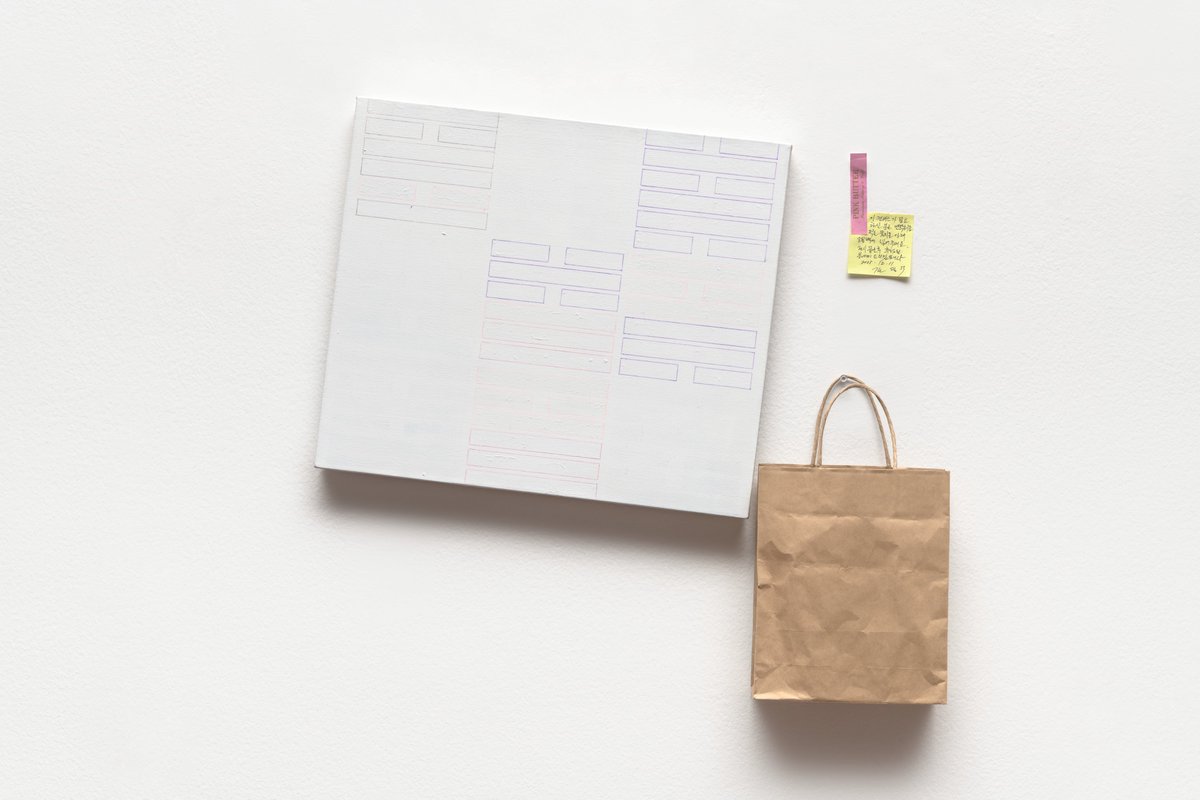
The National Museum of Modern and Contemporary Art, Seoul has highlighted Kim Yong-ik’s 'White Out', a participatory artwork in which visitors can take part by leaving their contact information on shopping bags included in the piece. According to the museum’s post, the work also includes canvases covered with gesso, extending Kim’s approach to a project that invites direct audience involvement rather than passive viewing.
The museum’s notice frames 'White Out' as an artwork that changes through participation. Visitors are asked to leave their contact details on the shopping bags, making the audience part of the work’s circulation and documentation. The post also states that, after the exhibition, one of the canvases will be selected at random and given away to participants.
Kim Yong-ik’s project sits within the museum’s ongoing presentation of contemporary art in Seoul, where audience engagement is often part of how works are introduced to the public. In this case, the museum emphasizes the social and exchange-based dimension of the artwork, linking the exhibition display to a post-exhibition distribution process.
The museum did not provide further exhibition details in the post, but it did direct viewers to additional information about how the artwork will be used after the exhibition. That suggests the participatory element is not limited to the gallery visit itself, but continues into a later phase in which one of the gesso-covered canvases enters a giveaway process.
'White Out' is presented here as both object and activity: shopping bags, canvases, and visitor participation are all part of the same work. The post’s description indicates that the audience’s contact information becomes part of the artwork’s functioning, while the canvases remain central visual elements within the exhibition.
MMCA Seoul’s post offers a concise outline of the project rather than a full curatorial statement, but it makes clear that Kim Yong-ik’s work relies on participation as a structural feature. The museum’s announcement positions 'White Out' as an artwork in which viewers are invited to leave a trace and, in one case, potentially receive a canvas after the exhibition ends.