 Image: Museo de Arte Contemporáneo, Madrid
Otters have been recorded again in Madrid’s Manzanares River, marking the first confirmed sighting in around 50 years and underscoring the city’s long-running effort to restore the waterway’s ecology. According to the City of Madrid, municipal cameras spotted one animal on April 19 near Presa 6, in the stretch between Puente Oblicuo and the Andorra footbridge, on the border of the Arganzuela and Latina districts. The observation followed weeks of tracking paw prints and droppings along the riverbank.
The city described the sighting as a historic milestone for the Manzanares, which runs through the capital and has been the focus of renaturalisation measures in recent years. The municipal account says the return of otters confirms that the river has recovered enough ecological stability to support species that had disappeared from the urban section decades ago. It also notes that there had previously been only three isolated reports of otters since 2019, without firm visual confirmation until this spring.
Otters are considered a bioindicator species, meaning their presence can signal the health of a habitat. In the city’s account, their reappearance is tied not to symbolism alone but to improved water quality, more available food and the recovery of shelter and refuge areas along the river. The Manzanares has also seen changes linked to the restoration of its banks, the reintroduction of native fauna and broader work to improve the river’s natural conditions.
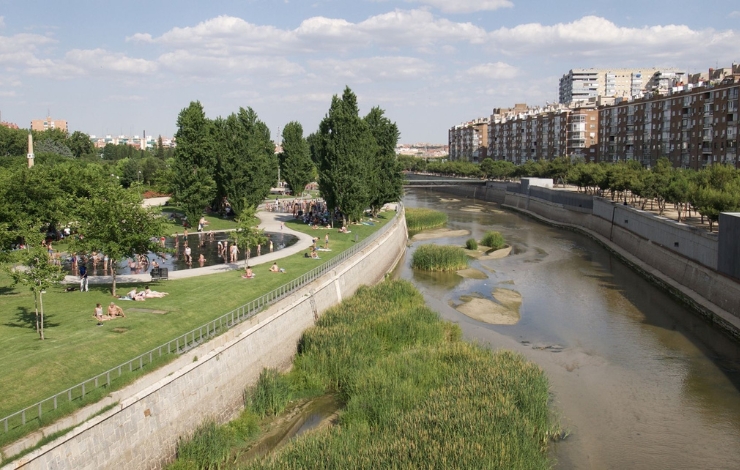
The municipality points to measures launched since 2016, when sections of the river’s dams were opened to restore a more natural flow and encourage the formation of sandbanks and small islands. Those interventions were followed by ongoing environmental policies under the current city government, overseen by the Department of Urban Planning, Environment and Mobility. The city says these actions have helped improve oxygenation and reduce total dissolved nitrogen in the water.
Other work cited by Madrid includes conservation and maintenance contracts for the river, regular removal of waste from the channel and riverbanks, monitoring of flora and fauna, control of invasive species, and the upkeep of vegetation along the margins. The city also says it has strengthened control systems for flow regulation and water monitoring, with physicochemical and microbiological analyses used to track progress.
Alongside habitat recovery, the Manzanares has seen the reintroduction of fish species that had been absent for decades. In the last two years, protected and vulnerable species such as boga, bermejuela, colmilleja and cacho have been released into the river, with the most recent release in May involving the latter three species. The city says this renewed fish population, together with carps and barbel, now forms part of the food chain that can support otters.
Madrid says the river has also regained a wider range of wildlife, including around 50 bird species and other animals such as pond turtles, viperine snakes, voles, hedgehogs and field mice. The city framed the otter’s return as part of the ongoing transformation of the Manzanares into a restored urban ecosystem, and said the sighting near Presa 6 reflects conditions that had not been documented in the capital since the species disappeared from the river half a century ago.