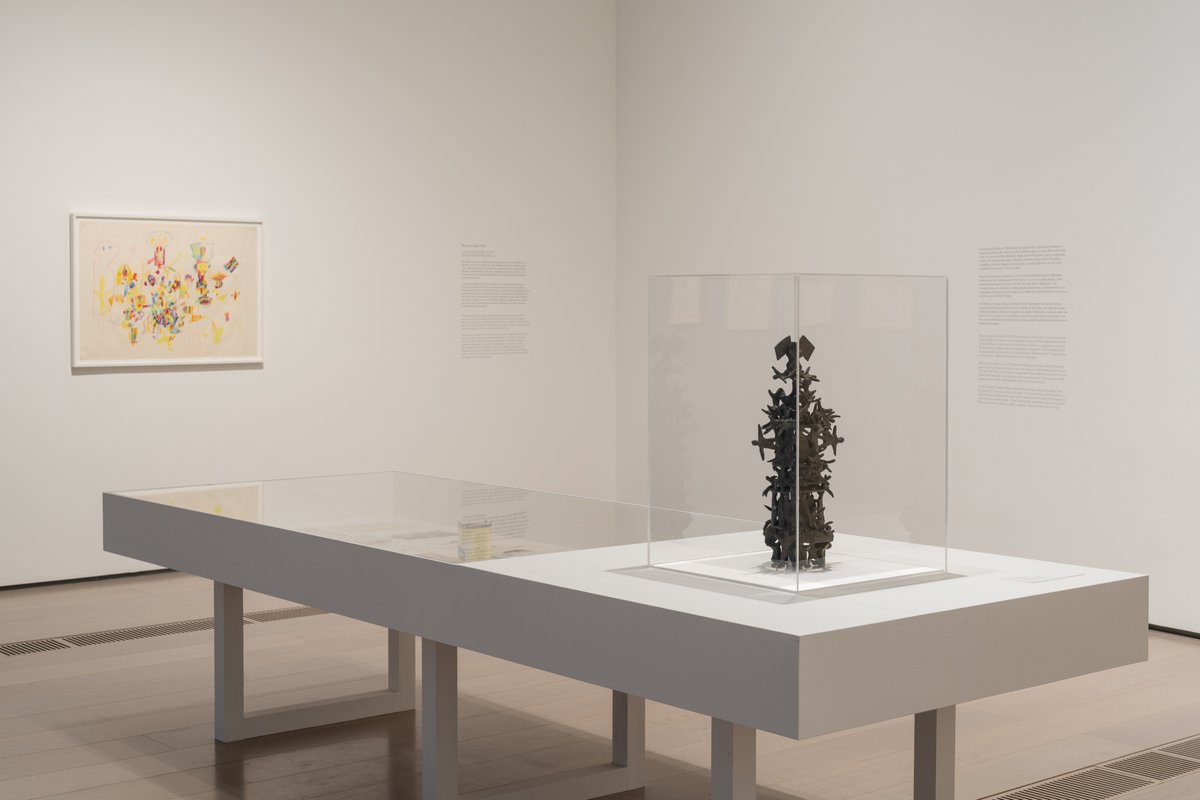
 Image: Botin Centre, Santander
The Botín Centre in Santander is drawing attention to a group of works from the 1950s that show an artist’s creative world beginning to take shape, with drawings, sculptures such as 'Triumph (1959)', and archival materials presented together. According to the source material, the selection traces a period in which the human body emerges as the central figure in a language marked by irony and transformation.
The institution’s notice frames the presentation as a look at the consolidation of an artistic universe rather than a broad retrospective overview. The works gathered from the decade include sculpture alongside drawings and documents, allowing viewers to follow how recurring themes and formal strategies began to cohere. The emphasis on archival material suggests that the display is not limited to finished objects but also points to the context in which the work developed.
Among the specific pieces mentioned is 'Triumph (1959)', singled out in the announcement as one of the sculptures that helps define the decade’s output. The source does not provide further identification of the artist in the excerpt supplied, but it does indicate that the body of work from the 1950s is being used to show the early consolidation of a visual language in which the human figure remains central.
The Botín Centre, based in Santander, Spain, is presenting the material as part of its exhibition programming. The institution’s website and social media presence regularly foreground contemporary and modern art initiatives, and this announcement continues that focus by spotlighting works tied to a specific formative period. In this case, the institution is foregrounding how the artist’s approach developed through a combination of sculpture, drawing and documentary traces.
The brief Spanish-language description supplied with the news item stresses both irony and transformation as key qualities of the work. It also places the human body at the centre of the creative vocabulary on view, indicating that the presentation is meant to reveal the foundations of a wider artistic practice rather than a single isolated object. The source does not specify the venue beyond Botín Centre, nor does it give dates for the display in the material provided.
What is verifiable from the announcement is the scope of the presentation: works from the 1950s, including 'Triumph (1959)', are being highlighted through drawings, sculptures and archival materials. The result is a focused look at an artist’s early development, anchored by a decade in which the language of the work was beginning to consolidate around the human figure.