 Image: Botin Centre, Santander
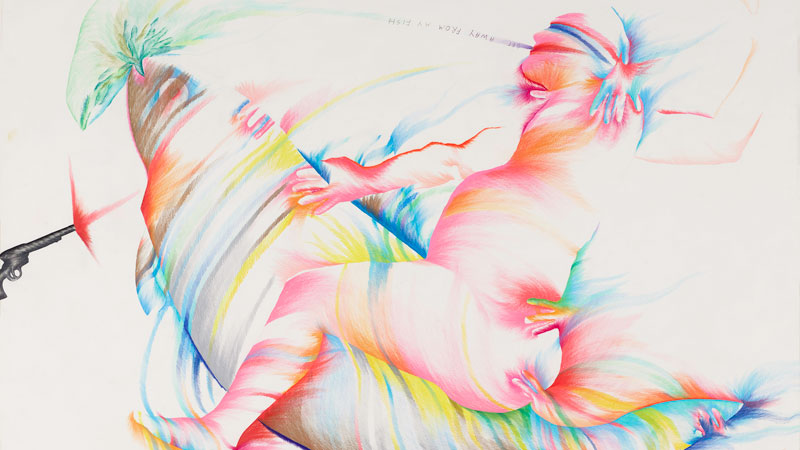
The Centro Botín in Santander, Spain, is presenting ‘Marisol: Cuando todo está por comenzar’, described by the institution as the first retrospective dedicated to the drawings of Marisol. Running from 23 May through 25 October 2026, the exhibition brings together more than 100 works spanning the artist’s career, alongside sculptures, archival material and films by Andy Warhol in which Marisol appears.
Titled ‘Marisol: Cuando todo está por comenzar. Dibujos de 1949 a 2015’, the exhibition is organised in collaboration with the Buffalo AKG Art Museum and co-produced by the Fundación Botín and MAC/CCB—Museu de Arte Contemporânea e Centro de Arquitetura / Centro Cultural de Belém in Lisbon. Most of the works come from the Buffalo AKG Art Museum’s collection. The presentation is curated by Laura Vallés Vílchez, a curator, editor and researcher.
The exhibition positions drawing as the most consistent thread in Marisol’s practice. According to the Centro Botín, the works connect her broad social and artistic concerns with private unease and imaginative fictions. The sculptures included in the presentation extend that investigation into three dimensions, while the archival materials and films provide further context for the artist’s public image and working life.
The exhibition’s title refers to an exchange between Marisol and the dealer Leo Castelli in the late 1950s. After the artist left the United States following a successful presentation at Castelli’s New York gallery, he reportedly asked her: ‘¿Cómo puedes marcharte ahora, cuando todo está por comenzar?’—‘How can you leave now, when everything is just beginning?’ The phrase also reflects later points in Marisol’s career when she withdrew from the centre of the art world before her work re-emerged in transformed ways.
Marisol Escobar (1930–2016), known simply as Marisol, was an American and Venezuelan artist born in Paris. She became known for satirical sculptural portraits and mixed-media compositions that examined gender roles, celebrity culture and family dynamics through humour and social criticism. She emerged in New York’s art scene during the late 1950s and 1960s, moving in the same circles as Andy Warhol, Willem de Kooning and Robert Rauschenberg. Although her practice developed alongside Pop Art, the Centro Botín describes it as distinct from the movement and marked by personal, feminist and political dimensions.
Marisol represented Venezuela at the 1968 Venice Biennale and took part in Documenta IV, where she was one of four women among 149 participating artists. The exhibition forms part of the Fundación Botín’s continuing curatorial and academic research into drawing, following presentations devoted to Francisco de Goya, Manolo Millares, Juan Muñoz and Silvia Bächli. It is accompanied by a bilingual Spanish-English catalogue tracing Marisol’s life and work through her engagement with drawing. The exhibition is held in Exhibition Room 1 at the Centro Botín, Plaza Emilio Botín, Santander, until 25 October 2026.