 Image: Kunstnernes Hus, Oslo
Kunstnernes Hus in Oslo is presenting ‘Minga for havet’, a major new exhibition by Chilean artist, poet and activist Cecilia Vicuña. Developed especially for the institution, the show is described as Vicuña’s first large presentation in the Nordic region and runs from 29 May to 9 August 2026 in the Overlyssalene. The exhibition brings together voices from Indigenous territories in the global south and north in defense of the sea against destruction, pollution and capitalist exploitation.
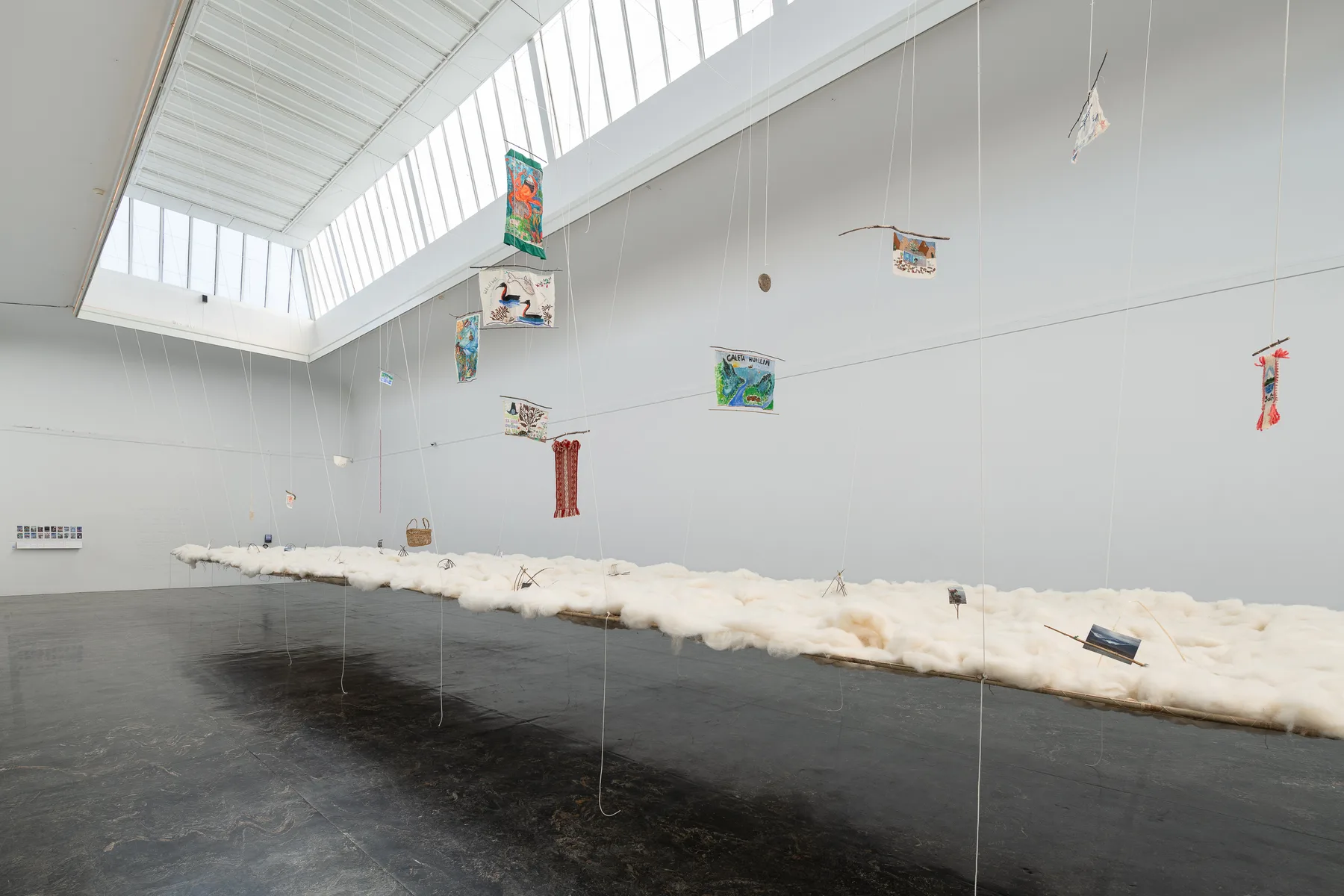
The project is built around quipu, the knot-based communication system used by the Incas, which Vicuña uses as a symbol of collective resistance and solidarity. According to Kunstnernes Hus, the exhibition centres on two large horizontal quipus made of locally produced wool, one installed in each of the museum’s skylit halls. The material choice is linked in the curatorial text to water and interdependence in Andean traditions, while the quipu itself is presented as a pre-Columbian system in which knowledge was encoded through knots along cords.
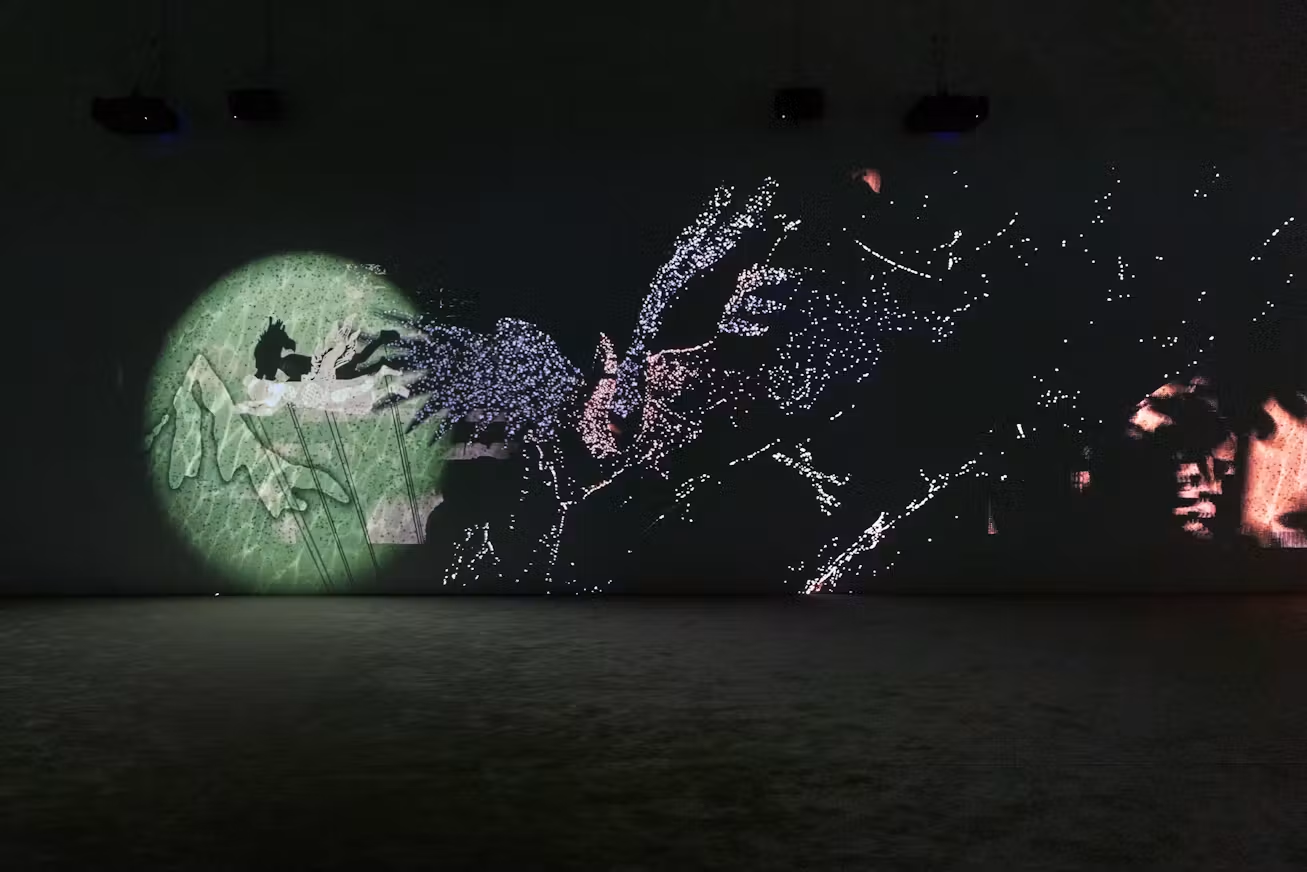
Kunstnernes Hus says the installation gathers what it calls a polyphonic archive of cultural resistance. Inside the works, Vicuña has woven in “letters” from Indigenous and environmental defenders, including poems, drawings, craft objects, gathered material and video. One quipu is associated with the southern hemisphere and Chile, and the other with the northern hemisphere and Sápmi. The southern work includes material created by members of the network Red de Mujeres Originarias por la Defensa del Mar, while the Sápmi-linked quipu includes contributions from activists opposing dumping of mining waste from copper extraction in Riehpovuotna/Repparfjord.
The two installations are presented differently in space. In one hall, the southern quipu hangs from the ceiling; in the other, the northern quipu stretches horizontally through the room and snakes like a river. The institution frames this as a reflection of different relationships to landscape and of resonances across them, including ocean currents, migration routes and ecological cycles that cross national boundaries. The exhibition text also points to links between the regions through global extraction systems, including Norwegian aquaculture feed that contains small fish caught off the coast of Chile and the long presence of Norwegian aquaculture companies in Chile.
The title’s word ‘minga’ comes from Quechua and refers to collective labour carried out for the common good. Kunstnernes Hus says this principle shapes the exhibition’s method, bringing together voices, gestures and materials through collaboration and solidarity across territories. The show also takes as a point of departure a Chilean law often referred to as ‘Ley Lafkenche’, which the institution describes as a pioneering protection of Indigenous marine rights that is now under pressure.
The exhibition page includes a statement by Vicuña: “We love the sea, and this love is the core of its defense.” Her wider practice, as outlined by Kunstnernes Hus, spans more than five decades across poetry, visual art, film and activism, with an ongoing focus on ecological destruction, cultural erasure and civil rights. The institution notes earlier international presentations and honours, including the Golden Lion for lifetime achievement at the Venice Biennale in 2022, Chile’s National Prize for Visual Arts in 2023, and the Museum of Contemporary Art Los Angeles’ first Art and Environment Prize in 2024.
‘Minga for havet’ is a collaboration with Nordnorsk Kunstmuseum and is initiated and produced by Kunstnernes Hus. After its presentation in Oslo, the exhibition is scheduled to travel to Nordnorsk Kunstmuseums branch in Bodø in 2027.