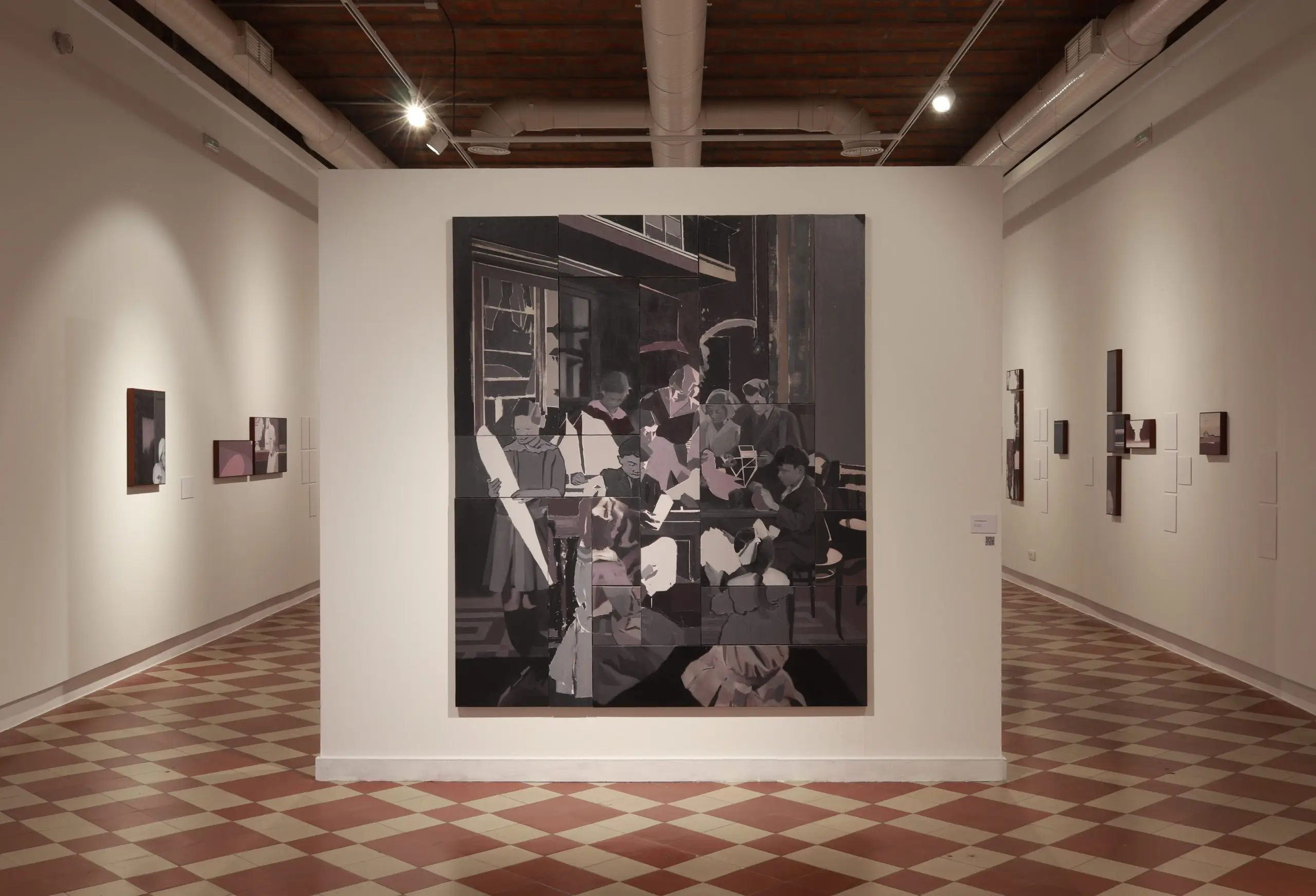
 Image: Tangere, installation view. Courtesy La Térmica Centro de Cultura Contemporánea, Málaga
Nacho Martín Silva's solo exhibition 'Tangere' runs from 18 June to 20 September 2026 at La Térmica Centre for Contemporary Culture in Málaga. It is an in-house production of the Málaga Provincial Council, curated by Juan Francisco Rueda and developed in collaboration with the ONCE delegation in Málaga, and it is built so that blind and visually impaired visitors can reach the work by touch. The centre, which calls it one of its major exhibitions of the year, opened it on the morning of 18 June in Sala 014 Vélez-Málaga; Martín Silva is based in Madrid.
The title is the Latin infinitive meaning to touch, to reach or to be in contact, the root of tangible, touch and contact. Rueda also reads it against the history of painting, through the 'Noli me tangere' of the Gospel of John — the resurrected Christ telling Mary Magdalene not to touch him — a subject painted over the centuries by Titian and Alonso Cano, and one the curator sees as a long record of attempts to make presence tangible.
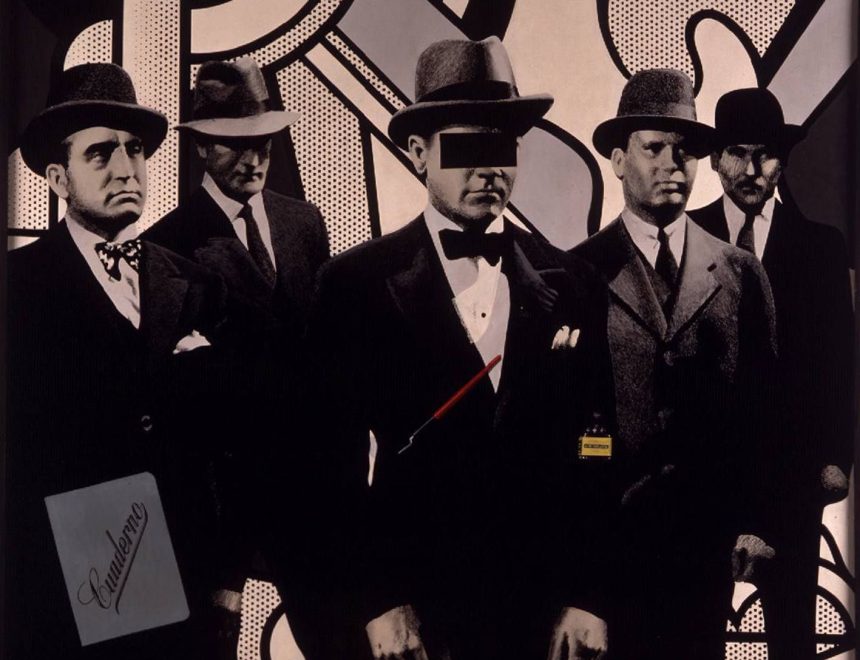
The starting point is documentary. In 1913 at the Sunderland Museum in Britain, its museographer John Alfred Charlton Deas ran pioneering inclusive sessions in which blind visitors of different ages and genders handled objects from the collection. He photographed the sessions and gathered them in a text titled 'What the Blind May ‘See’: Some Museum and Other Experiments in Tactile Sight', where he wrote that “to them, their fingers are eyes”. Martín Silva repaints those photographs, and the exhibition takes its title from that sentence.
In his hands the images become monumental fragmented compositions — the series La Térmica calls 'Fragmentados', which it describes as one of the artist's hallmarks. Each picture is broken into dozens of units, every one carrying a different pictorial language and a different degree of iconicity, running from close figuration to full abstraction — multiple translations of a single object that resist being read as one stable image.
Six ONCE members joined the research and production: Amparo, Carmen, José Antonio, Julia, Lía and José María, working alongside Ana as communicative mediator, with a person with deafblindness also taking part. The result, as Rueda describes it, is a play of mirrors: visually impaired people touching paintings in which blind people are shown feeling sculptures, their hands at times laid directly over the painted hands of Deas's anonymous sitters.
The exchange is pushed further through ekphrasis. Martín Silva supplied a verbal description of one of the photographs so that the participants, having first touched his painting of it, could translate it into form themselves. One painting is dispersed across the room, and the only complete record of it left in the show is the set of six embossings made by the visually impaired participants together with that spoken description — what the curator frames as a refusal of the image's claim to be single and objective.
Other languages accumulate alongside the paint: braille descriptions by two ONCE members, Carmen and Amparo, set a tactile writing system against painting, and supported sign language, spoken word and the translation of touch into image all enter the work. A video in the projection space and an audio piece installed in the galleries draw on the working sessions but are presented as works in their own right rather than documentation, favouring the same fragment and mosaic logic as the paintings. The curator links this weight given to touch to Juhani Pallasmaa's books 'The Eyes of the Skin' (1996) and 'The Thinking Hand' (2012).
At the opening the Málaga Provincial Council's First Vice President, Cristóbal Ortega, said the project was a reminder that there are many ways of perceiving and understanding the world, and thanked the artist, the curator and the La Térmica team. Speaking for ONCE, Leonor Basallote, Vice President of its Territorial Council for Andalusia, Ceuta and Melilla, said access to culture matters as part of an ordinary life. Rueda said the ONCE participants had set the pace of the project and acted as its guides, while Martín Silva thanked them for entering territory that was unfamiliar to everyone involved.