 Image: CCA Tel Aviv-Yafo
CCA Tel Aviv-Yafo has opened 'Nardeen Srouji: A sole cypress', an exhibition that uses the institution’s Central Gallery building and its surroundings as both subject and site of inquiry. On view from June 18 to August 29, 2026, the exhibition brings together site-specific installation, fabric embroidery, and material interventions that examine the historical, political, social, and physical layers embedded in the building and the ground beneath it.
According to the CCA’s exhibition text, the architectural starting point is the entrance plaza, where two cypress trees stand in front of the centre’s postmodern metal structure. From there, Srouji turns to the layered histories around the site, including houses and building materials, erased neighborhoods, traces absorbed into the landscape, ornamental motifs, and vegetation. The exhibition spans two gallery spaces and is described as including a site-specific installation and embroidery works.
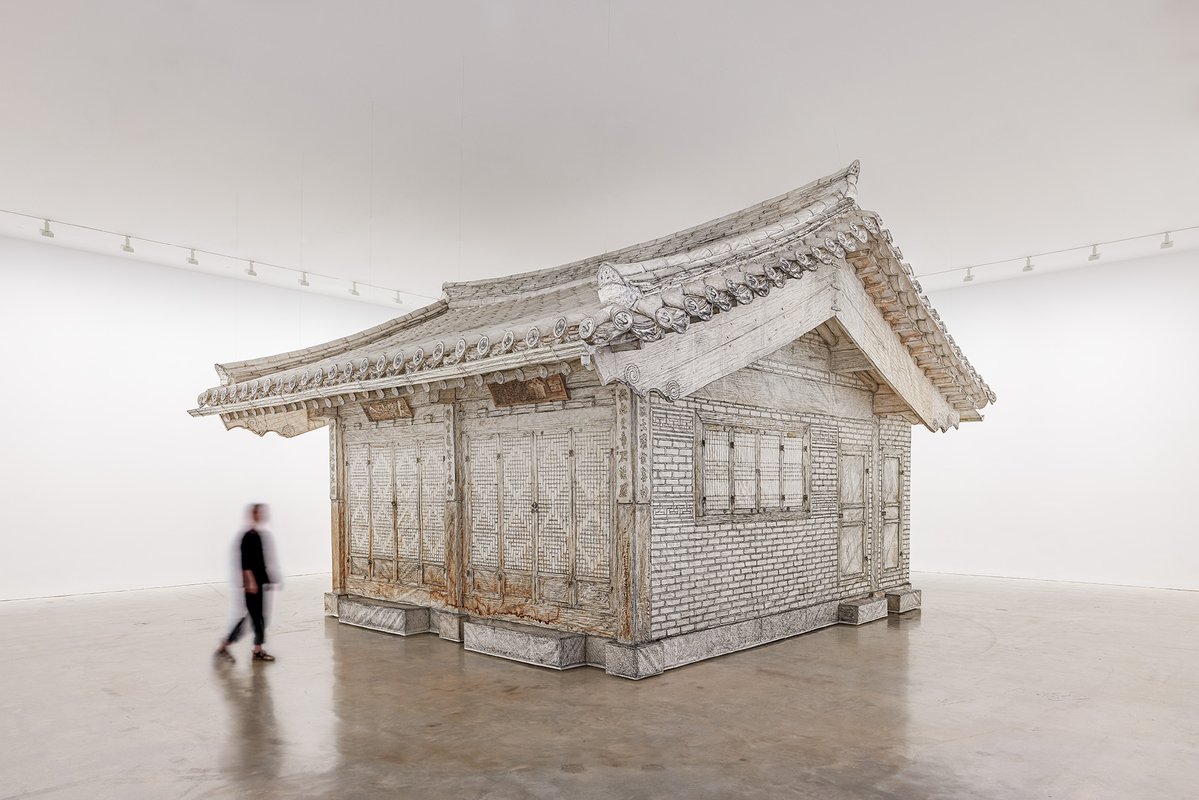
On the first floor, Srouji presents a reconstruction of the building’s facade that extends into the gallery at an angle, reading as an architectural remnant, a temporary backdrop, or the skeleton of a structure not yet completed or already collapsed. The artist links its light industrial materiality to Haret al-Tanak, the former tin-roofed hut settlement that stood between Manshiya and Kerem HaTeimanim until the mid-20th century near the end of Carmel Street, an area now used as a parking lot for market visitors. The exhibition text frames that vanished provisional landscape as one whose traces continue to resonate through the present building.
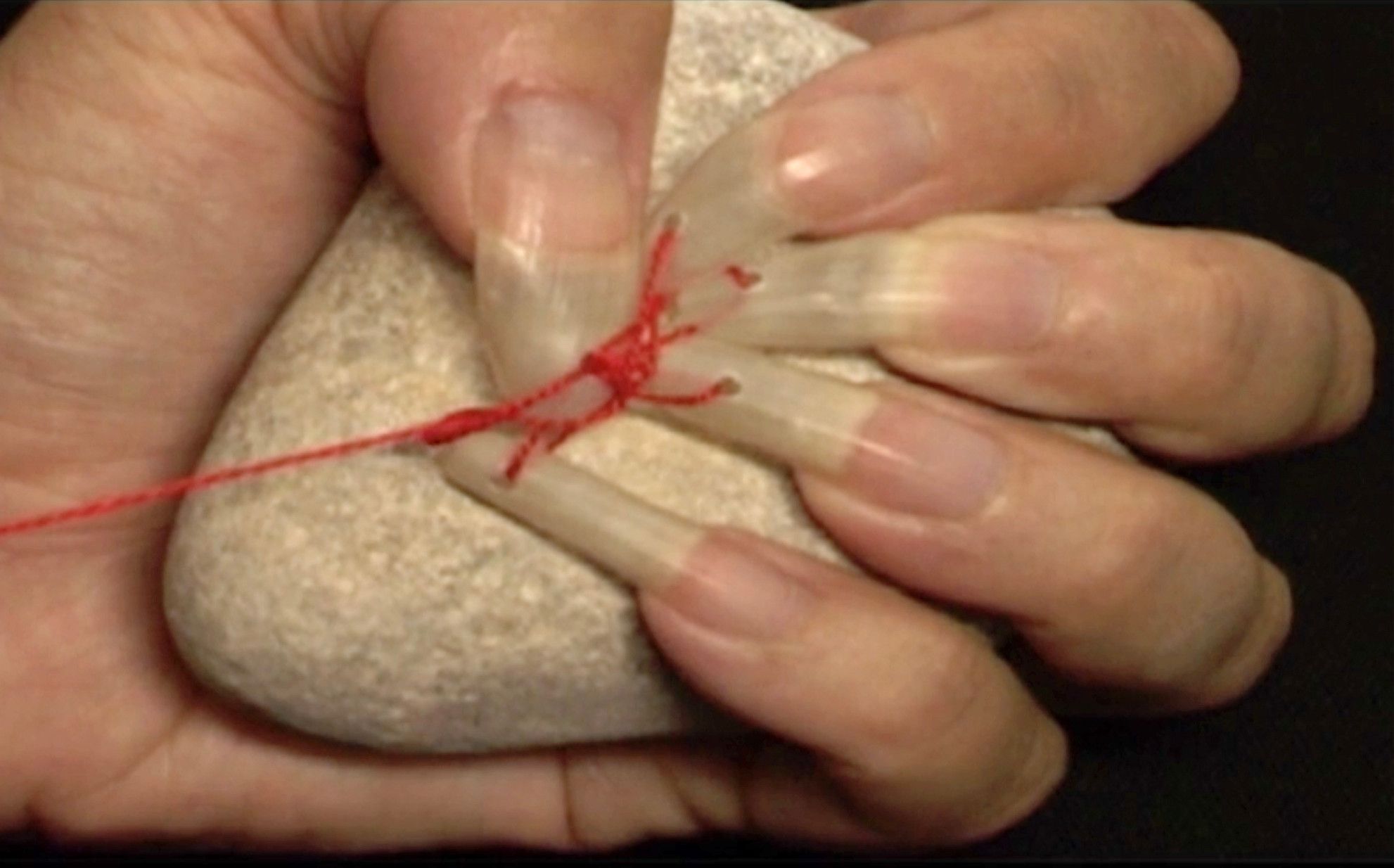
The second floor features a body of embroidery works mounted on metal supports that recall mashrabiya-like architectural elements derived from the CCA building itself. Installed along the staircase and screening windows from the southwest sun, these elements become the basis for Srouji’s embroidery compositions. The artist has worked in recent years with traditional Palestinian embroidery patterns, and the exhibition text describes embroidery as a coded visual system in which motifs can carry information about a woman’s origin, family affiliation, economic status, age, or personal condition. In Srouji’s hands, those patterns are not reproduced nostalgically; instead, they are stretched, dismantled, disrupted, and reassembled on industrial plates and into the building’s fabric.
The exhibition also draws on the cypress as a recurring sign in Palestinian visual culture. The tree, which can mark place and boundary, appears in cemetery settings and in embroidery in many variations. The title echoes Mahmoud Darwish’s poem 'The Broken Cypress', which the CCA text cites as a point of reference for the exhibition’s meditation on collapse and persistence. Rather than presenting breakdown as a single dramatic event, the exhibition frames it as an ongoing process: the facade tilts toward collapse while embroidery proceeds slowly and repetitively, working beneath the surface to mend, weave, and build an image that is at once old and new.
Curators Hila Cohen-Schneiderman and Yael Messer organized the exhibition. The project was realized with support from the Rivkind Ben-Zur Grant for Art, Education and Community, and with additional support from the Israel Lottery Council for Culture and Arts. The exhibition also notes that Srouji’s embroidery works were produced with young artists and students and graduates from art schools. Admission at CCA Tel Aviv-Yafo is listed at 20 shekels, with visiting hours Monday to Thursday from 14:00 to 19:00 and Friday to Saturday from 10:00 to 14:00.