 Image: Galicia Contemporary Art Center
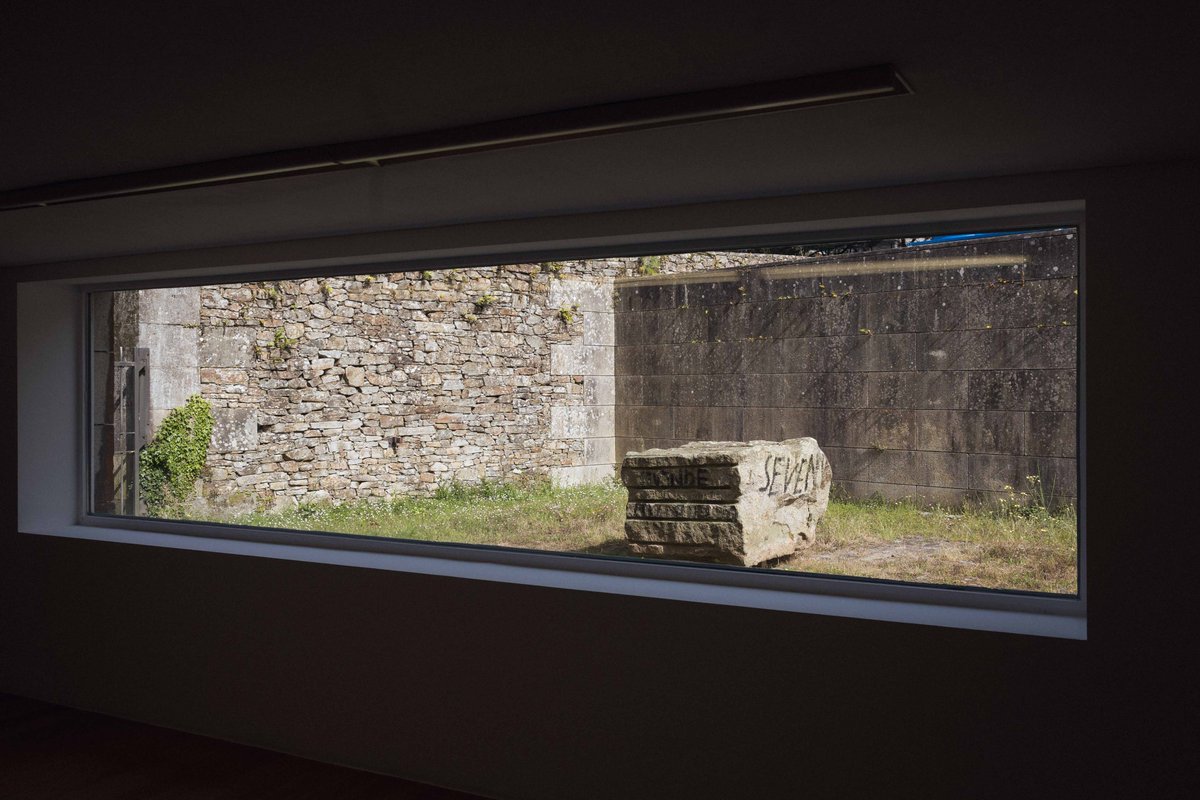
The Galicia Contemporary Art Center (CGAC) in Santiago de Compostela is presenting “Se vende esta piedra,” a work by Misha Bies Golas installed outside the museum. According to the center’s announcement, the piece transforms a block of granite marked with graffiti into an artwork that plays with humor and with viewers’ assumptions about what counts as art.
The work’s placement in the exterior of the museum is central to its impact. Rather than remaining inside a gallery or exhibition hall, the stone is encountered in public space, where its material presence and the added graffiti invite immediate, perhaps unexpected, attention. CGAC’s description emphasizes the tension between the object’s ordinary identity as a stone and its altered status as a sculpture or artwork.
By presenting a granite block in this way, Misha Bies Golas engages directly with questions that often animate contemporary art: how context changes meaning, how minimal interventions can reshape perception, and how humor can open a path into serious reflection. The museum’s note highlights that the work “plays with humor” and with “our way of understanding art,” underscoring the conceptual dimension of the piece.
CGAC’s post did not provide additional curatorial details, and no exhibition dates were included in the material made available. Even so, the announcement situates the work within the museum’s broader public-facing role, using its exterior space to extend contemporary art beyond the gallery interior and into the everyday urban environment.
That matters because outdoor works can widen access to contemporary art while also testing the boundaries between monument, object, and intervention. A simple stone, altered and newly framed by an institution, can become a site for looking again at materials that might otherwise be overlooked. In that sense, “Se vende esta piedra” reflects a familiar but still potent strategy in contemporary practice: making the ordinary strange enough to prompt renewed attention.
The CGAC, based in Santiago de Compostela, shared the announcement through its social media channels, presenting the piece as a current attraction for visitors. With its combination of a common material, a graffiti mark, and a wry title that suggests the language of commerce, the work offers a compact example of how contemporary art can turn a modest object into a broader reflection on value, perception, and interpretation.