 Image: Ebara Hatakeyama Museum of Art
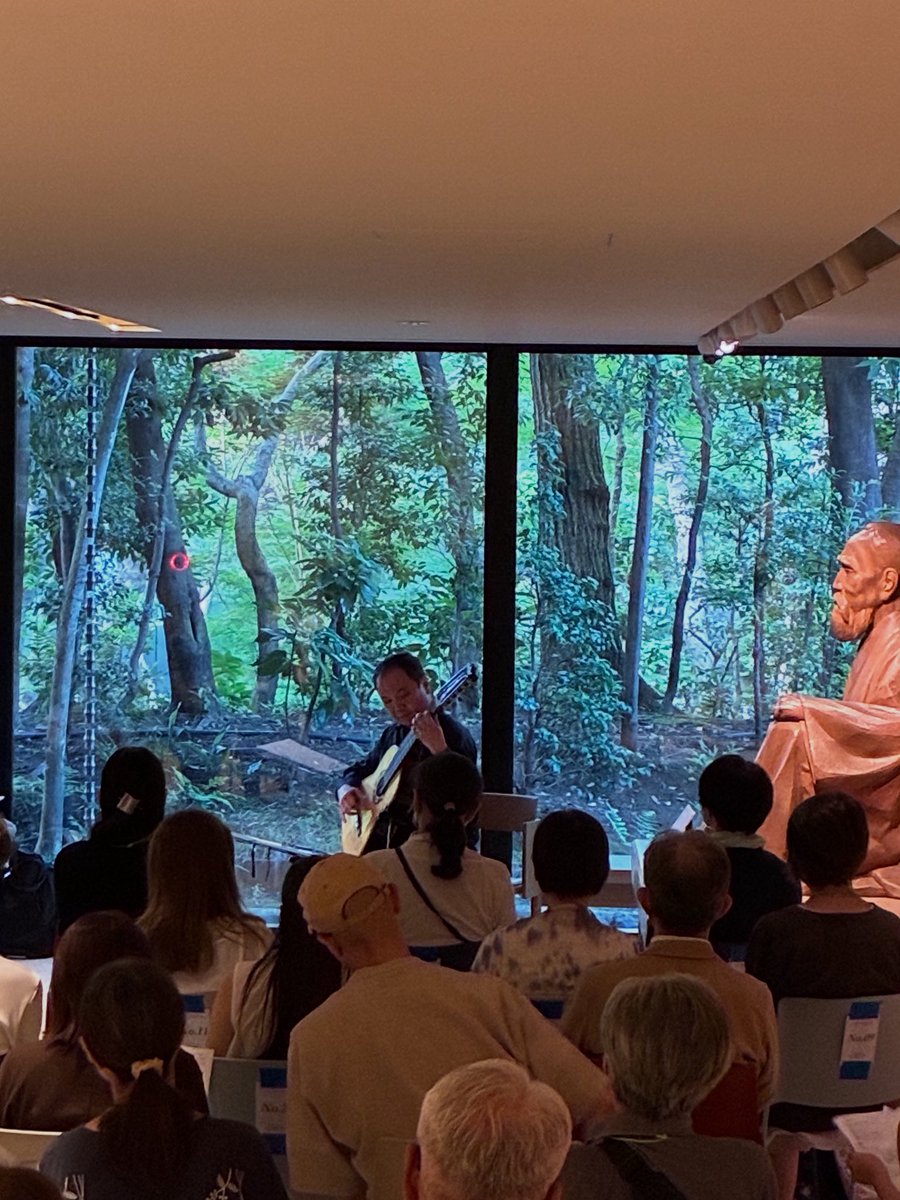
Ebara Hatakeyama Museum of Art held a twilight recital in the first-floor lobby of its main building, presenting guitarist Daisuke Suzuki in a summer evening program framed as a quiet musical event at the museum. According to the museum’s notice, the recital took place on July 12 and was designed as a serene, resonant experience for visitors.
The program centered on works by Federico Mompou, Hikari Hayashi and Tetsuya Tamiya. By bringing together this combination of repertoire, the museum placed the recital within a reflective, chamber-scale setting that complemented the architecture and atmosphere of the lobby space. The post described the event as offering a “luxurious summer evening” experience.
The Ebara Hatakeyama Museum of Art, known for presenting art in a setting that extends beyond conventional gallery display, has used its spaces for cultural programming that can include live performance as well as exhibitions. In that context, the twilight recital functioned not simply as a concert, but as part of the museum’s broader approach to activating the building as a site for aesthetic encounter.
While the museum’s announcement was brief, the choice to stage a guitar recital inside the main building lobby underscores a growing trend across cultural institutions: using live performance to deepen public engagement with museum space. Events like this can attract audiences who may come for music and encounter the museum’s collections and environment, or who may already be museum visitors and discover an added sensory dimension.
The selection of composers also points to the recital’s intimate scale. Mompou’s music, along with works by Hayashi and Tamiya, suited the calm, contemplative character described by the museum. Rather than a large concert event, the program appears to have emphasized listening, atmosphere and the interaction between sound and interior space.
For the museum, the recital reinforces the role of cultural programming in shaping how audiences experience an art institution after regular exhibition hours. For the wider art world, it is another example of museums presenting themselves not only as repositories of artworks, but as active venues for interdisciplinary experiences that can broaden public access to culture.