 Image: Ebara Hatakeyama Museum of Art, Tokyo
The exhibition frames the cat as an entry point into the encounter between Japanese art and late-19th-century Paris, as well as the new forms of expression that emerged from it.
Its account identifies Steinlen as an artist known for repeatedly depicting cats. It also says that, after Japanese art including ukiyo-e attracted attention in Paris in the late 19th century, cats—previously regarded as outsiders in the West—became an important motif of modern art.
The Steinlen works listed for display include ‘The Chât Noir Troupe’ from 1896 and ‘Vanjanne’s Milk’ from 1894. Other named examples are ‘Steinlen Exhibition at the Bodinière’ from 1894 and ‘Dream’ from 1890. The listing also includes ‘Abyssinian,’ dating from around 1900.
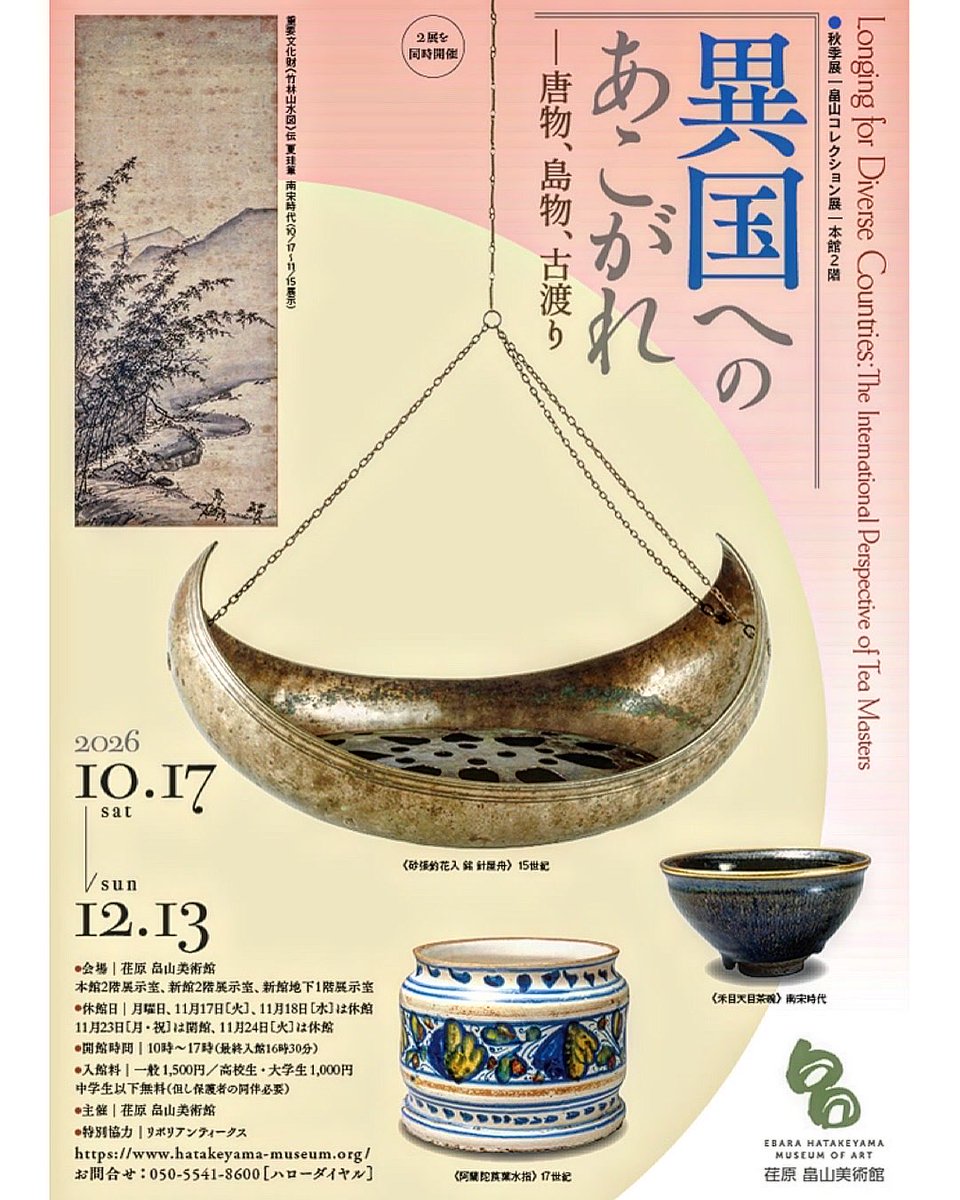
The account of tea practice describes it as developing from a longing for unknown foreign lands, with that longing changing over time from authority to aesthetic reinterpretation and then to global trade.
The Ebara Hatakeyama Memorial Cultural Foundation says it has supported Japonisme research and exchange for many years through support for the Japonisme Society and the co-hosting of international symposia.