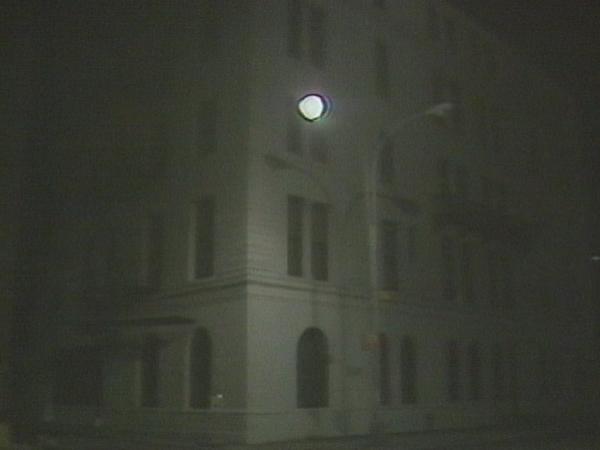
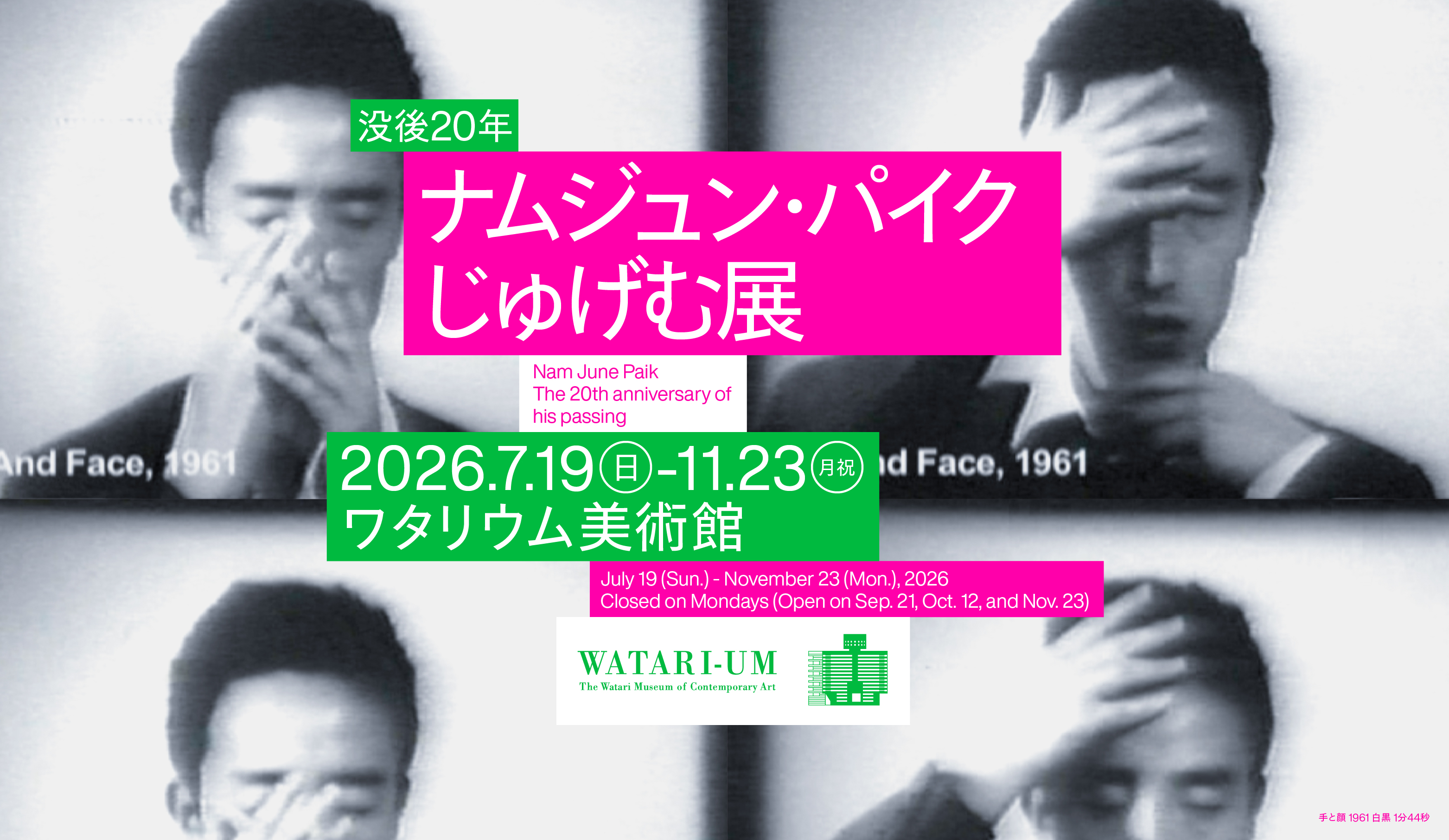
 Image: Nam June Paik, Hand and Face, 1961
The Watari Museum of Contemporary Art in Tokyo is in the final weeks of ‘Nam June Paik: Jugemu’, an exhibition marking twenty years since the artist’s death. The show opened on 19 July 2026 and closes on 23 November. In a post on 10 October, the museum noted that it is open throughout the three-day holiday weekend and on the Tuesday that follows.
The title borrows from ‘Jugemu’, a well-known comic piece from the rakugo storytelling repertoire in which parents give their child an absurdly long name in the hope of a long life. The museum uses the story as a metaphor for Paik’s work. More than half a century has passed since he first showed media art in West Germany in 1963, and the technologies he worked with, from cathode-ray televisions onward, have since been overtaken by flat screens, smartphones and AI. According to the museum, his works have not dated as a result; if anything their originality stands out more clearly with time, because Paik treated the television tube, the canvas and paint as equally valid means of expression. The exhibition sets out to look again at Paik as artist, writer, philosopher and prophet.
The works on view span three decades. They include ‘Hand and Face’ (1961), a black-and-white video of under two minutes; ‘TV Egg’ (1982); the pastel drawing ‘Time’ (1980, shown in part); the colour video ‘Eiheiji Sanka’ (1986); and a group of works from 1993, among them ‘New Candle’, made with candles, a camera and four video projectors, a section of the plant-and-monitor installation known in Japanese as ‘Kēji no mori / Mori no keiji’, and a neon-and-monitor piece using 72 screens. The cover of Paik’s manuscript ‘Feed back and Feed forth’ (1993) is also displayed.
Born in Seoul in 1932, Paik studied aesthetics in Japan and music in Germany before joining Fluxus in 1961. The Watari Museum’s relationship with him goes back to 1978, when its predecessor, Galerie Watari, gave him his first solo show there, a tribute to John Cage. In 1993 he represented Germany at the 45th Venice Biennale, in the first German pavilion after reunification, and received the Golden Lion; the same year the museum presented a solo exhibition of new work. Paik died in Miami in January 2006.
A bilingual Japanese-English book connected with the exhibition is due from the publisher twelvebooks in autumn 2026.