 Image: Museo de Arte Contemporáneo, Madrid
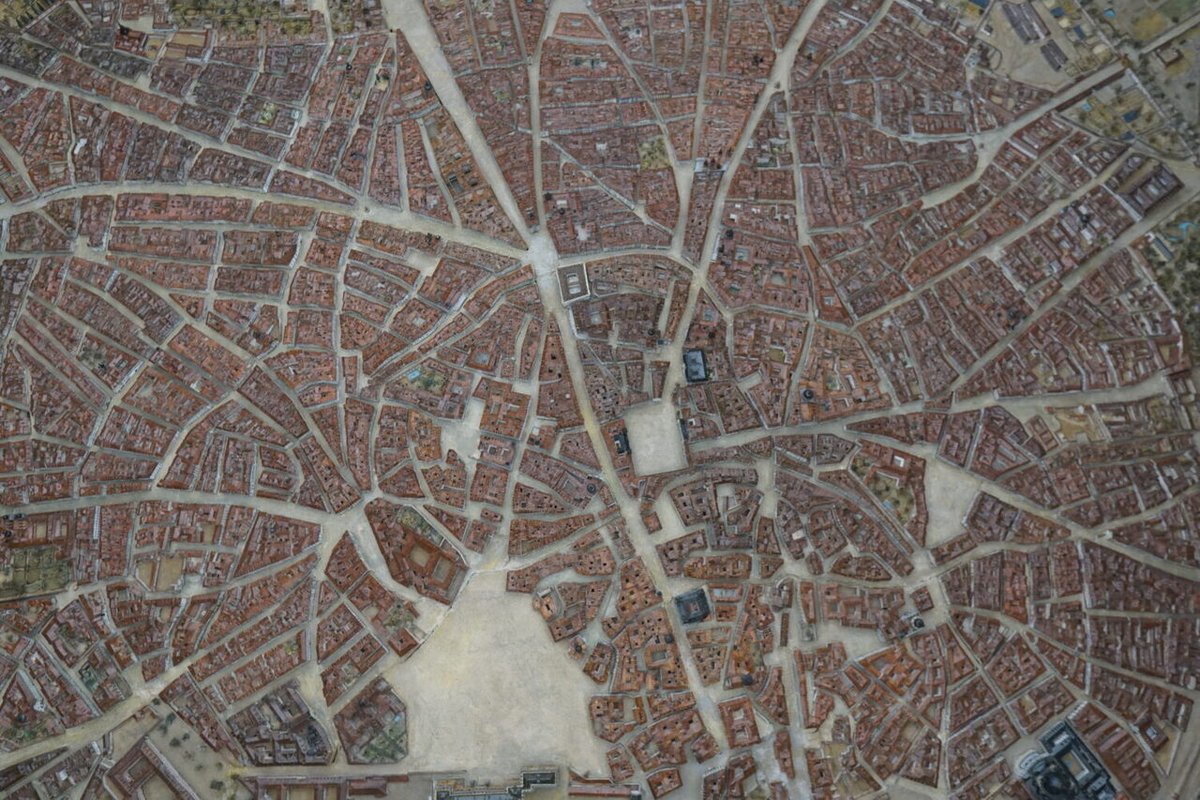
The Museo de Historia de Madrid has completed the restoration of one of its most important cartographic holdings: the three-dimensional model of Madrid made by León Gil de Palacio between 1828 and 1830. The museum says the work, a detailed replica of the city in the early 19th century, will be viewable again from 1 September 2026 in the exhibition and viewing setup devoted to the restored model.
Described by the city as one of the oldest urban maquettes in Spain and among the oldest in the world, the rectangular model presents Madrid at a moment when the population reached about 200,000 inhabitants. Built to a scale of 1:432, it was completed in ten blocks and measures 5.2 by 3.5 metres. The city’s account highlights the precision of the craftsmanship, including architectural details such as cornices, façades, spires, domes and other features rendered with unusual delicacy.
Gil de Palacio, identified in the source material as an engineer and lieutenant colonel of artillery, had already made models of the Torre de Hércules in A Coruña and Valladolid before receiving the Madrid commission. The project was ordered by Fernando VII by royal order dated 13 November 1828. According to the city’s account, the maker worked with materials including silk, wood, cork, lead and wallpaper, and the model’s reported cost was 66,358 reales. The finished work was presented roughly two years later.
The restoration campaign, which began in spring 2025 and was completed recently, focused on conservation and display conditions rather than altering the historical object itself. The intervention included a full cleaning of the model, structural reinforcement, replacement of the old display case with a new protective structure, and new museum lighting. The exhibition space was also redesigned to create a more fluid route for visitors.
Accessibility was a key part of the project. The museum installed a ramp for visitors with reduced mobility, and the city says the improvements were made with an investment of nearly 90,000 euros. Among the most technically demanding tasks was closing and disguising the joins between the separate blocks once the model had been reassembled.
The restored model is part of the museum’s cartographic legacy and has long been presented as a singular record of Madrid’s built form in the early 1800s. The city’s account notes that the level of detail impressed contemporaries and helped lead to further commissions for Gil de Palacio, including projects connected to El Escorial, Casa de Campo and Aranjuez. The model can now be visited again at the Museo de Historia de Madrid from 1 September 2026.