 Image: Buenos Aires Museum of Modern Art
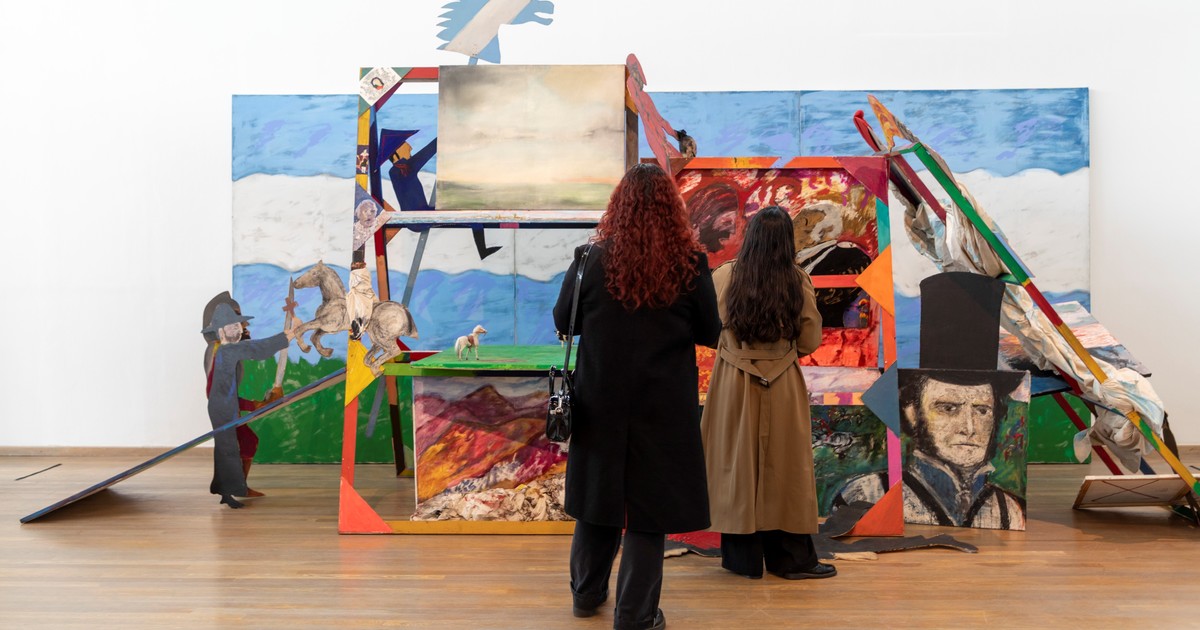
A major selection of works from the Buenos Aires Museum of Modern Art’s collection has opened at Parque de la Memoria in Buenos Aires in an exhibition marking 50 years since Argentina’s last military dictatorship. Titled 'La memoria de la colección: El Moderno en el Parque' and presented under the heading 'El Moderno en el Parque: Producir en medio del horror', the show gathers more than 70 works by 40 artists and will remain on view until October 12.
According to the source material, the project brings together works made mostly during the dictatorship period, while also spanning from the 1960s to the return of democracy. The exhibition is curated by Nicolás Cuello and Cecilia Nisembaum, and is framed around the relationship between art and politics, with particular attention to memory and trauma. The newspaper account describes the display as a lucid and sensitive survey that opens up contemporary discussion through the museum’s public collection.
The exhibition was developed through collaboration between Parque de la Memoria and the Museum of Modern Art. The source notes that Florencia Battiti, director of Parque de la Memoria, proposed the idea to Victoria Noorthoorn, director of the museum, and that the project became a joint effort. Battiti is quoted in the source saying that commemorating the 50th anniversary of the coup is a particularly significant moment for Parque de la Memoria, and that bringing works from the Moderno’s collection to the site felt especially appropriate.
The installation is organized into five sections, or nuclei, that use the selected works to build a curatorial argument about how artists responded to violence, censorship and political conflict. The opening section includes Norberto Gómez’s 'Crucifixión' (1983), alongside paintings from the 1960s by Carlos Gorriarena, Rómulo Macció and Ricardo Carreira. Diana Dowek’s 'Lo que vendrá' (1972) is also part of the early section, while Carlos Langone’s 'Tensiones' (1979) and Enio Iommi’s 'Atrapados' (1976) are placed in dialogue as examples of materially inventive responses to the period.
Several works by Alberto Heredia, including the series 'Ricky y el pájaro' (1976), appear in the exhibition as an allegory of political and ideological persecution. The source also highlights the first complete display of Víctor Grippo’s installation 'Algunos oficios' (1976), shown opposite works by Ricardo Carpani and Juana Elena Diz, both associated with the Espartaco muralist group. Photographs by Sara Facio from 1974, on militant youth, are also included.
Other sections move through post-dictatorship experimentation and the return of democracy, with attention to women artists such as Elda Cerrato, Paulina Berlatzky, Juana Butler, Josefina Quesada and Josefina Mazzaglia. The exhibition also includes works by Juan Carlos Romero, Mirtha Dermisache, León Ferrari, Marie Orensanz and Oscar Bony, as well as three large black-and-white intervened photographs by Marcelo Brodsky that the source says link Argentine human rights movements with the U.S. civil rights movement. The show is on view at Parque de la Memoria, Av. Costanera Norte Rafael Obligado 6745, Tuesday through Sunday from 11 a.m. to 5 p.m., with free admission.