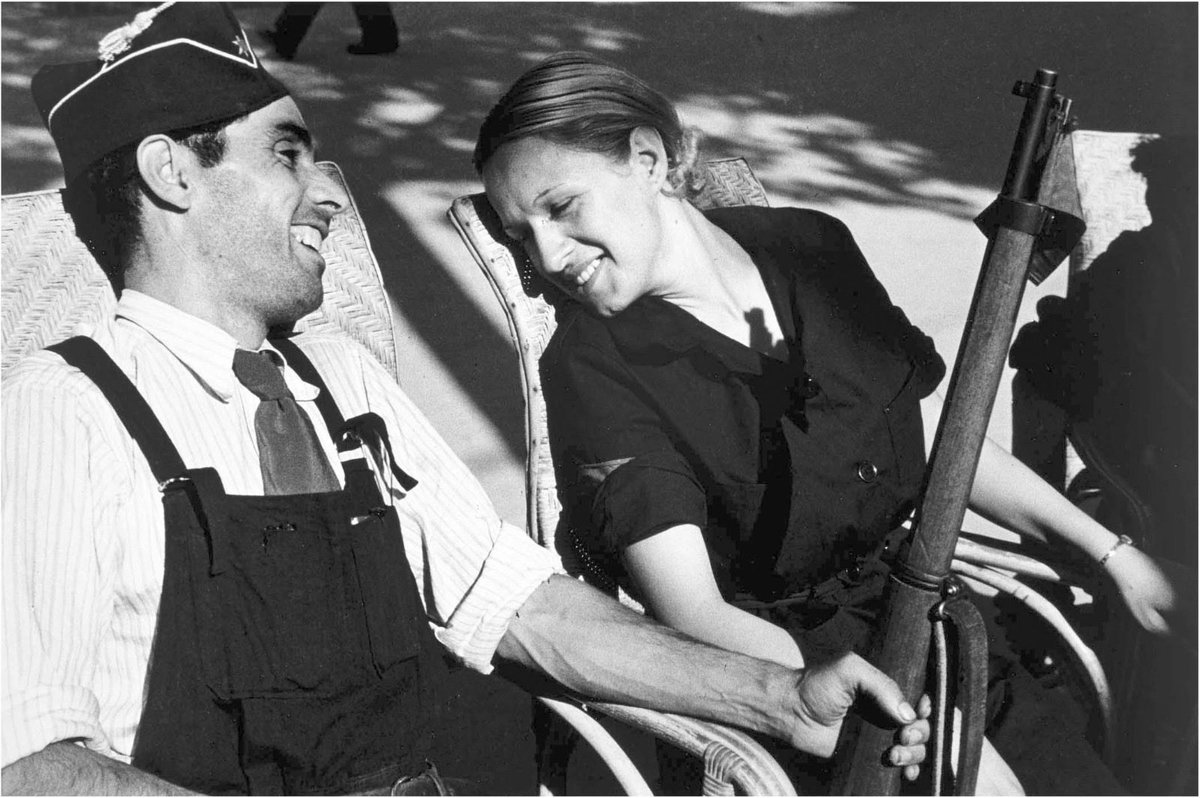
 Image: Museo Nacional Centro de Arte Reina Sofía, Madrid
Museo Nacional Centro de Arte Reina Sofía has highlighted the wartime photography of Gerda Taro in a recent social media post, drawing attention to the German-born photographer’s development of a distinct visual voice before her death in 1937. The museum’s message, written in Spanish, said that “Taro did not take long to make a name for herself,” and noted that she moved through different war settings and photographed the front from very close range.
According to the post, Taro’s pictures were made with a direct, dynamic and committed gaze. The museum also said that her images were published in magazines and newspapers including ‘Vu’ and ‘Regards’, placing her work within the illustrated press that helped circulate war photography in the interwar years. No exhibition dates, venue details or broader program information accompanied the post.
The Reina Sofía reference brings renewed institutional attention to a photographer who has become closely associated with frontline reporting and the visual culture of conflict. Taro’s name is often discussed alongside the rise of photojournalism in Europe, and the museum’s framing emphasizes both the immediacy of her pictures and the professional recognition she received during her brief career.
The museum’s post does not specify which war scenes or individual photographs it had in mind, but it presents Taro as an active and distinctive presence in the field, rather than as a figure defined only in relation to others. That emphasis is notable in the context of a national museum whose online communications regularly introduce or revisit artists, movements and key works for a broad public audience.
The source material available for the post remains limited, and it does not identify a corresponding exhibition, lecture or gallery display. Still, the wording makes clear that the museum is foregrounding Taro’s work as part of its public-facing content, with the focus squarely on her close-up approach to the front lines and the circulation of her photographs through major illustrated publications.
Taro died in 1937, the museum notes, after a career that took her across different war settings and into print culture through outlets such as ‘Vu’ and ‘Regards’.