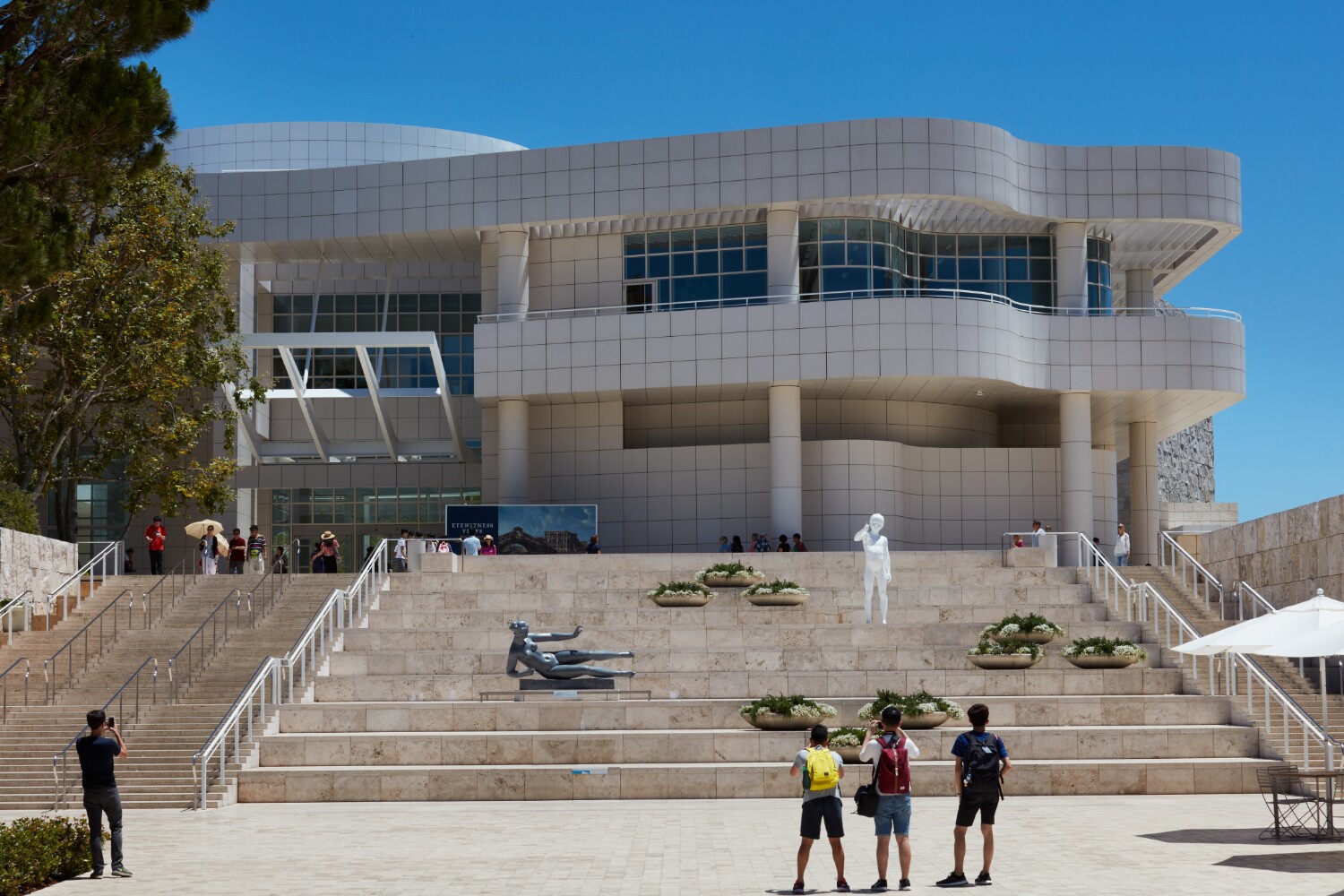
 Image: Getty Villa, Los Angeles
The Getty Center in Los Angeles will present "Lost. Found. Returned." from June 23 to October 18, 2026, an exhibition built around the wartime disappearance and later recovery of a drawing by Otto Greiner. According to the Getty, the show traces how the work vanished from Dresden during World War II and re-emerged in Los Angeles decades later, turning a single object into a wider story about loss, survival, and return.
The exhibition is listed for the Getty Center, the museum’s campus devoted to art from the Middle Ages to today and set amid modern architecture and gardens. The venue’s broader context matters here: the Getty Center is not only a museum of display, but also a place where research, conservation, and collection history intersect. An exhibition focused on an artwork’s long journey through wartime disruption fits squarely within that framework, where provenance can be as historically revealing as style or subject.
The source material identifies the featured image as "Graphic of Standing Male Nude from the Back, with a Smaller Sketch (detail), 1892," by Otto Greiner, with credit to the Kupferstich-Kabinett Dresden, Staatliche Kunstsammlungen Dresden. That attribution points to the central historical arc of the exhibition: an object associated with a German public collection, lost in the upheavals of war, and later found far from its original home. The Getty’s presentation appears designed to make that trajectory legible through artworks and historical context rather than through abstraction alone.
Although the available information is limited, the exhibition’s title suggests a narrative structure that is especially resonant in today’s museum world. "Lost. Found. Returned." foregrounds three stages that are increasingly central to art-historical debate: wartime loss, postwar rediscovery, and the ethics and mechanics of restitution. By framing the story around an individual work, the Getty can connect broad questions about displaced cultural property to a concrete case that visitors can follow closely.
The exhibition also underscores how museums use scholarship to reattach objects to historical events and institutions. In this case, the Getty is presenting the story not simply as a mystery solved, but as a way to explore what happened to art during and after World War II. That makes the show relevant beyond one drawing: it touches on how collections were fractured by conflict, how works travel across borders and markets, and how museums reconstruct those histories today.
For visitors, the Getty Center’s free-admission model and its exhibition schedule make the show accessible across a long summer and fall run. For the wider art world, the exhibition points to the continuing importance of provenance research and public-facing interpretation of wartime losses. In doing so, "Lost. Found. Returned." aligns the Getty Center’s research mission with one of the field’s most enduring questions: what it means when an artwork disappears, and what it means when it comes back.