 Image: Catriona Jeffries Gallery
Catriona Jeffries Gallery will open to the public Wednesdays through Saturdays from July 11 to 31, 2026, as it installs, documents and cares for new and archival works in its main space. The gallery’s July notice frames the month as an active working period rather than a conventional exhibition opening, with the Vancouver gallery also directing visitors to follow weekly updates on Instagram.
The announcement offers a glimpse into the operational side of a contemporary art gallery, where exhibition-making often overlaps with conservation, documentation and collection stewardship. Catriona Jeffries, located at 950 East Cordova Street in Vancouver, has long been associated with contemporary art practice and presentation, and the July schedule underlines how galleries can use in-between periods to maintain both current programming and the care of earlier works.
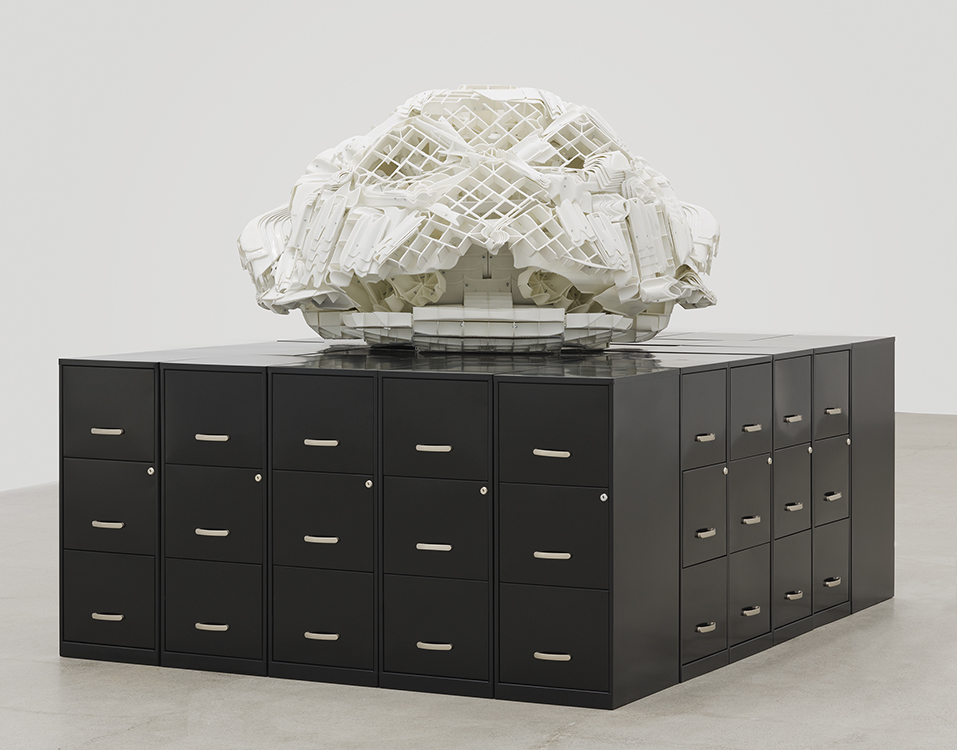
The only artwork identified in the notice is Brian Jungen’s Tombstone, 2019, described as a work made from Rubbermaid step stools and filing cabinets. The image caption, credited to Rachel Topham Photography, highlights a sculptural practice in which familiar manufactured objects are reconfigured into an artwork of substantial scale. Even in this brief announcement, the work signals the gallery’s continuing engagement with artists whose practices operate through material transformation and the recontextualizing of everyday forms.
The gallery’s public hours during July are also notable for what they suggest about the rhythm of a commercial gallery’s calendar. Rather than closing entirely while installations are underway, Catriona Jeffries is inviting visitors into the process, making installation and documentation part of the public-facing story. For audiences, that creates a rare chance to encounter the gallery at a moment when artworks are being handled, reviewed and prepared for future presentation.
A separate “summer break” is scheduled for August 4 to 31, 2026, indicating that the July opening period is temporary and transitional. The sequencing of the notice suggests a deliberate pause in regular exhibition activity, followed by a month-long closure. While the gallery does not specify a named exhibition in the source material, the structure of the announcement makes clear that July functions as a working window for new and archival material in the main space.
In broader art-world terms, the announcement matters because it reminds audiences that galleries are not only places of display but also sites of maintenance, curation and institutional memory. Public attention often centers on openings and finished exhibitions; this notice instead places emphasis on the quieter labor that sustains contemporary art spaces and preserves the conditions for future exhibitions and scholarship.