 Image: Barbara Hepworth Museum and Sculpture Garden
Tate is using a membership campaign to spotlight the breadth of its exhibition programme, highlighting works by Frida Kahlo, Tracey Emin, Claude Monet and other artists in an email sent to recipients this week. The message invites Tate Members to enjoy unlimited free exhibition entry, alongside access to Members’ Rooms, special events and other benefits, framing membership as a route into the institution’s current and forthcoming displays.
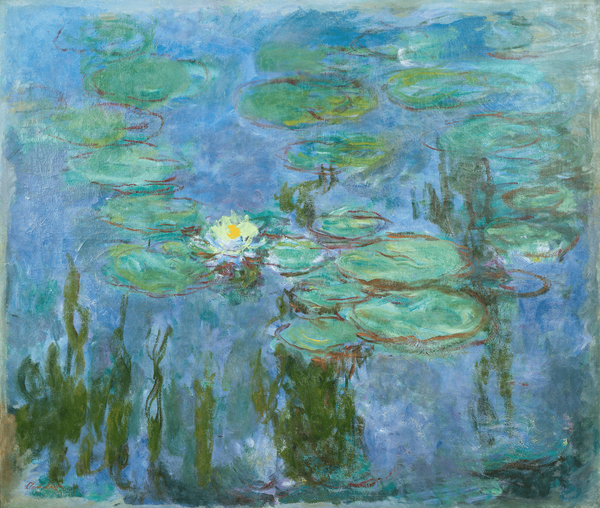
The email’s headline, “You’re one step from seeing it all – from Frida Kahlo to Tracey Emin,” signals the range Tate is aiming to emphasise. Rather than promoting a single exhibition, the campaign presents Tate’s offer as a wider invitation to move across the institution’s galleries and shows. The copy specifically says members can “explore a world of art” featuring works by Kahlo, Emin, Monet and many more, underlining the breadth of the Tate programme as a central selling point.
Among the works named in the email is Frida Kahlo’s Untitled [Self-portrait with thorn necklace and hummingbird], 1940, an oil on canvas mounted to board from the Nickolas Muray Collection of Mexican Art at the Harry Ransom Center. The image is paired in the campaign with Juergen Teller’s Young Pink Kate, London, 1998, suggesting Tate is using recognisable modern and contemporary works to bridge historical and present-day audiences. The email also identifies Tracey Emin and Claude Monet among the artists represented in the broader membership offer, though it does not specify the exhibitions or individual works being referenced.
The campaign arrives alongside Tate’s wider public-facing visitor information, which confirms that its galleries continue to foreground exhibition access as a major part of the institution’s offer. Tate St Ives, according to the gallery’s site, requires a ticket or membership card for entry, while other Tate venues are listed with free admission. In this context, membership becomes not only a loyalty scheme but also a practical way to guarantee access to ticketed exhibitions and special events across the network.
For Tate, the messaging matters because it positions exhibition-going as an essential part of the museum experience at a moment when major institutions increasingly rely on memberships to deepen audience engagement. By pairing a star name such as Kahlo with artists associated with different generations and styles, Tate is also reinforcing the curatorial diversity that has made its programming a touchstone in British museum culture.
The email’s strongest significance lies in how it reflects Tate’s broader institutional strategy: to present its galleries as a place where canonical modern masters and contemporary figures can be encountered in one membership package. Even without naming a single featured exhibition in the body text, the campaign makes clear that the institution is leveraging the drawing power of major artists to encourage repeat visits and sustained public access to art.