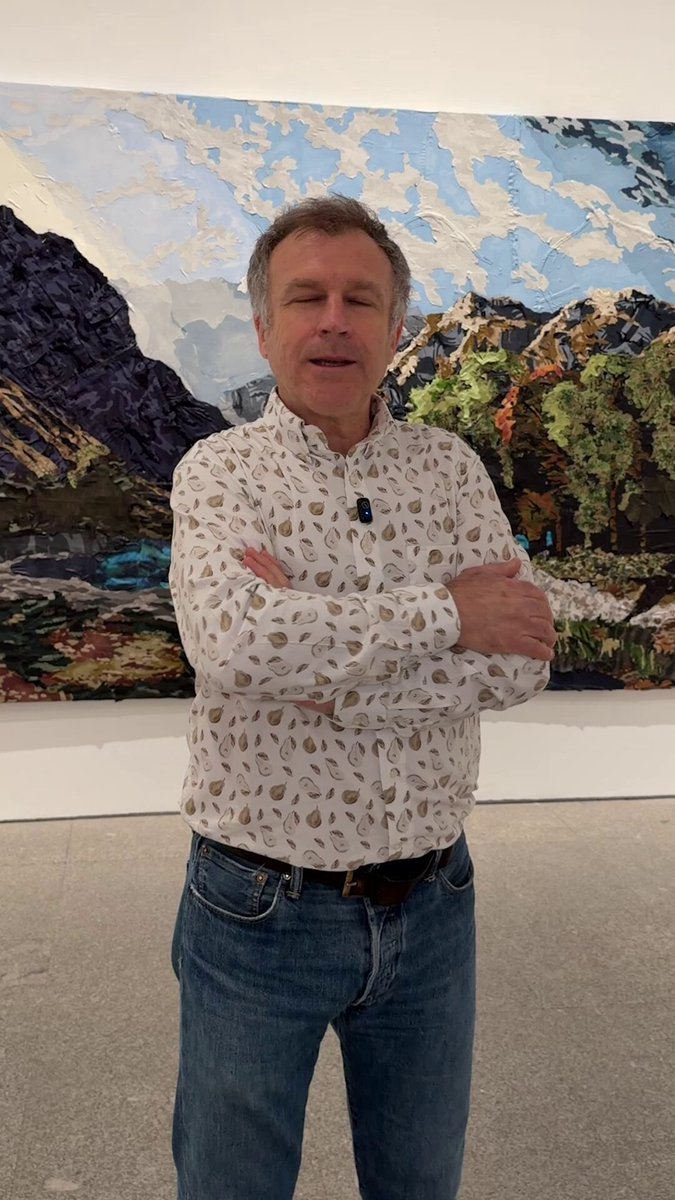
 Image: Museo Nacional Centro de Arte Reina Sofía, Madrid
Museo Nacional Centro de Arte Reina Sofía has shared a video in which Mateo Maté discusses 'Paisajes de siempre', a work that reimagines Alexandre Calame’s Lake Geneva using fragments of military uniforms. The post frames the piece through a direct question: can a canvas conceal the trace of war?
The museum’s message positions the work as both a landscape image and an inquiry into what materials can carry. Rather than presenting a conventional painted view, Maté reconstructs the scene through textile remnants associated with military dress, shifting attention from scenic representation to the textures and histories embedded in the medium.
'Paisajes de siempre' draws on Calame’s depiction of the Lake Geneva landscape, but the source material offered by the museum emphasizes Maté’s transformation of that reference into a work assembled from uniforms. That choice places the piece within a line of contemporary art that revisits familiar visual traditions while altering the substance from which they are made.
The Reina Sofía post does not announce an exhibition or public event tied to the video, and it does not provide further details about the work’s display context. Instead, the museum presents the artist speaking directly about the piece, using the video format to foreground the relationship between the landscape motif and the military material from which it is built.
By highlighting 'Paisajes de siempre', the museum draws attention to Maté’s method of remaking a recognizable pictorial subject through materials loaded with historical associations. The work’s title, which translates as 'Landscapes of Always', adds another layer to that revisiting of an established image, although the post itself does not elaborate on the title’s meaning.
The video is part of the museum’s social-media output dated 29 July 2026, and the available source text keeps the focus tightly on the artist’s account of the work. No additional biographical information, exhibition dates, or venue details are given in the post beyond its appearance on Museo Reina Sofía’s channels.