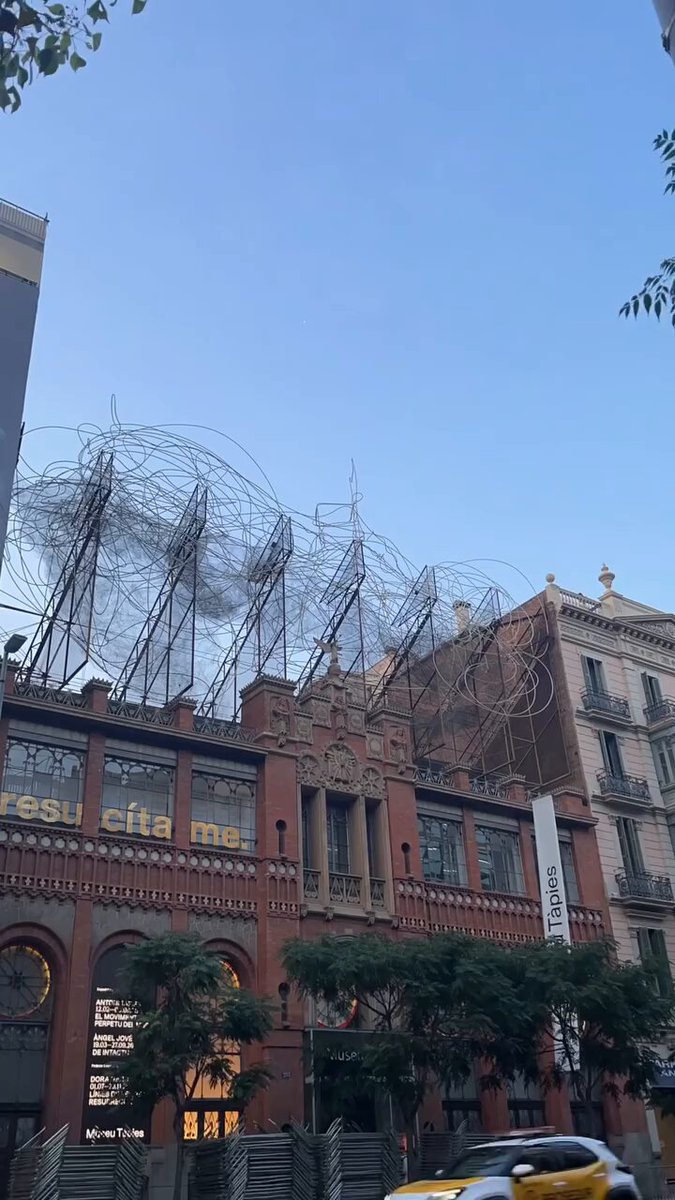
 Image: Tàpies Museum, Barcelona
Barcelona’s Tàpies Museum is drawing attention to an installation by Antoni Tàpies that the artist created in 1990 to reinforce the identity of the Domènech i Montaner building. In a short post, the museum described the work through two of its visual elements — “the cloud and the chair” — and noted that the chair is a recurring symbol in Tàpies’ visual language.
The museum’s message presents the installation as something visitors can encounter in person, inviting the public to “visit us and experience it for yourself.” No further curatorial details were provided in the post, but the museum’s framing makes clear that the work is being discussed as part of the institution’s presentation of Tàpies’ practice and its relationship to the building that houses the museum.
Antoni Tàpies remains one of the central figures in modern and contemporary Spanish art, and the museum that bears his name continues to use its own spaces to underscore the artist’s enduring presence there. The reference to the Domènech i Montaner building also links the installation to the architecture of the museum itself, situating the work within a specific site rather than treating it as a standalone object.
According to the museum, the installation dates to 1990. The post does not indicate whether the work is newly installed, reinstalled, or simply being highlighted for visitors at the moment, and it does not provide an exhibition title or separate event name. The emphasis is instead on the artwork’s symbolic language and on the way Tàpies used the chair motif within his broader visual vocabulary.
The museum’s social-media note also suggests a close reading of the installation’s imagery, pairing the cloud and chair as the key elements visitors should look for. Beyond that, the institution gave no additional interpretive statement, program information, or schedule details in the post.
Visitors can currently see the installation at the Tàpies Museum in Barcelona, where the museum points to Antoni Tàpies’ 1990 work as a way of understanding the building’s identity and the artist’s recurring symbols.