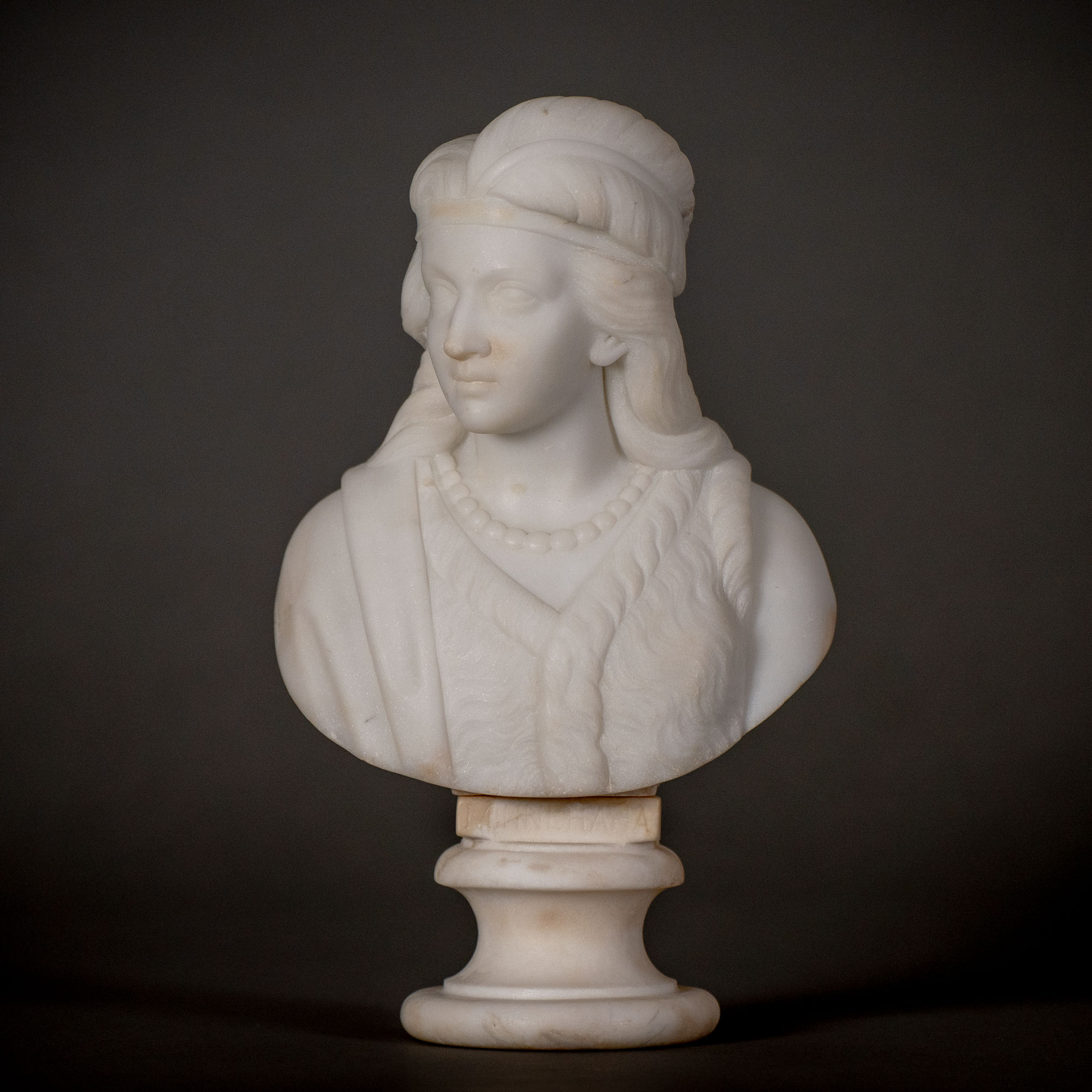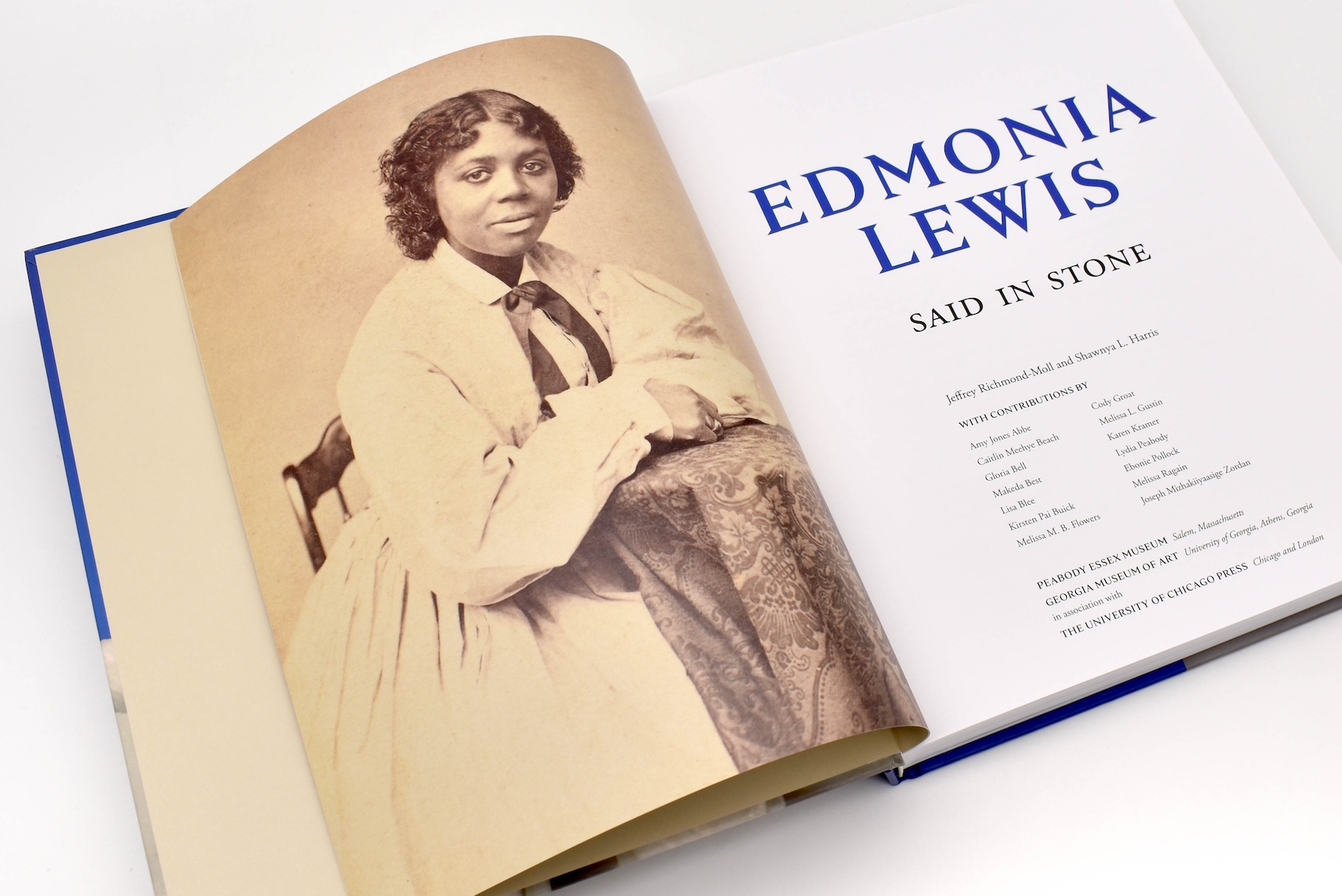
A new catalogue accompanying "Edmonia Lewis: Said in Stone," the retrospective on view at the Georgia Museum of Art in Athens, Georgia, brings together essays by 16 scholars on the life and work of the 19th-century sculptor. The Georgia Museum and the Peabody Essex Museum in Salem, Massachusetts, which co-organized the exhibition, worked together on the book, published by the University of Chicago Press. It was edited by the show's co-curators, Shawnya L. Harris, the Georgia Museum's Larry D. and Brenda A. Thompson Curator of African American and African Diasporic Art, and Jeffrey Richmond-Moll, George Putnam Curator of American Art at the Peabody Essex Museum.
Lewis, born in Greenbush, New York, in 1844 to a free Afro-Caribbean father and a mother of African and Mississauga descent, is described by the museum as the first sculptor of Afro-Caribbean and Indigenous American descent to gain international recognition. She studied at New York Central College and Oberlin College, and the Anishinaabe crafts she saw while being raised by her aunts shaped her work. After settling in Boston in 1863, where she sold work at antislavery meetings, she used commissions from abolitionist circles to reach Europe and spent most of her career in Rome working in the neoclassical style.
Harris describes the research as a mix of art-historical study and reconstruction, given the gaps and contradictions in the historical record. During planning, the curators held two meetings with invited curators and scholars to set the book's direction. Its essays fall into seven sections: "Indigenous Artistic Worlds," "Relations," "Diplomacies," "Facts and Fiction," "Religion and Myth," "Materialities" and "Legacies," the last tracing how Lewis was remembered, forgotten and recovered after neoclassicism lost favor in the late 1880s. Contributors include scholars from Harvard University, McGill University, the Oakland Museum of California, National Museums Liverpool and the Peabody Essex Museum.
According to the museum, the book aims to secure Lewis's place in the scholarship while questioning the idea that she had been entirely forgotten. It is heavily illustrated with work by Lewis and other artists, and each copy includes a facsimile of the pamphlet "How Edmonia Lewis Became an Artist" along with a detailed chronology covering the rediscovery of sculptures such as "Awake," "Asleep" and "The Death of Cleopatra."
"The Death of Cleopatra" was thought lost when Lewis died in 1907, until art historian Marilyn Richardson found it in 1988 in the storage room of an Illinois strip mall. Now in the Smithsonian American Art Museum, it could not travel for the exhibition, which instead presents an interactive 3-D scan.
The exhibition opened at the Peabody Essex Museum earlier in 2026 and is scheduled to travel to the North Carolina Museum of Art from April 3 to July 11, 2027.