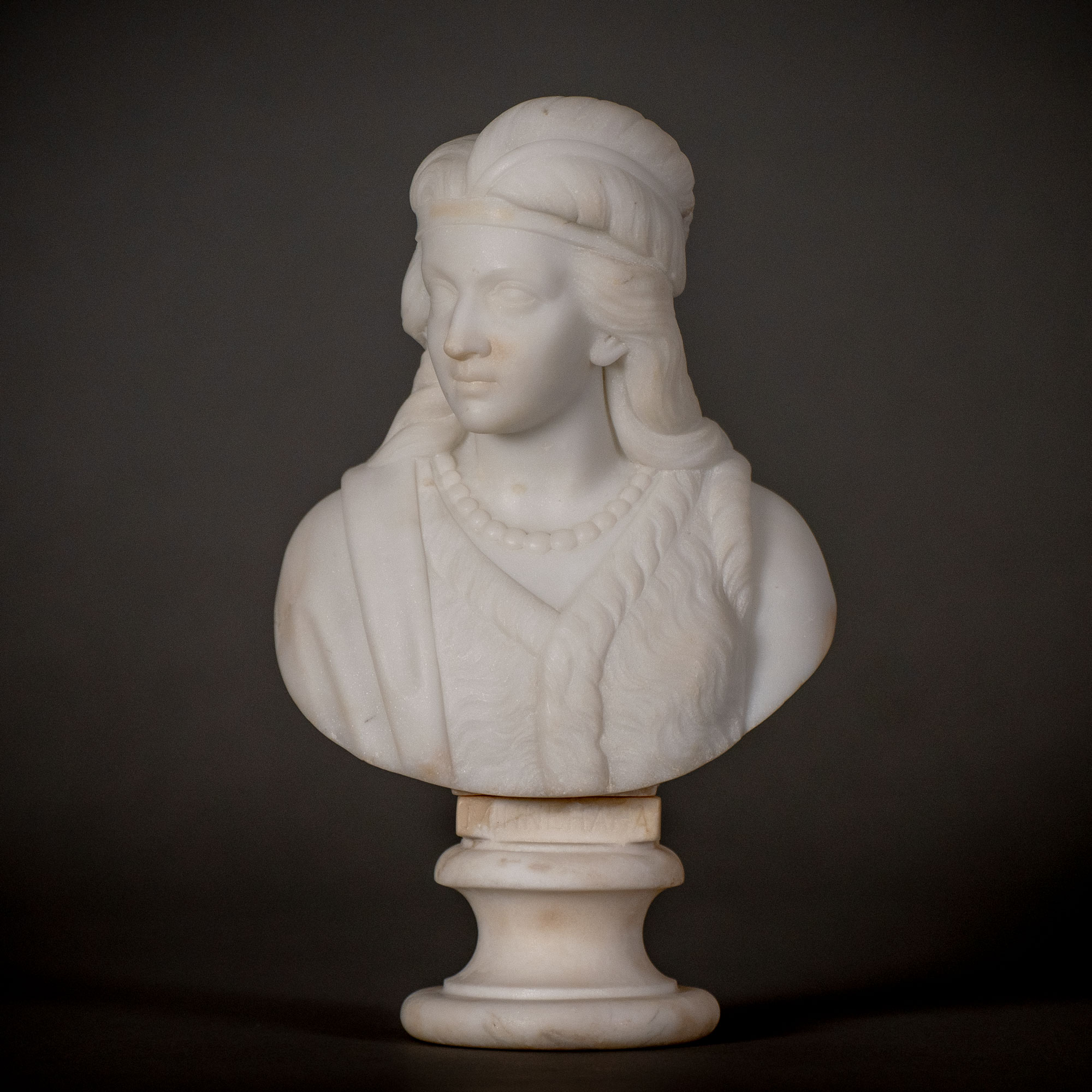
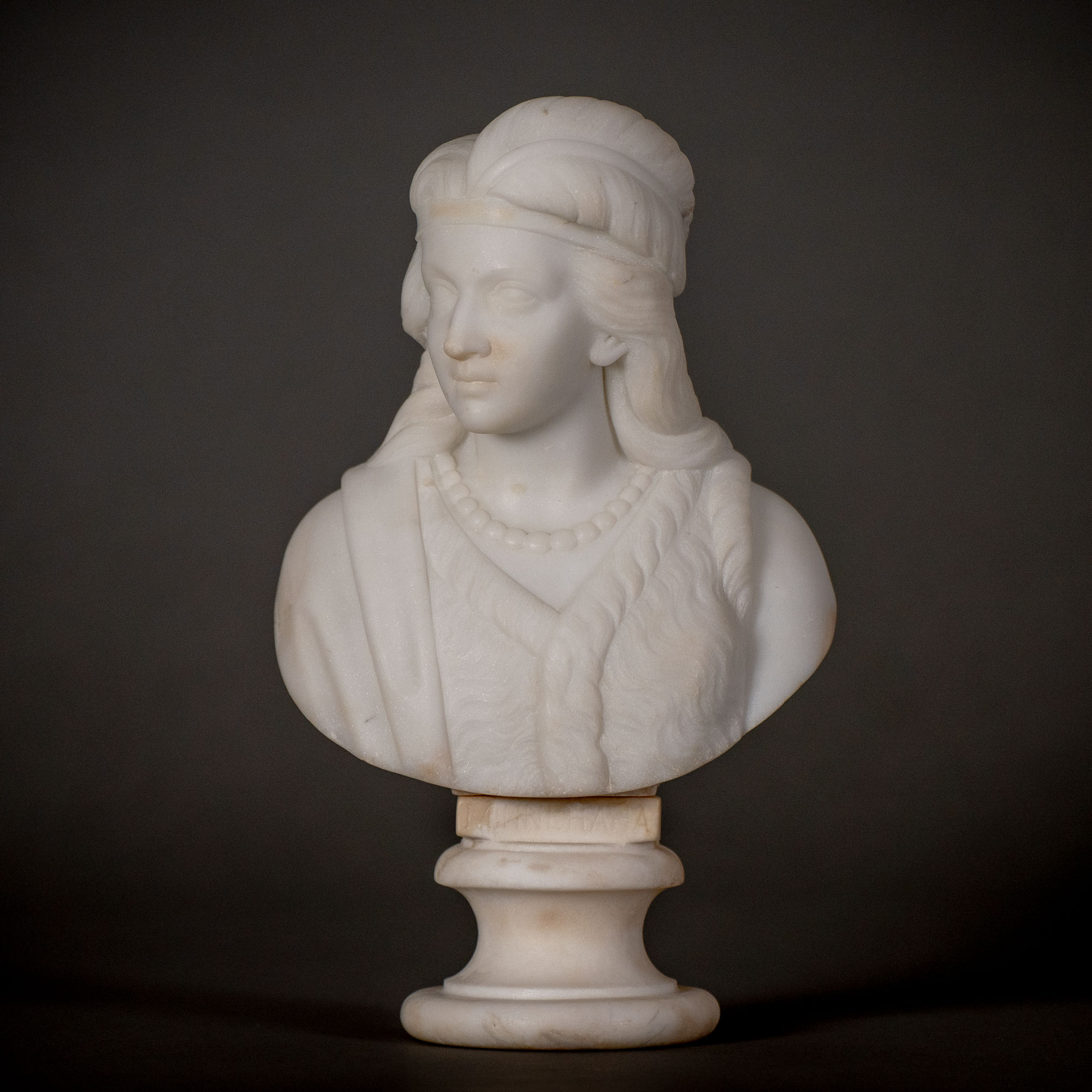
 Image: Georgia Museum of Art, University of Georgia; Museum purchase with funds provided by the Collectors of the Georgia Museum of Art. No. 2016.251 [index:1.4.2].
‘Edmonia Lewis: Said in Stone’ is on view at the Georgia Museum of Art in Athens from 8 August 2026 to 3 January 2027. Organized around the work and legacy of the 19th-century sculptor, the presentation brings together the full range of Lewis’s art with works by her contemporaries and by artists she influenced.
The exhibition is co-organized by the Georgia Museum of Art at the University of Georgia and the Peabody Essex Museum. It opened at the Peabody Essex Museum in Salem, Massachusetts, where it was presented from February 14 through June 7, 2026, before moving to Athens. It is scheduled to travel next to the North Carolina Museum of Art in Raleigh, where it will run from April 3 through July 11, 2027. The show is curated by Jeffrey Richmond-Moll, George Putnam Curator of American Art at the Peabody Essex Museum, and Shawnya L. Harris of the Georgia Museum of Art, with major support from the Terra Foundation for American Art and the Henry Luce Foundation and additional support from Traditional Fine Arts Organization.
Born in Greenbush, New York, in 1844, Lewis became the first sculptor of Black and Indigenous, specifically Mississauga, descent to achieve international recognition. She began her career in Boston in 1863 and traveled to Rome in 1866, joining the leading American sculptors of her generation. Her career challenged racial and gender conventions in the art world of the period, while her mastery of marble shaped the works for which she became known.
Lewis’s sculptures address abolitionists and social reformers, Indigenous identity, and religious and mythological subjects. The exhibition includes works such as ‘Forever Free,’ ‘Indian Combat,’ ‘Awake,’ ‘Hagar,’ and ‘The Old Indian Arrow Maker and His Daughter,’ alongside portraits and other examples of her practice. The museum describes the project as the first exhibition of its kind to gather the full range of Lewis’s art with work by related artists, placing her life and sculpture within the artistic worlds in which she worked and the generations that followed.
Although Lewis’s legacy continued in Black communities after her death in 1907, the Georgia Museum of Art notes that her contribution to American sculpture remained underrecognized for decades. Some of her major works were rediscovered years later, while others remain lost. A statement on the exhibition page also preserves Lewis’s words from 1878: “Sometimes the times were dark and the outlook was lonesome, but where there is a will, there is a way.”
The museum is marking the Athens presentation with public programmes on August 22. A free community open house will run from 10 a.m. to 4:30 p.m., beginning with Family Day and continuing with drop-in art activities, a photo booth, and Athens sculptor Stan Mullins discussing marble carving, materials and tools alongside examples of his work, from 10 a.m. to 6 p.m.. Tintype photography sessions with Amanda Corbett of Salvage Sparrow are scheduled from 1 to 6 p.m., with sessions priced at $70.
At 3:30 p.m., Shawnya L. Harris, the museum’s Larry D. and Brenda A. Thompson Curator of African American and African Diasporic Art, will give a talk on Lewis before a performance by students from the University of Georgia’s Hugh Hodgson School of Music. The programme, ‘Harmony in Stone: The Song of Hiawatha in Sculpture and Sound,’ relates Lewis’s marble sculptures of Hiawatha and Minnehaha, made between 1866 and 1872, to Samuel Coleridge-Taylor’s musical works based on Henry Wadsworth Longfellow’s 1855 poem. A separately ticketed reception follows from 4:30 to 7 p.m.; it costs $15, with complimentary admission for Reciprocal-level members and above.